

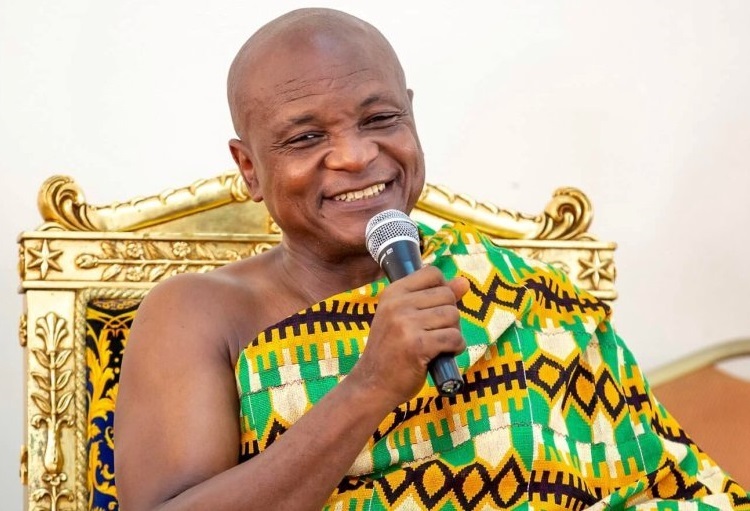

- Ghana’s Recovery Needs Discipline, Industrial Transformation — Togbe Afede
Togbe Afede XIV, Executive Chairman of the World Trade Centre Accra, has called for bold and disciplined leadership to sustain Ghana’s economic recovery, warning that recent macroeconomic gains could prove temporary without deeper structural reforms and industrial transformation.
Speaking at the 10th Ghana CEO Summit in Accra, the Agbogbomefia of the Asogli State said Ghana’s recovery journey must move beyond short-term stabilisation toward long-term productivity, competitiveness and value creation.
According to him, the changing global economic environment, shaped by geopolitical tensions, technological disruption and shifting trade dynamics, requires decisive policy direction and stronger collaboration between government and the private sector.
“The global environment is going through massive change, both positive and negative,” Togbe Afede said, urging leaders to adopt innovative and resilient strategies capable of positioning Ghana competitively within the global economy.
His remarks come as Ghana shows signs of improving macroeconomic stability after years of severe fiscal stress, currency depreciation, high inflation and investor uncertainty.
Inflationary pressures have started to ease, the cedi has shown periods of stability, and investor confidence is gradually recovering under ongoing fiscal consolidation and monetary policy tightening.
But Togbe Afede cautioned that macroeconomic recovery alone would not be sufficient unless it translates into tangible improvements in employment, industrial output and living standards.
His warning reflects a wider concern among business leaders that Ghana’s recovery could remain fragile if it is not anchored in productive investment, export competitiveness and stronger domestic enterprise capacity.
For Ghana, the next phase of recovery will require more than lower inflation and improved fiscal numbers. It will require a stronger industrial base, cheaper and more reliable energy, improved access to credit, better infrastructure and policies that allow businesses to expand and hire.
Business leaders and policymakers at the summit echoed similar concerns, pointing to structural constraints such as high production costs, weak industrial capacity, limited value addition and persistent unemployment pressures.
The summit, held under the theme of accelerating economic transformation through leadership, technology, industrialisation and energyisation, brought together corporate executives, policymakers and development stakeholders to discuss strategies for sustaining growth and strengthening Ghana’s economic resilience.
Participants stressed the need for execution-driven reforms, investment-friendly policies and stronger support for local industries as Ghana seeks to reposition itself for long-term economic expansion.
For the private sector, the message was clear: Ghana’s recovery must not be measured only by macroeconomic indicators. It must also be judged by whether businesses can produce competitively, whether young people can find jobs, whether local firms can scale, and whether the country can capture more value from its resources.
Togbe Afede’s intervention therefore places discipline and transformation at the centre of the recovery debate.
Ghana may be moving out of crisis, but the country’s ability to stay on a sustainable path will depend on whether leaders can resist short-termism, protect fiscal gains and implement reforms that raise productivity.
Without that shift, recent macroeconomic gains may offer temporary relief but fail to deliver lasting prosperity.
The challenge now is to convert stabilisation into structural transformation — and to ensure that Ghana’s recovery is not only visible in official data, but felt in factories, businesses, jobs and household incomes.

