

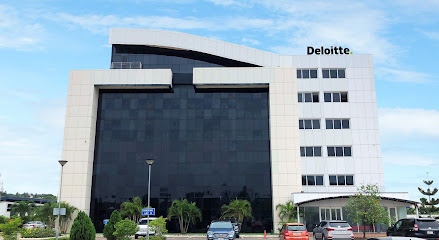

Deloitte Ghana Highlights Macroeconomic Stability, Infrastructure Push and Capital Market Activity as Key Drivers of Investment Opportunities
Senior Manager at Deloitte Ghana, Peter Nii Charway, has highlighted improving macroeconomic stability, expanding infrastructure investments, and renewed capital market activity as key signals of Ghana’s evolving investment landscape.
Speaking at the UKGCC-Deloitte Investment Readiness Business Webinar Series themed, “Ghana’s Economic Reset: What it Means for Investors and SMEs”, Mr Charway noted that Ghana’s ongoing economic reforms, supported by fiscal consolidation measures and an IMF-backed programme, have contributed to restoring investor confidence and stabilising the macroeconomic environment.
According to him, recent economic indicators point to sustained growth momentum, with GDP expected to expand further in 2026, underpinned by gains in key sectors of the economy.
He explained that government’s economic strategy is increasingly centred on infrastructure development and industrialisation, with a focus on export-led growth. This, he said, is evident in strong non-oil sector performance driven by services, industry and trade.
Mr Charway further indicated that policy emphasis on industrial parks, logistics corridors and export-oriented manufacturing hubs is expected to unlock significant investment opportunities. He added that increased spending on energy, transport and digital infrastructure, alongside the expansion of public-private partnerships, is positioning Ghana as a competitive investment destination.
Touching on regional integration, he pointed to ongoing efforts to develop cross-border trade corridors, including the Abidjan–Lagos highway and other strategic routes across West Africa. These, he noted, are critical in attracting investment into allied industries by improving connectivity and reducing trade bottlenecks within the sub-region.
On capital markets, Mr Charway observed that Ghana is gradually regaining access to funding channels following recent disruptions linked to the domestic debt exchange programme. He stressed that the stock market remains a vital avenue for mobilising long-term and relatively cheaper capital to support business expansion.
He also identified agriculture, manufacturing and logistics as priority sectors driving economic activity. In agriculture, he highlighted opportunities in agribusiness, processing and exports, while manufacturing prospects remain strong in agri-processing, pharmaceuticals and automobile assembly.
Citing developments in the automotive sector, Mr Charway noted that government’s policy to attract global vehicle manufacturers has already seen firms such as Toyota, Nissan and Mitsubishi Motors establish assembly operations in Ghana.
He explained that the initiative forms part of a broader import substitution strategy aimed at reducing the country’s heavy reliance on vehicle imports, while gradually transitioning into a manufacturing hub.
Additionally, he pointed to pharmaceuticals as an emerging sector with strong growth potential, driven by rising population demand and ongoing economic expansion.
Overall, Mr Charway maintained that Ghana’s economic reset, anchored on structural reforms and strategic investments, presents a range of opportunities for both investors and small and medium-sized enterprises.

