

- Domestic Savings Must Fund Ghana’s Growth — BoG
The Bank of Ghana is placing greater emphasis on trust, policy credibility and domestic capital mobilisation as it seeks to sustain economic stability and support the next phase of Ghana’s growth agenda.
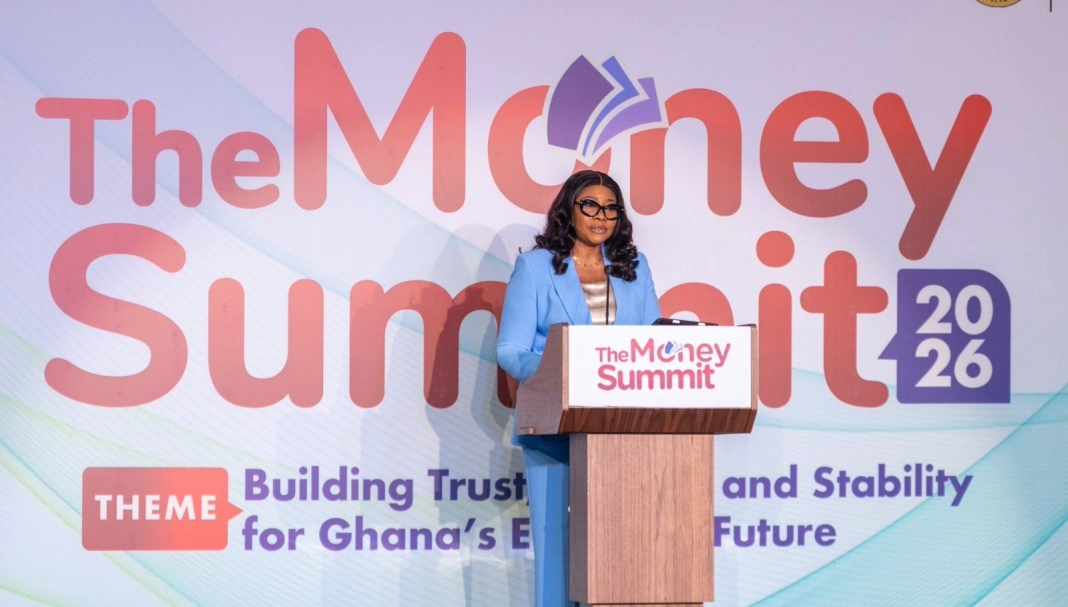
Speaking at the Money Summit 2026, organised by the Business and Financial Times, Second Deputy Governor of the Bank of Ghana, Matilda Asiedu-Asante, said trust, capital and stability are mutually reinforcing pillars that will determine the country’s ability to maintain recent macroeconomic gains and expand investment.
She noted that while inflation has moderated, interest rates have declined and international reserves have strengthened, Ghana must now focus on translating stability into productive investment and private sector growth.
According to Ms Asiedu-Asante, investor confidence remains critical to reducing risk premiums, lowering the cost of capital and encouraging long-term investment.
She stressed that a stable economy must also provide adequate financing to productive sectors such as agriculture, manufacturing and small businesses if the recovery is to become meaningful to households and firms.
The Second Deputy Governor said the central bank is coordinating efforts across the financial sector to mobilise long-term domestic savings, including pension funds, remittances and capital market resources, for investment in the real economy.
“We have over 100 billion in pension funds, in our capital markets and in remittances,” she said, urging financial institutions to develop investment products that can channel savings into productive ventures.
Her comments reflect a growing policy shift from short-term macroeconomic stabilisation toward domestic resource mobilisation and productive capital deployment.
The country’s recent economic recovery has been supported by lower inflation, improved reserves and renewed investor confidence. But those gains will remain fragile unless capital begins to flow more strongly into businesses, production, exports and jobs.
Ms Asiedu-Asante said initiatives such as credit guarantee schemes, alternative credit scoring systems and bank recapitalisation efforts are intended to expand access to finance and support sustainable economic growth.
Credit guarantee schemes can help reduce lending risks for banks, especially when financing small and medium-sized enterprises that may lack strong collateral.
Alternative credit scoring systems can also help bring informal businesses and individuals into the formal credit system by using non-traditional data to assess repayment capacity.
Bank recapitalisation, meanwhile, is expected to strengthen the balance sheets of financial institutions and improve their ability to support long-term lending.
The Deputy Governor’s message points to one of the biggest challenges facing Ghana’s financial system: how to convert domestic savings into productive investment rather than leaving capital trapped in short-term instruments and low-risk placements.
Pension funds, remittances and capital market resources represent significant pools of money. But without credible investment vehicles, strong regulation and trusted financial products, much of that capital may not reach the sectors that can drive structural transformation.
A stable currency, credible monetary policy, transparent regulation and predictable government behaviour all reduce uncertainty and make long-term capital more willing to take risk.
For businesses, especially in agriculture, manufacturing and small enterprise development, the test is whether falling inflation and lower rates will translate into more affordable financing.
The Bank of Ghana’s position is therefore clear: macroeconomic stability is necessary, but not sufficient. The next phase of growth must be anchored on trust, stronger financial intermediation and the deliberate mobilisation of domestic capital into productive sectors.
For Ghana’s recovery to become transformation, the financial system must now do more than preserve stability. It must help finance the economy that stability was meant to build.

