

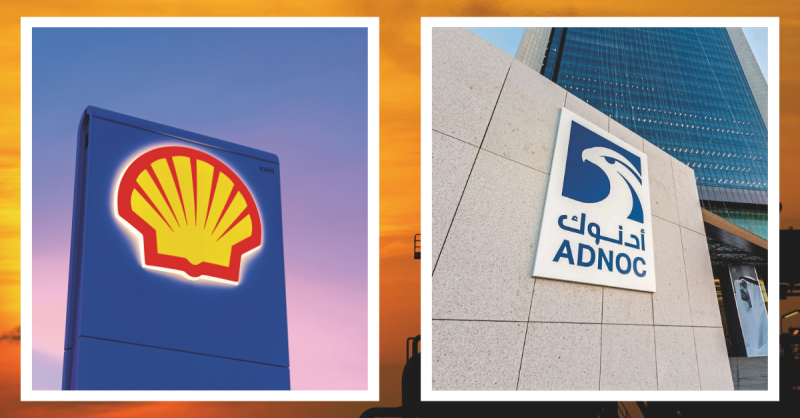

- ADNOC nears US$1 billion takeover of Shell’s South African fuel retail business
Abu Dhabi National Oil Company is nearing a deal to acquire Shell’s South African fuel retail business for about US$1 billion, in a transaction that could give the UAE state-owned energy giant a major foothold in Africa’s largest fuel market.
The proposed deal would involve about 600 Shell fuel stations across South Africa and give ADNOC control of roughly 10.00% of the country’s retail fuel sector, according to reports citing people familiar with the talks.
The transaction, if concluded, would mark one of ADNOC’s biggest downstream moves in sub-Saharan Africa and a significant expansion of its global retail ambitions. It would also bring Shell closer to exiting a market where it has operated for more than a century.
Reuters reported in April that Shell was in advanced discussions with ADNOC over the sale of its South African retail fuel stations, after the Abu Dhabi company emerged as the preferred bidder following the collapse of earlier talks with commodity trader Gunvor Group.
Business Insider Africa, citing Bloomberg, reported that ADNOC is now close to acquiring Shell’s South African fuel retail business for about US$1 billion, months after the negotiations first began.
Shell announced in 2024 that it planned to exit its downstream businesses in South Africa, ending a major chapter in the company’s long presence in the country’s fuel retail and distribution market. The move forms part of a broader reshaping of Shell’s global portfolio as international oil majors prioritise higher-return assets and streamline downstream operations.
For ADNOC, the deal would represent a strategic entry into a large and competitive African fuel market. South Africa remains the continent’s most developed fuel retail market, with a sizeable network of service stations serving motorists, logistics companies, commercial fleets and industrial users.
The acquisition would also deepen ADNOC’s push beyond crude production and into branded retail, distribution and customer-facing energy services. The UAE oil giant has been expanding its international footprint as it seeks to grow across the energy value chain.
A successful acquisition would place ADNOC in direct competition with established players in South Africa’s fuel retail sector, including Engen, BP, TotalEnergies, Astron Energy, Sasol and other operators.
The deal also underlines a wider shift in Africa’s downstream energy landscape, where global oil majors are increasingly reviewing legacy retail assets while state-backed energy companies and commodity traders move to capture distribution networks, fuel storage, lubricants and customer access.
For Shell, the potential sale would mark another step in its portfolio rationalisation strategy. For ADNOC, however, it would provide immediate scale in a market that would otherwise take years to build organically.
The reported US$1 billion valuation reflects the strategic importance of Shell’s network, its brand position, and South Africa’s role as a gateway market for broader regional downstream expansion.
However, any deal is likely to require regulatory scrutiny, including competition and public-interest assessments in South Africa. Authorities may examine the implications for market concentration, fuel security, employment, local participation and ownership requirements.
Neither Shell nor ADNOC has publicly confirmed a final agreement.
Still, the direction of travel appears clear. Shell is preparing to step back from one of its oldest African downstream markets, while ADNOC is positioning itself to enter South Africa not as a marginal player, but as a serious force in fuel retail.
If completed, the transaction would be more than a corporate asset sale. It would signal how Africa’s energy retail map is being redrawn, with Gulf capital, state-backed energy groups and new strategic investors increasingly moving into spaces once dominated by Western oil majors.

