

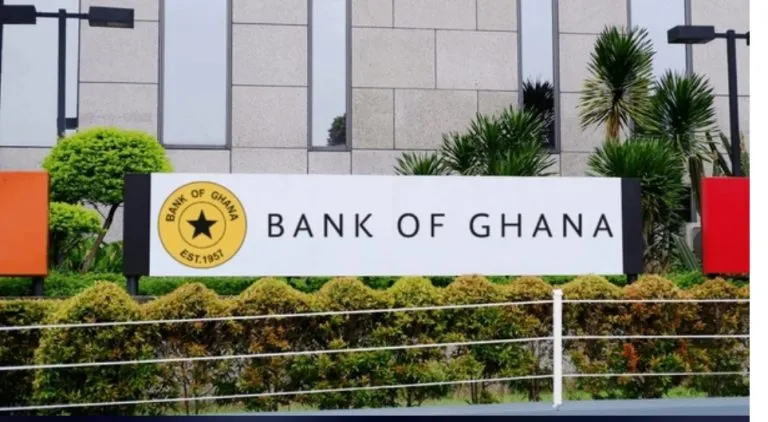

- BoG Cracks Down on Dud Cheques With 20% Levy and Three-Year Ban
The Bank of Ghana has tightened sanctions against customers who issue dud cheques, introducing heavier penalties, mandatory reporting to credit reference bureaus and a possible three-year ban from issuing cheques across the country.
In a new notice to banks, specialised deposit-taking institutions and the public, the central bank said it had observed “with grave concern” the high issuance of dud cheques by some customers, warning that the practice threatens confidence in the use of cheques for transactions.
The directive, issued under Notice No. BG/GOV/SEC/2026/12 and dated June 24, 2026, takes immediate effect and supersedes earlier notices issued in March 2021 and October 2025.
Under the new sanctions regime, a customer who issues a dud cheque for the first time will be charged 10.00% of the cheque’s face value by the bank or specialised deposit-taking institution.
The bank must also issue a warning notification to the affected customer, report the offence to the Credit Reference Bureaus and the Bank of Ghana, and place the customer under surveillance for at least one year.
The warning may be issued through SMS, email or any established communication channel between the institution and the customer.
For a second offence within one year, the customer will face a levy of 15.00% of the cheque’s face value. The bank or SDI must again issue a warning notification and report the offence to both the Credit Reference Bureaus and the Bank of Ghana.
A third offence within one year will attract a levy of 20.00% of the cheque’s face value.
At that point, the Bank of Ghana will ban the customer from issuing cheques in Ghana for a minimum period of three years. The customer will also be barred from accessing new credit facilities from the banking system for one year.
The central bank said affected customers may still receive cheques and funds into the affected account and may continue to perform other electronic transactions on the account.
Once the Bank of Ghana notifies banks and SDIs of the ban, the affected institution must inform the customer within five working days, recall all unused cheque books and refrain from issuing new cheque books until the sanctions are lifted.
The Bank of Ghana also indicated that it may publish the list of third-time offenders.
Customers who fail to return unused cheque books within ten working days from the notification date will be reported to the central bank. Such customers may be banned from operating any current account and added to a new Directory of High-Risk Cheque Issuers to be created by the Bank of Ghana.
The directory will serve as a reference point for the central bank and the banking industry.
The directive also places obligations on banks and specialised deposit-taking institutions.
Banks and SDIs must continue to submit data on customers who issue dud cheques to Credit Reference Bureaus in line with the Credit Reporting Act, 2007, Act 726.
They must also submit monthly returns on dud cheques to the Bank of Ghana by the 10th day of the following month, using the prescribed format. Institutions must submit a “Nil Report” for months in which no dud cheques are recorded.
Failure to submit returns, or the submission of inaccurate or incomplete returns, will attract sanctions under the Banks and Specialised Deposit-Taking Institutions Act, 2016, Act 930.
Banks and SDIs are also required to conspicuously display copies of the new notice in all banking halls and on their official websites.
The Bank of Ghana warned that any bank or SDI that fails to comply with the directive will be sanctioned under section 92(8) of Act 930.
The latest move signals a tougher regulatory stance on cheque-related misconduct at a time when the financial system is increasingly shifting toward electronic payments, instant transfers and digital channels.
Although cheque usage has declined relative to electronic payment instruments, cheques remain important in commercial transactions, particularly among businesses, suppliers, professional service providers and some high-value account holders. Dud cheques undermine trust in that system.
For recipients, a dishonoured cheque can disrupt cash flow, delay business payments and create legal and operational costs. For banks, repeated issuance of dud cheques raises questions about customer discipline, account monitoring and the integrity of payment instruments.
The Bank of Ghana’s new sanctions therefore seek not only to punish offenders but also to protect confidence in the payment system.
By linking dud cheque offences to credit reference reporting and future access to credit, the central bank is making clear that issuing a dud cheque is not merely a banking inconvenience. It is now a conduct issue with wider implications for a customer’s financial reputation.
The creation of a Directory of High-Risk Cheque Issuers will also make it easier for financial institutions to identify repeat offenders and manage payment-related risks.
For businesses and individuals who still rely on cheques, the message is clear: issuing a cheque without adequate funds can now carry significant financial and reputational consequences.
The new rules also increase pressure on banks and SDIs to monitor, report and enforce compliance more strictly.
With the directive taking immediate effect, customers who issue cheques will now have to ensure that funds are available before cheques are presented.
The central bank’s position is unmistakable: the era of weak consequences for dud cheques is over.

