


- Quality, Not League Location, To Determine Black Stars Selection
Ghana will select its strongest available players for the November Africa Cup of Nations qualifiers against Somalia, interim assistant coach Ibrahim Tanko says, leaving the door open to both Ghana Premier League players and Ghanaians playing abroad as the Black Stars try to revive a campaign that has begun with two defeats.
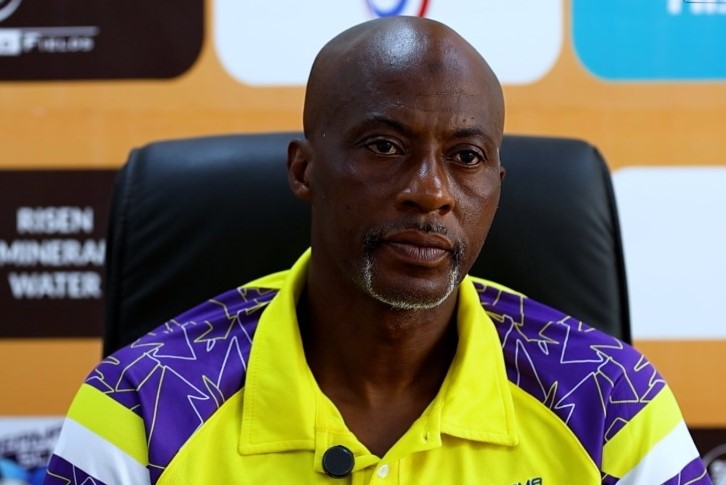
“There is no Ghana Premier League player or foreign player; we are looking at the best players that can help Ghana, that’s it,” Tanko said after Medeama’s 1–1 league draw with Asante Kotoko on Sunday.
He added: “If 10 local players, we think they can help, why not?”
The message is a call for selection based on quality and suitability rather than a fixed preference for players based at home or overseas. It also places pressure on the new technical team to show that “the best” will be judged by consistent criteria: current form, fitness, tactical fit and what the squad needs for two difficult matches.
The Somalia games are scheduled for November 12 and 16. Both teams are seeking their first win in Group C after losing their opening two matches. Ghana lost 2–0 to Côte d’Ivoire and 4–2 to The Gambia, leaving the Black Stars without a point and at the bottom of the group on goal difference. Somalia also have no points.
The stakes are clear. Ghana’s next two results will shape the direction of its qualification campaign and determine whether the team can regain ground before the final group matches. A pair of wins would provide a substantial lift; further dropped points would leave the Black Stars needing help from other results as well as a stronger finish of their own.
Tanko’s comments come during a change in leadership. After the poor start, head coach Carlos Queiroz departed. The Ghana Football Association appointed an interim technical team for the November fixtures, led by Kim Lars Björkegren, with Tanko and Godwin Attram as assistants and Fatawu Dauda as goalkeepers coach.
The arrangement gives the team a new staff, but little time to prepare before the double-header.
That makes squad selection more than a debate about domestic and foreign-based players. The coaches must identify a group capable of adapting quickly to a new approach and delivering under pressure. Tanko’s refusal to rule out Ghana Premier League players suggests that league affiliation alone will not determine a call-up. But the test will be whether the final squad reflects that principle.
A merit-based policy can widen the pool and give in-form domestic players a clear route into the national team. It can also challenge assumptions that a player’s quality is determined by the league or country in which he competes.
At the same time, the phrase “best players” needs practical meaning: technical ability matters, but so do fitness, recent performances, tactical discipline and the ability to contribute to a specific match plan.
The two defeats offer evidence of where Ghana must improve. The team conceded six goals and scored twice across its opening qualifiers. The scorelines point to problems at both ends of the pitch, though they do not by themselves identify the causes.
The incoming technical team will have to review the performances, decide which players can address the weaknesses and settle on a structure that can produce results quickly.
The Somalia fixtures also create a scheduling challenge. Two matches within four days give Ghana limited time to correct mistakes between the first and second legs. The squad will need enough depth to manage fatigue, suspensions or injuries, while retaining the cohesion required for consecutive qualifiers.
The first match will also provide an immediate test of the technical team’s decisions before it must prepare for the return fixture.
Tanko’s comments are significant because they rule out a simple selection division between locally based and foreign-based players. Ghana’s football debate often turns on whether the national side should draw more heavily from the domestic league or from players competing overseas. Tanko’s answer is that the coaches should look at who can help Ghana, regardless of where they play.
That principle will be tested when the squad is announced. If Ghana Premier League players are included, their selection will need to be supported by their form and their role in the plan.
If overseas-based players dominate, the same standard should apply. A clear explanation of the team’s choices could help players and supporters understand how the interim staff intends to rebuild after the opening losses.
The technical team must also balance immediate results with the need to restore confidence. The Black Stars cannot afford an experiment that ignores the urgency of the group, but a short-term response built only around reputation could miss players in strong form.
The coaches will need to combine experience with current performance, and ensure the squad understands its responsibilities in both matches.
For supporters, Tanko’s statement offers a clear promise but not yet proof. The selection policy is merit-based in principle; its credibility will depend on the final choices and the performances that follow.
The coaches will be judged not only on whom they select, but on whether the squad looks organised, responds to setbacks and converts opportunities into points.
Ghana’s route back into contention begins against Somalia. Tanko has made clear that neither domestic nor foreign-based players should expect automatic selection.
The challenge now is to turn that standard into a squad capable of winning twice, or at least securing the results needed to keep qualification within reach.

