

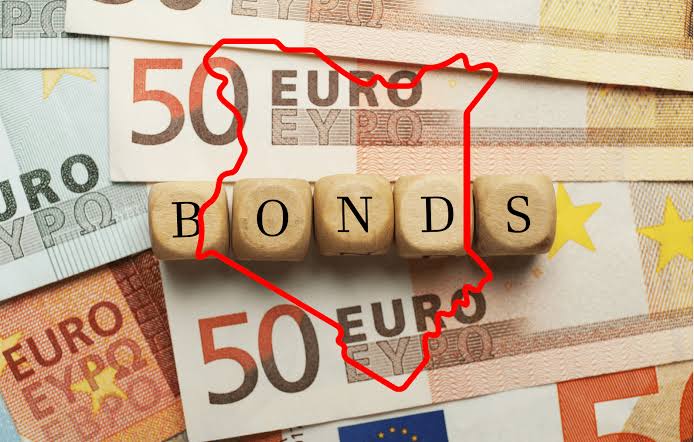

- Nairobi Moves to Extend Debt Maturities with Planned US$500m Bond Buyback
Kenya is preparing a fresh US$500 million Eurobond buyback, signalling a shift from crisis-driven borrowing towards active debt portfolio management as the government seeks to reduce refinancing risks and smooth its external debt repayment schedule.
The proposed transaction, expected to be financed through a new international bond issuance, would allow Nairobi to repurchase part of its outstanding Eurobonds before maturity and replace them with longer-dated debt. The strategy is aimed at easing near-term repayment pressure while extending the country’s debt maturity profile, giving the Treasury more flexibility in managing external liabilities.
The final size of the buyback will depend on investor demand for the new bond sale, officials indicated. Any proceeds raised beyond the amount required for the repurchase could be used to support the national budget, highlighting the dual objective of the transaction: liability management and fiscal financing.
The planned operation would mark Kenya’s latest attempt to manage its sovereign debt more proactively after returning to international capital markets earlier this year. Improved investor sentiment, stronger foreign exchange reserves and recovering prices of Kenya’s outstanding bonds have created more favourable conditions for refinancing existing obligations rather than allowing large maturities to accumulate.
For Nairobi, the timing is important. Kenya has spent the past few years under intense scrutiny from investors over its debt position, fiscal deficit, external financing needs and ability to meet Eurobond repayments. The country’s debt-service burden has placed pressure on public finances, while higher global interest rates have made refinancing more expensive for many emerging and frontier market borrowers.
A buyback financed through a new bond allows the government to manage the maturity wall more smoothly. By replacing shorter-term or more immediate obligations with longer-tenor instruments, Kenya can reduce rollover risk and avoid sharp repayment spikes that could strain reserves or unsettle markets.
The transaction also sends a message to investors that the government is no longer merely reacting to repayment pressure, but actively reshaping its debt profile.
For African sovereigns, this is becoming an increasingly important strategy. Countries that regained access to international markets after the tightening cycle are now looking not only to raise fresh capital, but also to optimise the structure of existing debt. Liability management operations, including tender offers, exchanges and buybacks, allow governments to reduce near-term stress, improve cash-flow planning and signal fiscal discipline.
Kenya’s proposed buyback therefore fits into a broader market trend in which African issuers are seeking to rebuild credibility after years of elevated borrowing costs, pandemic-era fiscal pressure and tighter global financial conditions.
However, the strategy is not without risk.
A buyback can improve the maturity profile, but it does not automatically reduce the overall debt burden unless executed at favourable pricing and accompanied by fiscal consolidation. If the new bond carries a higher coupon or significantly increases future debt-service costs, the short-term relief could come at a longer-term price.
Economists therefore caution that liability management must be treated as a tool, not a substitute for broader fiscal reform.
Kenya’s public debt remains elevated, approaching KSh13 trillion, and continues to weigh heavily on the budget. Debt-service obligations have limited fiscal space for infrastructure, health, education and social spending, while domestic taxpayers face pressure from revenue measures designed to fund the state and stabilise public finances.
The planned Eurobond buyback may ease refinancing concerns, but durable debt sustainability will depend on stronger domestic revenue mobilisation, tighter expenditure control, improved public investment efficiency and sustained economic growth.
The government must also manage the political economy of fiscal consolidation. Kenya has faced strong public resistance to tax increases and spending reforms, underscoring the difficulty of raising revenue in an environment where households and businesses are already under pressure from high living costs.
That makes the Eurobond strategy both financial and political.
On the financial side, extending maturities can reduce immediate repayment pressure and improve market confidence. On the political side, smoother debt servicing could reduce the risk of abrupt fiscal tightening and provide the government with more room to manage budget priorities.
For investors, the key question will be whether the new issuance attracts sufficient demand at acceptable pricing. Strong demand would confirm improved confidence in Kenya’s credit story and validate the Treasury’s decision to move early. Weak demand, or expensive pricing, would suggest that investors remain cautious about the country’s fiscal outlook.
The proposed transaction also raises an important signal for other African borrowers. As global investors gradually return to frontier market debt, countries with credible reform programmes and clearer debt strategies may find opportunities to refinance or restructure maturities before pressure builds.
But market access alone is not a recovery strategy. It must be supported by fiscal discipline and growth-enhancing reforms.
Kenya’s planned US$500 million Eurobond buyback is therefore best understood as a step towards managing debt more intelligently, rather than a solution to the debt problem itself.
If executed well, it could ease near-term pressure, lengthen maturities and strengthen investor confidence. If not backed by stronger fiscal adjustment, however, it may simply postpone the same risks.
For Nairobi, the challenge is to ensure that liability management becomes part of a broader path towards debt sustainability, not another round of borrowing under a different name.

