


- Tax Compliance Must Rest on Public Trust – World Bank
Ghana’s drive to strengthen domestic revenue mobilisation must go beyond tax laws, penalties and enforcement to focus on public trust, taxpayer behaviour and clearer communication, the World Bank has said, warning that voluntary compliance will be critical to financing the country’s long-term development agenda.
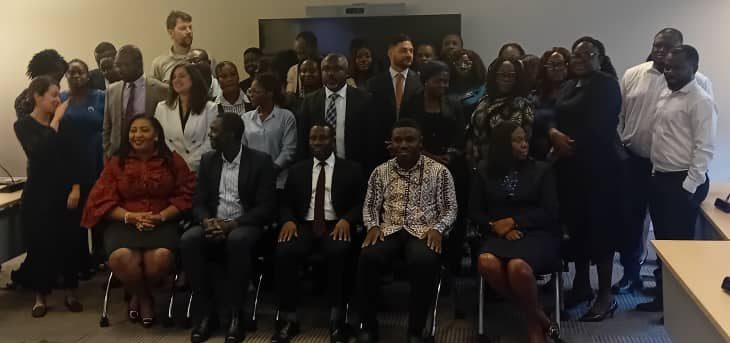
Delivering opening remarks at a two-day workshop on Leveraging Social and Behavioral Change Communications for Tax Compliance in Ghana, World Bank Lead Public Sector Specialist, Raymond Muhula, said sustainable tax collection depends not only on stronger systems and legal reforms, but also on whether citizens understand, trust and believe in the fairness of the tax system.
“As external financing becomes more constrained and citizens rightly demand better services and accountability, strengthening voluntary tax compliance becomes central to the national development agenda,” he said.
His remarks come at a time when Ghana is pursuing fiscal consolidation and seeking to increase domestic revenue under its economic reform programme. With access to external financing still constrained and debt sustainability remaining a major policy priority, government’s ability to raise predictable domestic revenue has become central to restoring fiscal stability.
Mr Muhula said Ghana’s ambitions in infrastructure, healthcare, education, digital transformation, social protection and climate resilience increasingly depend on the country’s ability to mobilise reliable revenue internally rather than continue relying heavily on borrowing and external support.
That message places tax compliance at the centre of Ghana’s development financing challenge. The issue is no longer simply whether government can introduce new taxes or strengthen enforcement. It is whether citizens and businesses are willing to comply because they understand the system, believe it is fair and trust that public funds will be used responsibly.
Mr Muhula noted that taxpayer behaviour is shaped by more than legal obligations or fear of penalties. Compliance improves when taxpayers know what is expected of them, see others contributing, find the system easy to navigate and believe that tax revenues are used transparently for public benefit.
This is a critical point for Ghana, where public resistance to taxes has often been linked not only to affordability concerns, but also to questions over accountability, service delivery and trust in public institutions.
The World Bank described Social and Behavioral Change Communications as an evidence-based approach to understanding why individuals and businesses comply with tax obligations, and why they sometimes fail to do so.
Unlike traditional public awareness campaigns that mainly focus on telling citizens to pay taxes, the approach seeks to identify behavioural barriers, simplify communication, improve public understanding and encourage long-term changes in taxpayer attitudes.
In practical terms, this means tax communication must move beyond slogans. It must explain the purpose of taxes, clarify obligations, reduce confusion, address misinformation, and show citizens the link between taxes paid and services delivered.
The workshop forms part of broader efforts to strengthen Ghana’s tax administration, including reforms supported under the World Bank’s US$150 million Public Financial Management for Service Delivery Programme.
Mr Muhula said investments in digital tax systems and administrative reforms will deliver stronger results only when supported by communication strategies that are “clear, credible, inclusive and practical.”
That warning is important. Ghana has invested in digital tax platforms, electronic invoicing, taxpayer identification systems and administrative reforms designed to improve compliance and reduce leakages. But digital systems alone cannot solve the compliance problem if taxpayers do not understand them, distrust them or find them difficult to use.
The World Bank’s message suggests that technology must be matched with trust.
Mr Muhula called on tax communicators to act as a bridge between complex fiscal reforms and public understanding. He described them as “architects of public understanding” whose role is to translate technical policy into language citizens can trust and act upon.
This places communication at the heart of fiscal reform. Tax policy is often presented in technical terms, but citizens experience it through daily costs, business obligations, filing requirements, audits, levies and service expectations. If government fails to explain reforms clearly, even well-designed policies can face resistance.
Mr Muhula also advocated a whole-of-society approach to improving tax compliance. He urged collaboration among government institutions, local authorities, civil society, the private sector, educational institutions, traditional leaders, technology providers and the media to build a stronger tax culture.
This broader approach matters because tax compliance is not shaped only by the Ghana Revenue Authority. It is influenced by social norms, business practices, community leadership, political accountability and public perceptions of fairness.
If citizens believe others are not paying, they may be less willing to comply. If businesses believe competitors are evading taxes without consequence, voluntary compliance weakens. If taxpayers see limited public services despite paying taxes, trust declines.
That is why enforcement alone cannot carry Ghana’s revenue strategy.
Enforcement is necessary to deter evasion and protect fairness, but it becomes more effective when taxpayers view the system as legitimate. A tax system built only on fear may collect revenue in the short term, but one built on trust is more likely to sustain compliance over time.
Mr Muhula concluded that improving tax compliance is not only about increasing government revenue.
“Tax compliance is not only about collecting revenue; it is about strengthening the social contract between the state and its citizens,” he said.
That statement captures the deeper significance of Ghana’s revenue challenge. Taxes are not merely financial transactions. They are part of the relationship between citizens and the state. Citizens pay when they believe government is accountable. Government earns legitimacy when it delivers services, manages resources responsibly and treats taxpayers fairly.
Higher voluntary compliance could expand domestic revenue without relying solely on higher tax rates or aggressive enforcement. It could reduce borrowing needs, support public investment, improve debt sustainability and create more fiscal space for development priorities.
But achieving that will require more than new policies. It will require visible accountability, credible public communication and a tax administration system that is easier to understand and less burdensome to use.
The World Bank’s message is therefore timely. Ghana cannot build a stronger revenue base only by tightening enforcement. It must also rebuild confidence in the tax system.
If citizens are expected to contribute more, they must also see more transparency, better service delivery and a clearer connection between taxes paid and national development.
The future of Ghana’s fiscal consolidation may depend not only on how much government can collect, but on how much trust it can earn.

