


- European Lawmakers Demand FIFA Investigation Over Infantino’s Political Neutrality Amid Balogun Controversy
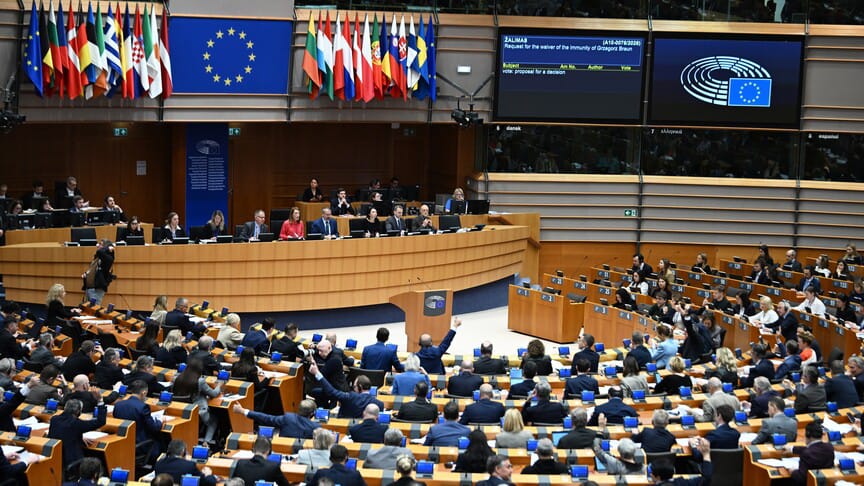
Pressure is continuing to mount on FIFA President Gianni Infantino after more than 70 members of the European Parliament called for an investigation into the world football governing body over allegations that it may have breached its own rules on political neutrality during the ongoing 2026 FIFA World Cup.
The latest development follows FIFA’s controversial decision to suspend the one-match ban imposed on United States forward Folarin Balogun, allowing him to feature in the Americans’ Round of 16 clash against Belgium despite being sent off in the previous round.
Balogun had received a red card during the United States’ Round of 32 victory over Bosnia and Herzegovina and was automatically suspended for the next match under FIFA’s disciplinary regulations. However, FIFA’s independent disciplinary committee later suspended the ban, clearing the striker to play against Belgium, where the United States eventually suffered a 4-1 defeat.
The decision sparked widespread criticism across European football and intensified after U.S. President Donald Trump publicly revealed that he had personally contacted Infantino to request a review of the suspension, describing Balogun’s dismissal as “a great injustice.”
Infantino has defended his actions, insisting that FIFA’s judicial bodies remain independent and free from outside influence.
According to the FIFA president, he informed Trump that the case was already before FIFA’s independent disciplinary authorities and would be decided according to the governing body’s regulations.
“Our judicial bodies operate independently, apply the FIFA Disciplinary Code and decide cases based on the applicable regulations and the facts before them,” Infantino said.
Despite those assurances, the controversy has continued to grow.
A group of 72 Members of the European Parliament (MEPs) has now written to the heads of all 27 European Union football associations, urging them to demand a formal investigation into FIFA’s handling of the Balogun case.
The lawmakers argue that FIFA’s own statutes require the organisation and its officials to remain politically neutral and believe the circumstances surrounding the suspension warrant closer scrutiny.
The letter also references an earlier complaint submitted by 50 MEPs, which questioned Infantino’s decision to award the inaugural FIFA Peace Prize to President Trump in December 2025, alleging repeated breaches of FIFA’s neutrality obligations.
The lawmakers are urging European football associations to use their influence as FIFA member associations to request an investigation into both Infantino’s relationship with political leaders and the decision-making process that led to Balogun’s suspension being overturned.
The controversy has also attracted criticism from other football stakeholders.
European football governing body UEFA described the decision to suspend Balogun’s ban as “incomprehensible” and warned that it had crossed “a red line.”
Meanwhile, FairSquare, a non-profit organisation specialising in sport, human rights and governance, announced that it intends to submit a complaint to the International Olympic Committee (IOC), accusing Infantino of repeatedly breaching the principle of political neutrality.
Former Wales captain and UEFA vice-president Laura McAllister also expressed concern over the precedent created by the case.
Speaking to BBC Radio Wales, McAllister warned that allowing political intervention in disciplinary matters could undermine the credibility of football’s justice system.
“Any political leader could potentially pick up the phone and say there’s now a precedent for changing a punishment awarded to a player,” she said. “That creates a very dangerous environment for football.”
FIFA has yet to issue any further response to the latest calls for an investigation.
The controversy comes at a sensitive time for world football’s governing body as the 2026 FIFA World Cup enters its quarter-final stage, with growing debate over governance, transparency and the independence of football’s disciplinary processes overshadowing events on the pitch.

