

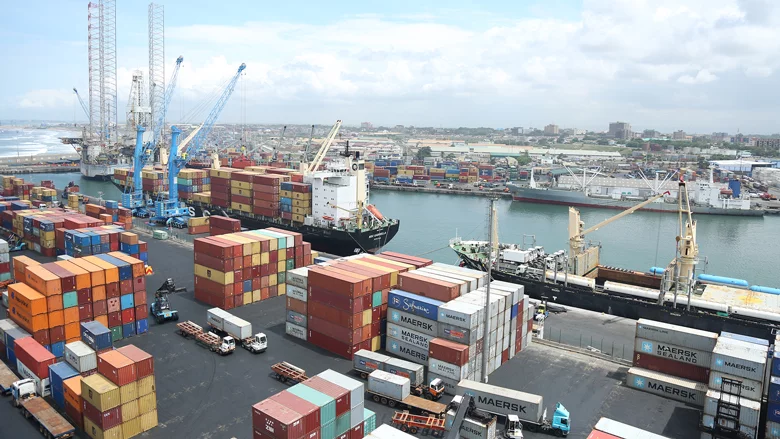

IEAG Backs GSA Directive to Cap Container Administrative Charges at GHS 550 per TEU
The Importers and Exporters Association of Ghana (IEAG) has thrown its full backing behind a directive by the Ghana Shippers’ Authority (GSA) to cap Container Administrative Charges (CAC) at the country’s ports, describing the move as a long-awaited relief for domestic traders.
In a statement issued on Tuesday, April 21, 2026, the Association characterised the intervention as “timely and long overdue,” arguing that it brings an end to decades of what it termed unjustified costs imposed by international shipping lines.
The directive places a ceiling of GHS 550 per Twenty-Foot Equivalent Unit (TEU), with implementation scheduled for May 1, 2026.
The IEAG maintained that the charges represent a duplication of costs already embedded in freight rates, insisting that port dues and terminal handling fees are typically covered within existing shipping charges.
“Ghanaian businesses have, for years, been burdened by excessive, opaque and unjustified charges imposed by international shipping lines and their local agents,” the Association stated, adding that the practice has significantly increased the cost of doing business and undermined the country’s competitiveness as a regional trade hub.
According to the IEAG, the financial burden of the charges has been substantial, with estimates indicating that Ghanaian traders paid approximately GHS 1.69 billion (about $108 million) in CAC fees in 2024 alone.
The Association further pointed to disparities within the sub-region, noting that while countries such as Togo, Benin, Côte d’Ivoire and Nigeria charge between $30 and $68 per container, Ghana’s fees have reached as high as $165 per TEU.
Providing historical context, the IEAG explained that the CAC was initially introduced in the 1980s as a temporary measure to support port operations when infrastructure was underdeveloped. However, with significant investments in the modernisation and automation of the country’s ports in recent years, the group argued that the basis for the charge no longer exists.
The Association also cautioned against any attempts by shipping lines to resist the directive, following reports of possible pushback from industry players.
“Attempts to resist or undermine this reform through threats or pressure tactics will not succeed,” the statement said, describing such actions as efforts to sustain foreign exchange outflows through the repatriation of shipping-related revenues with limited benefit to the domestic economy.
IEAG described the GSA’s decision as a “balanced intervention,” noting that while it allows room for operational considerations, it also protects consumers from rising import-related costs.
With the May 1 implementation date approaching, the Association is urging full compliance across the shipping value chain, warning that the period of unchecked administrative charges in Ghana’s port sector is coming to an end.

