


- From Fiscal Discipline to Productive Growth: The Choice Facing Ghana’s 2027 Budget
Ghana’s economic debate is shifting from whether stability can be restored to whether the method used to restore it can deliver jobs, reliable infrastructure and relief that households recognise.
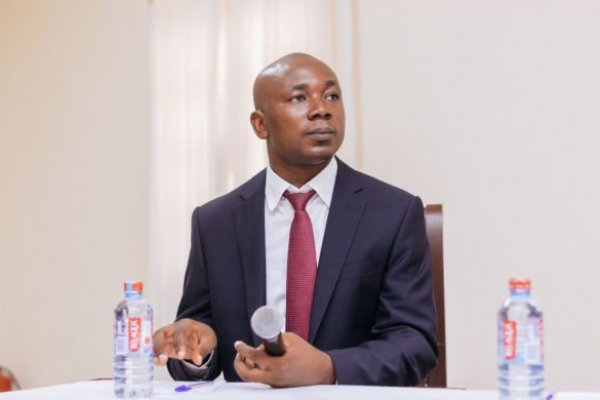
Economist Prof. Godfred Alufar Bokpin has put that tension in concrete terms: “If somebody is spending nine to 12 hours to travel from here to Kumasi, inflation of 5.2% means nothing to that person,” speaking on Joy News’ PM Express on Tuesday night,
The remark is not a rejection of lower inflation. It is a challenge to treat the national figure as a complete account of economic recovery.
There is a reason the distinction matters. Inflation measures how quickly prices are changing; it does not mean prices have returned to where they were before the crisis. A basket that cost GH¢100 a year earlier would cost GH¢105.20 at annual inflation of 5.20%.
For a household still managing that higher price level, slower inflation can feel like an easing of the pressure without a restoration of purchasing power.
And 5.20% is no longer the latest reading. Ghana’s annual inflation rate rose to 5.50% in October, its third consecutive monthly increase. Transport costs and services were prominent pressures: services inflation reached 11.50%, while the transport division recorded 14.10%.
The national rate remains far below its level a year earlier, but the recent turn shows that disinflation is not guaranteed to continue in a straight line.
The road journey Prof. Bokpin describes is therefore more than a striking anecdote. It illustrates how infrastructure affects the cost of economic activity. Time lost moving people and goods can raise transport costs, constrain business productivity and reduce the time workers have for productive or family activities.
A country may record improving macroeconomic indicators while households and firms continue to pay for weak transport links, congestion and unreliable public services.
Prof. Bokpin’s wider argument is that spending cuts have helped stabilise the economy but are also squeezing demand and postponing the benefits.
He credited the government’s progress on inflation, interest rates and currency stability, while warning that the approach could leave those gains slow to reach citizens. “If you choose that approach, you will get the result, but the impact will not be felt by Ghanaians,” he said.
This is the central policy trade-off. Fiscal restraint can help reduce borrowing needs, rebuild confidence and contain pressures on prices and the currency.
After a severe economic crisis, stabilisation is not optional: losing control of public finances can ultimately impose still greater costs on households through inflation, currency depreciation and disrupted access to credit.
But the composition and duration of consolidation matter. Cutting expenditure can reduce demand in the short term. If it also compresses investment in roads, health, education or other productive infrastructure, it may leave the economy’s capacity to produce and grow constrained.
In that case, the state would be cooling demand without doing enough to ease the supply bottlenecks that keep costs high and productivity low.
Prof. Bokpin describes this as restraining the “growth drivers of the economy” while infrastructure needs remain substantial. The implication is not that all public spending is productive, or that fiscal discipline should be abandoned.
It is that a broad spending squeeze risks treating capital investment and low-value expenditure as if they had the same economic effect.
The consequences can extend beyond the public sector. Businesses dependent on government contracts may face weaker cash flow when procurement and payments are reduced or delayed.
A shortage of public investment can also hold back private activity: firms may be less willing to expand where roads, power, skills or other essential infrastructure are inadequate.
At the same time, a weak economy can mean fewer jobs and softer household demand. Stabilisation may succeed on paper while the private sector waits for the conditions to invest and hire.
That is why the measure of success must change as the economy moves from crisis management to recovery. Inflation, debt and the exchange rate remain important, but they are intermediate indicators.
The harder tests are whether businesses can plan with confidence, whether public services improve, whether infrastructure reduces costs and whether job creation broadens household incomes.
The 2027 Budget, scheduled for Thursday, November 12, arrives at a significant moment. The government has presented its proposed New Economy programme as a shift towards investment, production and jobs.
Yet a large programme is not itself a financing plan, and the Minority has questioned how the proposed US$10 billion initiative would be funded.
The public interest lies in the detail: what will be invested, how projects will be selected, what results they are expected to deliver and how spending will be financed without rebuilding unsustainable debt.
The budget should make the transition from consolidation to growth credible. That means protecting high-impact investment, strengthening project appraisal and procurement, and publishing clear delivery targets.
It also means being explicit about which cuts remove waste and which may be weakening essential services or productive capacity. Without that distinction, “discipline” can become a label for reducing expenditure regardless of its economic value.
Prof. Bokpin’s criticism ultimately asks a question that headline statistics cannot answer: what is the purpose of stability if citizens cannot experience its benefits? A return to inflation, currency or debt instability would threaten the gains already made.
But stability that does not lead to better infrastructure, jobs and business conditions risks remaining fragile in another way: politically difficult to sustain and economically insufficient to transform lives.
Ghana’s next phase will require more than spending less. It will require spending better, raising revenue sustainably and making every major investment accountable for results.
The 2027 Budget will show whether the government can preserve the gains of stabilisation while beginning to address the conditions that make those gains meaningful in everyday life.

