

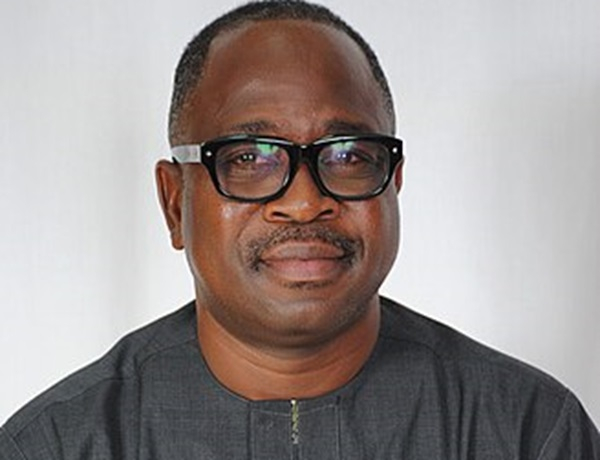

- Minister Seidu Demands Fair Climate-Finance Access as Ghana Positions Itself to Lead Lifeline Fund
Ghana has called for countries undergoing debt restructuring to remain eligible for emergency climate financing, arguing that governments taking difficult measures to restore fiscal stability should not be denied support when floods, droughts and other climate shocks strike.
Mr Issifu Seidu, Minister of State in charge of Climate Change and Sustainability speaking in an interview at the sidelines of the ongoing Annual Meetings of the IMF/World in Bangkok, Thialand, said Ghana made the case during a ministerial dialogue on a proposed Lifeline Fund intended to provide countries with rapid access to resources following climate-related disasters.
The initiative, credited to Barbados and the OPEC Fund, is expected to begin with seed capital of about US$500 million before being expanded through contributions from strategic investors and development partners.
Mr Seidu said climate shocks frequently reverse years of development and force governments to redirect already scarce resources towards emergency interventions. The proposed facility is therefore intended to reduce the delay between a disaster and the release of funding needed to protect affected households, restore livelihoods and rebuild infrastructure.
“Anytime we have climate shocks, it reverses our development process,” he said. “Governments have to look for very scarce resources to be able to intervene.”
His argument raises a significant weakness in the international financial architecture. Countries facing debt distress are often excluded from new financing precisely when their capacity to absorb another shock is weakest. Climate disasters can then deepen fiscal pressures, worsen borrowing conditions and undermine the adjustment programmes they are implementing.
Mr Seidu said countries making difficult debt-restructuring decisions should not be excluded from climate-finance opportunities. Ghana, which has recently navigated its own debt restructuring, brings direct experience to that debate.
The Minister’s position is that climate vulnerability should be assessed separately from a country’s immediate access to conventional borrowing. Emergency climate support, particularly where it is concessional or grant-based, can protect the economic recovery on which debt sustainability ultimately depends.
Ghana is expected to demonstrate leadership by making an initial contribution to the proposed fund. Mr Seidu said such participation would signal commitment and help attract partners willing to share in the success of vulnerable countries and communities.
The larger policy question will be how the facility is designed. Its credibility will depend on whether funding can be accessed quickly, whether debt-distressed countries are genuinely included and whether contributions are structured to avoid creating another layer of unsustainable liabilities.
It will also require clear rules for identifying climate emergencies and monitoring how resources are used. Rapid access should not mean weak accountability; delays caused by excessive bureaucracy, however, could defeat the purpose of an emergency facility.
Beyond international financing, Mr Seidu said Ghana was working to embed climate responsibility throughout government. The administration is advocating climate and sustainability desks in every ministry, with his office coordinating sector-level initiatives into a national policy and action framework.
The model recognises that climate change cannot be managed by an environment ministry alone. Agriculture, energy, transport, housing, finance and local government all make decisions that influence emissions, adaptation and community resilience.
The government is considering extending the structure to district assemblies, allowing climate education, mobilisation and adaptation programmes to begin at community level.
“Climate change is a reality,” Mr Seidu said. “You cannot remove it; you can only contain it, manage it and get people to know that their behaviours must change.”
A district-based approach could make national climate commitments more relevant to households. Communities experience climate change through failed harvests, coastal erosion, flooding, water insecurity and excessive heat, rather than through the technical language of international agreements.
Local implementation, however, will require funding, trained personnel and measurable responsibilities. Creating desks without budgets or authority would risk adding another administrative layer without changing outcomes.
Mr Seidu also linked environmental responsibility to productive activity, including mining and manufacturing. Ghana’s struggle with illegal mining demonstrates how economic activity can destroy water bodies, land and livelihoods when regulation and enforcement fail.
On disaster response, the Minister said his office had activated a climate-emergency mobilisation programme following recent flooding. About US$1 million worth of relief items had been secured from the United Arab Emirates and distributed, while further support was expected from the Red Cross and the American and German embassies.
The effort shows Ghana’s ability to attract international support, but it also underlines the need for predictable financing. Emergency appeals can produce valuable relief, yet they cannot replace a permanent system that releases resources before temporary displacement becomes prolonged poverty.
The test is now implementation. Ghana’s advocacy for fairer climate financing is strengthened when its domestic policies produce visible results: protected rivers, resilient infrastructure, climate-conscious public investment and communities prepared for disasters.
The proposed Lifeline Fund offers Ghana an opportunity to help reshape climate finance around speed, fairness and vulnerability. If debt-distressed countries are included and financing reaches communities without creating fresh debt problems, the initiative could prevent climate shocks from repeatedly erasing hard-won development gains.

