


- Football Leads 2026’s Most Instagrammable Sports Events, Foresight Sports Study Finds
The 2026 FIFA World Cup generated more social media engagement than any other major sporting event during the first seven months of the year, attracting 20.50 million Instagram posts, 11.30 million TikTok videos and an estimated 4.40 billion online searches.
Research by golf simulator company Foresight Sports ranked major sporting events held between January and July 2026 according to Instagram hashtag activity, while also assessing search interest and TikTok content.
The findings placed the World Cup far ahead of the NBA Finals, UEFA Champions League, Formula One Grand Prix and Wimbledon Championships, underscoring football’s unrivalled ability to combine live sport, national identity and digital participation.
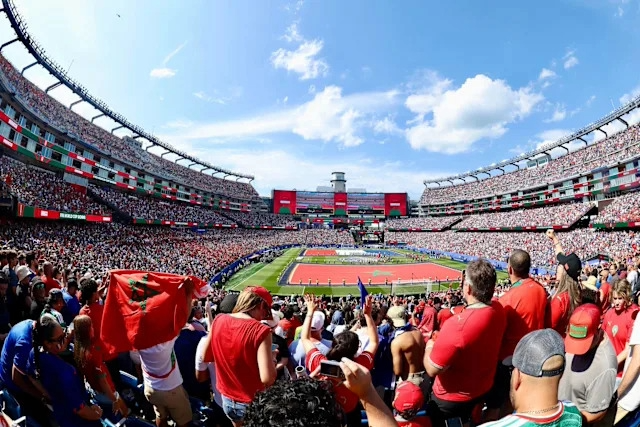
Hosted across North America and expanded to 48 teams, the tournament generated content ranging from match highlights and late goals to supporter celebrations, stadium atmospheres and national-team campaigns.
Its 20.50 million Instagram posts were more than seven times the 2.90 million recorded for the second-ranked NBA Finals.
The World Cup also generated approximately 13 times as many TikTok posts as the NBA Finals, demonstrating the scale of the competition’s reach beyond conventional television audiences.
The NBA Finals ranked second, with an estimated 99.10 million searches, 853,500 TikTok videos and 2.90 million Instagram posts.
For two weeks in June, supporters used social media to share match highlights, game-winning moments, celebrity appearances and behind-the-scenes content from the championship series.
The UEFA Champions League placed third with 2.70 million Instagram posts, 979,200 TikTok videos and 716.00 million searches.
The competition’s digital impact was driven by the buildup to the final in Budapest, fan activity around the stadium and celebrations following Paris Saint-Germain’s victory.
Formula One Grand Prix events ranked fourth, attracting 2.40 million Instagram posts and 298,600 TikTok videos.
Foresight Sports attributed Formula One’s strong social media performance partly to the success of Netflix’s Drive to Survive, which expanded the sport’s audience beyond traditional racing supporters to viewers interested in drivers, personalities, fashion and the wider lifestyle surrounding the championship.
The Monaco Grand Prix remains particularly suited to visual platforms because of its combination of motorsport, luxury, celebrities and distinctive city-centre setting.
Wimbledon placed fifth, recording 2.40 million Instagram posts, 178,800 TikTok videos and 41.90 million searches.
The tournament’s grass courts, traditional dress code and global audience make it one of the most visually recognisable events in international sport.
The US Open golf championship followed with 1.70 million Instagram posts, ahead of the FA Cup Final, which attracted 1.20 million.
The Australian Open generated 711,000 Instagram posts despite recording a comparatively high 842.50 million searches, suggesting that search activity does not always translate directly into visual social media content.
The Masters recorded 499,000 Instagram posts, while the Milano Cortina Winter Olympics completed the top 10 with 495,000.
The rankings show that football accounted for four of the 10 most Instagrammable sporting events: the World Cup, Champions League, FA Cup Final and, indirectly, the broader football-driven social media ecosystem surrounding international tournaments.
They also highlight how major sporting events now operate as digital media products as much as physical competitions.
Online engagement expands sponsorship exposure, strengthens athlete and team brands and gives organisers access to global audiences that may never attend events in person.
For broadcasters and advertisers, millions of user-generated posts create an additional distribution network for sports content, although much of that activity occurs outside traditional media rights structures.
“The World Cup is something else,” a Foresight Sports spokesperson said. “It’s the one event where people who don’t watch football all year suddenly have a flag on their face and a result to care about.”
The study suggests that the most successful sporting events are those that combine competitive drama with strong visual identities, national or cultural affiliation and personalities capable of sustaining discussion beyond the field of play.
By those measures, the World Cup remains in a category of its own, converting six weeks of football into one of the largest global social media events of 2026.

