

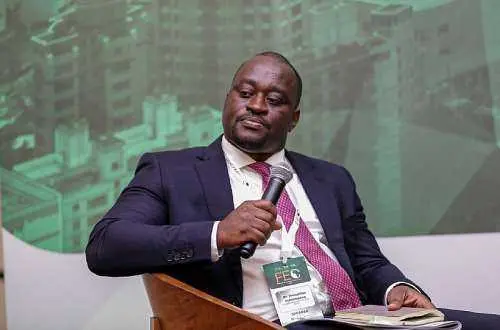

Ghana’s Macroeconomic Recovery Outpacing Historical Trends, Says Dr Theo Acheampong
Technical Advisor at the Ministry of Finance, Theo Acheampong, has indicated that Ghana’s recent macroeconomic recovery is occurring at a pace faster than typically observed following periods of economic distress.
Speaking on Ghana’s Economic Outlook on Channel One TV on Monday, April 27, under the theme “Taking Stock – Ghana’s Economic Turnaround: What Changed & What Comes Next?”, he noted that the speed of improvement in key economic indicators is notable given the scale of recent policy adjustments.
According to him, major economic reforms usually take between three to five years to yield visible outcomes, particularly after episodes of macroeconomic instability. However, Ghana has begun to record improvements within roughly 18 months.
“The pace of change that has happened is not something you typically see within just one economic cycle. After the painful adjustments we’ve gone through as a country over the last two to three years, you would expect to begin seeing improvements within three to five years. But we have achieved this within about a year and a half,” he stated.
Dr Acheampong pointed to significant improvements in the country’s external position, noting that current account balances have exceeded earlier baseline projections by a wide margin.
“For the first time, you look at the current account balances and they have gone up several times beyond what the baseline was,” he said.
He further highlighted developments in the foreign exchange market, citing a period of sustained appreciation of the Ghana cedi—an occurrence he described as rare over the past three decades.
“When you look at exchange rate trends over the past 20 to 30 years, it has often been negative. But for the first time in over three decades, we are seeing sustained appreciation of the cedi,” he noted.
Touching on broader macroeconomic stability, he observed that despite global uncertainties, including geopolitical tensions in the Middle East, Ghana has not experienced panic buying or fuel shortages—an outcome he attributed to improved exchange rate stability.
“Even with the pressures we’ve seen globally, people are not queuing at fuel stations looking to buy petrol. That stability is very important,” he explained.
Dr Acheampong emphasised that while macroeconomic indicators are improving, the ultimate test of the recovery lies in its impact on households and businesses.
“For the ordinary Ghanaian, whether it is my grandmother in the village or traders in the market, three things matter: interest rates, inflation, and confidence. People want to know that if they borrow money, they will get returns,” he said.
He added that sustaining confidence in the economy will be critical to consolidating the gains achieved and supporting long-term economic resilience.

