


- Ghana Looks to Malaysia as Non-Interest Finance Push Moves From Policy to Market
Ghana’s effort to build a fully functioning non-interest finance ecosystem is gaining momentum as regulators and financial sector professionals look to Malaysia’s four-decade success story for practical lessons in banking, insurance and capital market development.
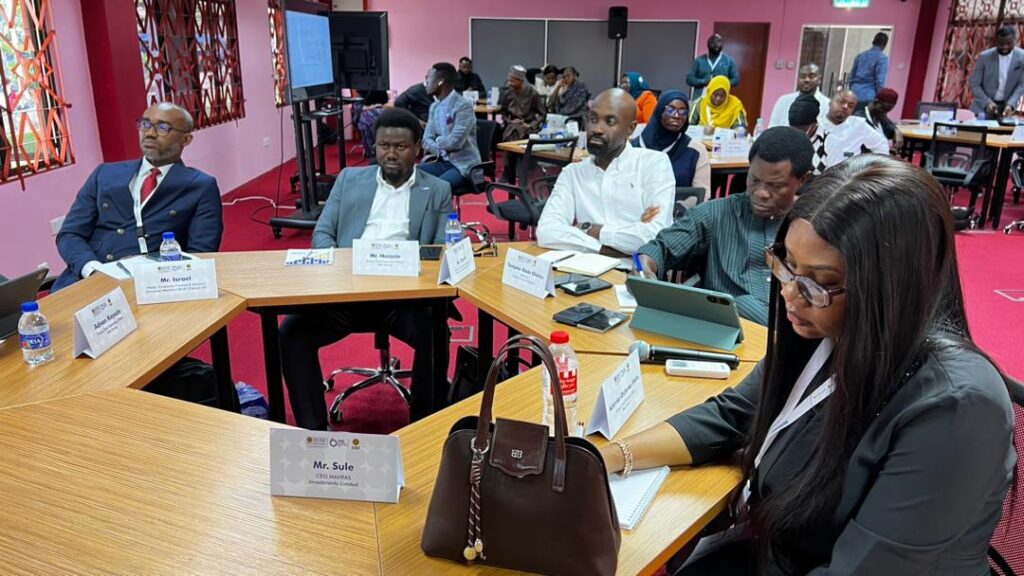
A Ghanaian delegation is currently participating in an intensive training programme at the International Islamic University Malaysia, organised by the Islamic Finance Research Institute of Ghana, as the country prepares to deepen implementation of new non-interest finance guidelines across the banking, insurance and capital market sectors. The study tour comes at a critical point in Ghana’s financial sector reform agenda.
For years, non-interest finance has been discussed largely as a niche idea linked to Islamic banking. But the Malaysian experience shows that, with the right legal framework, regulation, governance and market depth, it can become a major pillar of national finance.
Malaysia operates one of the world’s most successful dual-banking systems, where conventional and non-interest financial institutions coexist. Its ecosystem includes Islamic banks, sukuk markets, takaful insurance, centralised Shariah advisory structures, specialised academic institutions and deep capital markets.
Ghanaian regulators are now studying that model as they seek to build a framework that is credible, inclusive and commercially viable.
At the heart of the Ghanaian interest is a simple question: can non-interest finance broaden access to capital, attract new pools of investment and create alternative instruments for funding national development? The Securities and Exchange Commission believes the answer could be yes.
Director-General of the SEC, Dr James Klutse Avedzi, said Malaysia’s experience offers Ghana practical lessons in how non-interest financial instruments can help mobilise long-term capital for development projects.
“What we have learnt during this session will help in the development of various sectors. Malaysia has success stories, and by studying them, we can avoid certain challenges and improve our financial system, including helping the government raise capital for development projects,” he said.
That point is important because Ghana’s infrastructure financing needs remain large, while fiscal space remains constrained.
Traditional public borrowing has become more difficult following years of debt pressure and fiscal consolidation. Banks also remain cautious in long-term lending, while the domestic capital market is still developing depth across instruments. Non-interest finance could provide an additional channel.
The sukuk market, in particular, offers a model for asset-backed or asset-based financing tied to real economic activity. In Malaysia, sukuk has been used to finance highways, airports, energy projects, housing and other major infrastructure.
For Ghana, a well-regulated sukuk market could help finance roads, hospitals, schools, energy infrastructure, affordable housing and other strategic projects without relying exclusively on conventional debt instruments.
But the Malaysian lesson is not only about products. It is about institutions.
Professor Dr Nurdianawati Irwani Abdullah of the Kulliyyah of Economics and Management Sciences at IIUM told participants that regulation is central to the success of non-interest finance, but regulation alone is not enough.
“Proper financial regulation is definitely a key to the success of the sector, but it is not only the regulator’s job. It is a collective effort involving government, industry players and consumers,” she said.
Non-interest finance cannot be built by the Bank of Ghana, SEC or National Insurance Commission alone. It will require coordinated action across government, Parliament, regulators, financial institutions, investors, professional bodies, faith communities, businesses and consumers.
One of the risks facing Ghana is that non-interest finance may be wrongly perceived as a religious product rather than an ethical finance model based on risk-sharing, asset backing, transparency and real economic activity.
If the market is poorly explained, adoption may be slow. If it is over-politicised or mischaracterised, it may fail to reach the wider population that could benefit from it.
The country built public confidence through legal certainty, strong Shariah governance, credible supervision and a clear distinction between conventional and non-interest financial products.
The Bank of Ghana must ensure that non-interest banking institutions are properly licensed, capitalised and supervised. The SEC must provide clear rules for sukuk issuance, Shariah-compliant funds and non-interest investment products. The National Insurance Commission must develop a credible takaful insurance framework that protects policyholders and builds confidence.
For the insurance sector, the Malaysia study mission is particularly important.
Mohammed Hafiz Issahaku, Head of Prudential Supervision at Ghana’s National Insurance Commission, described the training as an eye-opener.
“This trip has been an eye-opener. The robust regulatory framework that Malaysia has is very impressive. Going back home, this is definitely going to help us a lot in rolling out our non-interest finance system,” he said.
Takaful insurance could widen insurance participation in Ghana by offering risk-sharing products that appeal to consumers who may be uncomfortable with conventional insurance structures.
This could be important in a country where insurance penetration remains low and many households and small businesses remain exposed to financial shocks.
Non-interest finance could also support financial inclusion.
By offering banking, investment and insurance products structured around ethical and risk-sharing principles, Ghana could reach communities and businesses currently underserved by conventional financial institutions.
Small businesses, farmers, traders and informal-sector operators could benefit if the model is adapted to local realities rather than copied mechanically from Malaysia or the Gulf.
Ghana must learn from Malaysia, but it cannot simply import Malaysia’s model wholesale.
Malaysia’s ecosystem was built over decades through sustained policy commitment, institutional investment and market education. Ghana must therefore develop a phased approach that reflects its legal system, financial market depth, investor base, regulatory capacity and development priorities.
The immediate priority should be getting the foundations right.
This includes a clear legal and regulatory framework, strong governance standards, trained supervisors, credible Shariah advisory structures, dispute resolution mechanisms and investor protection rules.
Without these safeguards, non-interest finance could become another underdeveloped reform idea that attracts attention but fails to scale.
A credible non-interest finance ecosystem could attract investment from the Gulf, Southeast Asia and other markets where Islamic finance has deep institutional support. It could diversify Ghana’s capital market, expand long-term financing options and create new products for pension funds, insurers, banks and retail investors.
It could also give government another route for financing infrastructure while linking investment more directly to identifiable assets and projects.
The Ghanaian delegation’s exposure to Malaysia’s regulatory agencies and financial institutions is therefore timely.
Beyond classroom sessions, participants are expected to gain practical insight into licensing procedures, supervision frameworks, consumer protection mechanisms and dispute resolution systems.
These are the details that will determine whether Ghana’s framework succeeds.
A market is not built by announcing guidelines. It is built by credible rules, capable institutions, trusted products and informed consumers.
Non-interest finance can help deepen financial inclusion, expand infrastructure financing, attract new investment and diversify the financial system. But it must be implemented carefully, transparently and with strong coordination among regulators. Malaysia’s success offers inspiration, but also a caution.
The model works when regulation is strong, governance is credible, markets are deep and public confidence is earned. Ghana is only at the beginning of that journey.
The next step is to ensure that the lessons from Kuala Lumpur are translated into a practical national roadmap that moves non-interest finance from policy ambition to real market activity.
If that happens, Ghana could build a more inclusive, ethical and diversified financial system capable of supporting sustainable growth.
If it does not, the country may miss another opportunity to broaden its financial architecture at a time when alternative sources of long-term capital are urgently needed.

