

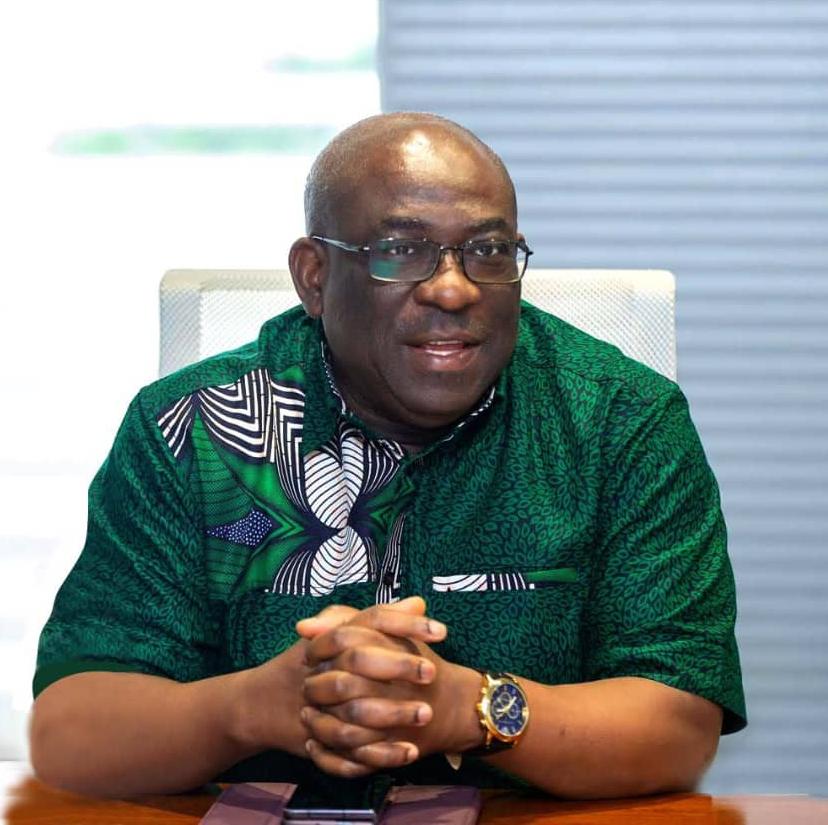

- Fiscal Discipline Is Strengthening Ghana’s Banking Sector and Economy, Says ADB MD
Ghana’s renewed fiscal discipline is beginning to strengthen both the banking sector and the wider economy, according to Edward Ato Sarpong, Managing Director of Agricultural Development Bank, who says tighter public finance management is helping restore confidence and improve the environment for private sector growth.
Speaking at the launch of the 2025 Non-Traditional Export Statistics Report, Mr Sarpong said Ghana’s recent efforts at fiscal consolidation are now producing visible gains in financial stability and broader economic performance.
“Ghana’s recent fiscal consolidation efforts, characterised by expenditure rationalisation, improved revenue mobilisation, and strengthened public financial management, have significantly contributed to stabilising the financial system,” he said.
He added that these measures “have helped restore confidence in the banking sector, enhance liquidity conditions, and improve the resilience of financial institutions”.
His remarks suggest that the benefits of fiscal discipline no longer frame themselves only in terms of budget control or IMF programme compliance. They are now being presented as part of a wider recovery story in which macroeconomic stability is feeding directly into stronger banking conditions and better support for business activity.
The MD of ADB said the impact goes beyond the financial system itself. By reducing macroeconomic imbalances, he argued, government policy is helping to create a more predictable environment for businesses, which in turn supports investment and private sector expansion.
He pointed in particular to the performance of the non-traditional export sector, which he said continues to grow and diversify Ghana’s economic base.
The 2025 Non-Traditional Export Statistics Report was launched by the Ghana Export Promotion Authority under the theme “Driving Economic Transformation Through Strategic Export Diversification”, bringing together policymakers and industry players to assess how exports can support a broader economic shift.
Mr Sarpong said the expansion of non-traditional exports, including processed agricultural products, manufactured goods and services, shows that Ghana is making progress in reducing its reliance on traditional export pillars such as cocoa and gold.
He also linked his argument to broader messages from the event. According to him, insights from the report and solidarity messages reinforced the view that the non-traditional export sector is becoming more important not only for earnings growth but also for macroeconomic stability, noting that the Governor of the Bank of Ghana had highlighted the NTE sector as a major contributor to export earnings and macroeconomic stability, particularly through its support for exchange rate stability and inflation control.
For Mr Sarpong, the significance of that trend is clear: a more diversified export base gives the economy greater resilience, while stronger fiscal management gives businesses and banks a more stable environment in which to operate. He commended GEPA and its partners for using the improved macroeconomic setting to push export-led growth and said the country must now work to preserve those gains. In his view, will require sustained discipline rather than short-term relief. He urged continued efforts to strengthen financial sector oversight, expand access to credit, and support small and medium-sized enterprises, which he described as central to export growth.
Mr. Sarpong also reiterated ADB’s own role in that process, saying the bank remains committed to supporting Ghana through targeted financing for infrastructure, industrialisation, and trade across regional and global markets. His broader point was that Ghana’s recent experience offers a lesson in how sound fiscal policy can support recovery.
He said the country’s progress shows how prudent management of public finances can help underpin economic stabilisation, restore financial confidence, and build a stronger base for long-term growth.

