

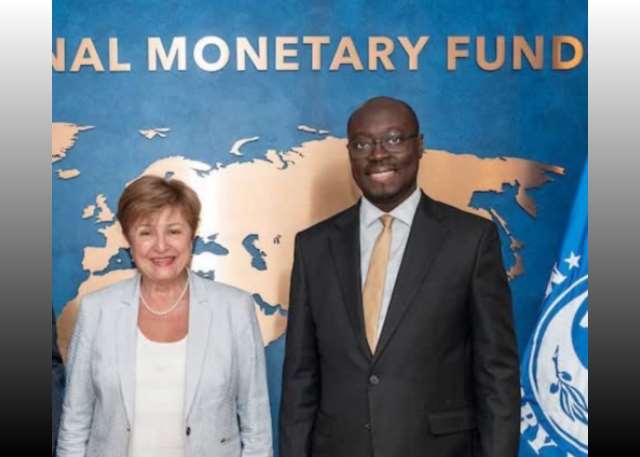

- IMF Endorses 2027 Budget Target as External Risks Persist
Ghana and the International Monetary Fund have reached a staff-level agreement on the first review of the country’s 36-month Policy Coordination Instrument, but the Fund’s assessment sets out a tension at the heart of the recovery: growth is strong and inflation is low, yet foreign exchange reserves have fallen and external vulnerabilities remain.
The agreement follows IMF staff discussions in Accra from October 22 to November 4. It is subject to approval by IMF Management and the Executive Board, so it is not yet a final Board decision. The PCI is non-financing; it supports Ghana’s reform programme but does not provide the country with a new loan disbursement.
“Macroeconomic stability is becoming entrenched,” IMF mission chief Ruben Atoyan said, pointing to growth, inflation and fiscal performance.
Real gross domestic product expanded by 6.20% year on year in the first half of 2026, while the Fund projects full-year growth of 5.70%. Inflation was 5.50% in October, below the Bank of Ghana’s 6.00% to 10.00% target band. The primary surplus is on track to meet the year-end programme target, and public debt has fallen sharply in recent years.
Those indicators suggest the economy has room to withstand some external pressure. But the IMF’s report also makes clear that stability cannot be judged by growth and inflation alone.
The decline in reserves has prompted the authorities to change the way foreign exchange is channelled into the market and to require large-scale miners to sell more gold. The Fund did not state the size of the reserve decline or specify the new gold-sale requirement in the release.
The authorities have moved foreign-exchange intermediation from the Bank of Ghana to GoldBod. The IMF says the change, the higher gold-sale requirement and greater exchange-rate flexibility must be implemented steadily if reserves are to recover in line with programme objectives.
The measures shift institutional responsibilities, but the release does not set out how quickly reserves are expected to rebuild or how the authorities will report the results.
That is a key test for the PCI. Because the instrument is non-financing, Ghana’s external buffer must be rebuilt through its own foreign-exchange flows and policy choices. It must also balance two needs: supplying foreign exchange to the market and preserving enough of it to strengthen reserves.
Transparent reporting on the flows and outcomes will be necessary to show whether the new arrangements are working.
The IMF says performance under the first review has been “broadly satisfactory”, with most quantitative targets met and structural reforms progressing. Its support for the programme, however, comes with a strong emphasis on sustaining the reforms and addressing risks before they undermine the gains.
The 2027 Budget is expected to target a primary surplus of 0.50% of GDP on a commitment basis. The IMF says the target is consistent with the PCI and will be supported by revenue measures approved by Parliament in July.
The government plans to use the fiscal space created for investment in job creation and infrastructure under the New Economy agenda.
This sets up a difficult policy balance. Ghana is seeking to maintain fiscal discipline while increasing investment to address infrastructure gaps and support employment.
The Fund says rigorous project appraisal, competitive procurement and strict expenditure controls will be essential to ensure value for money and preserve debt sustainability.
In practical terms, the quality of spending will matter as much as the surplus target: poorly selected or delayed projects could weaken the economic return on limited fiscal space.
The IMF expects non-oil revenue to rise further in 2027, supported by the July tax measures, changes to customs and excise legislation and revenue-administration reforms.
The authorities have completed a comprehensive review of customs and excise legislation ahead of schedule. Work is continuing on the Integrated Tax Administration System and electronic fiscal devices, both intended to strengthen revenue collection.
Other reforms include publication of the Fiscal Strategy Document, parliamentary approval of a new Cocoa Board Act and continued quarterly electricity tariff adjustments.
The IMF says work is also under way to reform the Bank of Ghana’s liquidity-management framework, operationalise the Fiscal Council and prepare a Fiscal Risk Statement.
The release identifies one significant outstanding issue: the delayed publication of the audit of the Electricity Company of Ghana’s collection accounts. The IMF says completing this and other remaining reforms on time will be important.
The audit’s publication could help clarify the financial position of a major energy-sector institution, an area where the Fund says fiscal pressures persist.
Those domestic risks include significant refinancing needs for government debt, pressures in the energy, cocoa and gold sectors, and weaknesses in parts of the financial system. Externally, Ghana remains exposed to volatility in gold, cocoa and oil prices, geopolitical tensions and tighter global financial conditions.
“Despite this progress, vulnerabilities persist, particularly from the external sector,” Atoyan said.
The IMF also says prudent monetary policy, a more flexible exchange rate and stronger reserves remain central to safeguarding stability. It has called for a sinking fund to help meet maturing debt payments.
This reflects a concern that debt refinancing needs could become more difficult if financial conditions tighten or market confidence weakens.
Governance remains another part of the programme. The Fund says passing the Conduct of Public Officers Bill, publishing the second National Ethics and Anti-Corruption Action Plan and improving oversight of state-owned enterprises would help build public trust and support private investment.
These reforms are intended to strengthen the institutional framework around public resources and reduce governance risks.
The first PCI review therefore offers Ghana an endorsement of its recent macroeconomic progress, but not a declaration that the recovery is secure. Strong growth and low inflation have improved the outlook, while the reserve decline and fiscal pressures expose areas where the gains remain vulnerable.
The next phase will depend on whether the government can rebuild reserves without disrupting market access to foreign exchange, meet its fiscal targets while investing effectively, and complete reforms that improve revenue collection and public accountability. The staff-level agreement is an important programme milestone. Its lasting value will be measured by the Board’s eventual decision and by whether the policies behind it produce stronger buffers and durable, broadly shared growth.

