

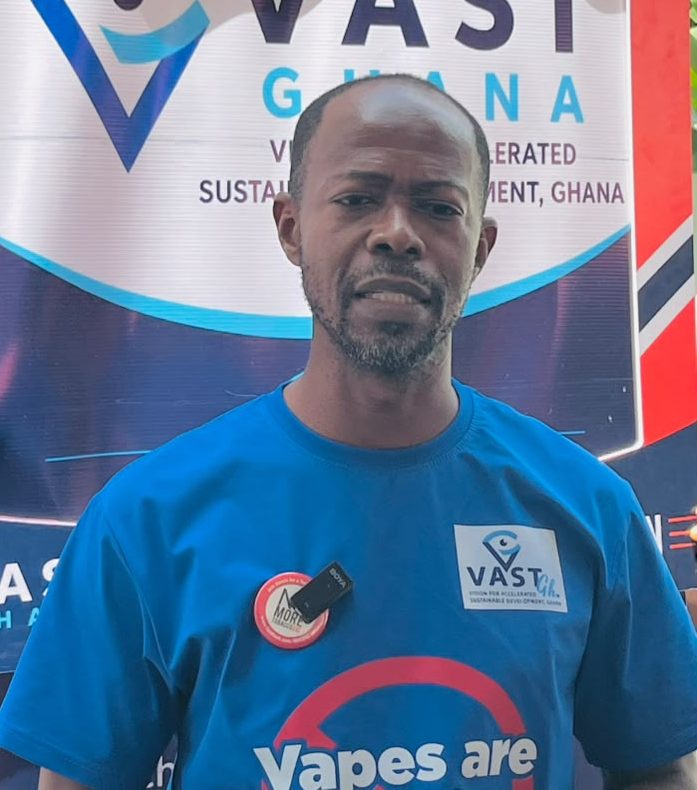

- Tobacco companies must pay for disease and pollution they cause — Labram Musah
African governments must move beyond conventional tobacco control measures and begin imposing legal and financial liability on tobacco companies for the health, social and environmental harm caused by their products, Executive Director of Vision for Accelerated Sustainable Development Ghana, Labram Musah, has said.
Speaking during a media engagement in Accra to commemorate the global “Make Big Tobacco Pay” week of action, Mr Musah said the tobacco industry continues to generate profits while governments, communities and public health systems absorb the heavy cost of tobacco-related diseases and environmental damage.
According to him, the campaign is aimed at ensuring that tobacco companies are held accountable for the full social, environmental and economic costs associated with tobacco production and consumption.
“Today, we engaged the media to deepen public understanding that the tobacco industry is not only harming public health through its products, but is also causing serious environmental damage,” he stated.
Mr Musah said the campaign aligns with decisions adopted during the 11th Session of the Conference of the Parties to the WHO Framework Convention on Tobacco Control, held in Geneva last year.
He explained that one of the key outcomes of the conference was the adoption of “forward-looking measures” intended to encourage countries to introduce stricter and more innovative tobacco control policies beyond existing regulatory frameworks.
A major component of those measures, he said, is Article 19 of the WHO Framework Convention on Tobacco Control, which focuses on liability and accountability for harm caused by tobacco products.
“Article 19 is about ensuring that the industry is held accountable for the harm they cause. This includes both criminal and civil liability,” he said.
Mr Musah argued that governments must explore legal and administrative mechanisms that allow victims of tobacco-related illnesses to seek compensation from tobacco companies.
He said the public health burden associated with tobacco use includes chronic diseases such as cancer, diabetes and other long-term conditions that impose significant costs on individuals, families and national health systems.
“We must begin to ask how people who develop chronic conditions from tobacco products can be properly compensated,” he stressed.
Beyond the health impact, Mr Musah also raised concern over the environmental damage caused by tobacco waste, particularly cigarette butts discarded into drains, water bodies and public spaces.
He said such waste contributes to pollution, damages ecosystems and adds to the cost of environmental clean-up, which is often borne by local authorities and communities rather than the companies whose products generate the waste.
“The environmental pollution created by tobacco products must also be addressed, and the industry should be made responsible for cleaning up the harm they create,” he added.
Mr Musah called on the Government of Ghana and other African governments to fully implement the resolutions adopted in Geneva and strengthen enforcement mechanisms aimed at reducing tobacco-related harm.
He said tobacco control should no longer be treated only as a matter of public education, taxation or warning labels, but as a broader accountability question involving health costs, environmental liability and corporate responsibility.
According to him, tobacco products provide no public benefit and continue to impose avoidable hardship on households, health systems and national economies.
“The only thing tobacco does is destroy, kill and maim,” he said.
Mr Musah maintained that stronger accountability frameworks would help reduce the growing burden tobacco places on African economies, while also discouraging harmful industry practices and strengthening public health protection.
The “Make Big Tobacco Pay” campaign forms part of a wider global push by public health advocates and civil society organisations to ensure that tobacco companies bear the cost of the damage caused by their products, rather than shifting that burden onto taxpayers and vulnerable communities.
For Ghana, advocates say the campaign presents an opportunity to strengthen domestic tobacco control enforcement, explore liability mechanisms under Article 19 of the WHO Framework Convention on Tobacco Control, and protect public policy from tobacco industry influence.
Mr Musah said the next stage of tobacco control in Africa must focus not only on preventing new users, but also on making the industry financially accountable for the harm already caused.

