


- Africa’s US$205bn Crypto Flows Push Regulators from Debate to Rule-Making — SEC
Sub-Saharan Africa received more than US$205bn in on-chain virtual-asset value over the past year, forcing regulators to move beyond debating whether cryptocurrencies will gain acceptance and confront the more difficult question of how the market should be governed, Ghana’s securities regulator has said.
Dr James Klutse Avedzi, Director-General of the Securities and Exchange Commission, said the value represented annual growth of 52%, demonstrating that digital assets had already become part of Africa’s financial architecture before many governments completed their regulatory responses.
Nigeria accounted for approximately US$92bn of the regional total, while Ghana ranked among sub-Saharan Africa’s five largest virtual-asset markets.
Industry estimates cited by Dr Avedzi valued crypto transactions in Ghana at about US$10bn by the end of 2025, compared with roughly US$6bn a year earlier.
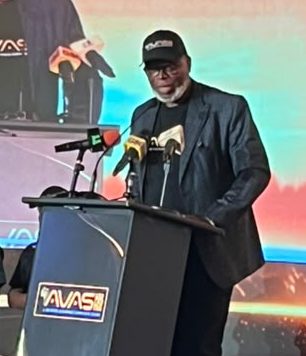
“That is not a forecast. It already happened, while many of us here were still asking whether it would,” he said at the launch of the Africa Virtual Assets Summit 2026.
“The question is no longer whether Africa will take part in the tokenisation of global finance. Our citizens settled that already.”
The US$205bn figure does not describe the market capitalisation of African crypto assets. It represents the value received through on-chain transactions and should therefore be understood as a measure of financial activity rather than wealth held in cryptocurrencies.
Even with that distinction, the scale of the flows is significant. It indicates that virtual assets have moved beyond a specialist investment product and are increasingly being used for payments, cross-border transfers, savings and access to dollar-linked instruments.
For regulators, the uncomfortable reality is that adoption did not wait for legislation.
Ghana’s passage of the Virtual Asset Service Providers Act, 2025 Act 1154 marked a transition from regulatory caution towards formal supervision.
The law makes the SEC a co-regulator of the sector, with responsibility for specified investment-related virtual-asset activities. The Bank of Ghana and SEC will share oversight under an activity-based regulatory structure.
Operational guidelines are still being developed, with the Bank of Ghana indicating that full implementation is expected by 2027.
Dr Avedzi stressed that creating a regulatory framework should not be interpreted as government approval of cryptocurrency speculation.
“Ghana’s Virtual Asset Service Providers Act, Act 1154, is not an endorsement of crypto,” he said. “It is a parameter that specifies who may operate, under what licence and under whose supervision.”
The distinction matters. Regulation does not remove the risk of volatile prices, fraud, platform failure or the loss of digital assets. It establishes rules for the businesses providing services and clarifies which institutions are responsible for supervising them.
Without such rules, consumers may mistakenly assume that every platform operating online is legitimate, while regulators struggle to identify the entities responsible when funds are lost.
Ghana’s regulatory challenge is therefore not to make crypto risk-free an impossible objective but to make the market more transparent, accountable and difficult for fraudulent operators to exploit.
The SEC is using a 12-month regulatory sandbox to assess virtual-asset business models before firms move towards formal activity-based licensing.
The sandbox allows regulators to examine how products work, how clients’ assets are held, how transactions are monitored and whether operators have adequate governance and risk controls.
It also gives companies an opportunity to test their models under supervision before being permitted to serve the wider market.
But sandboxes can become regulatory waiting rooms if they do not lead to clear licensing decisions. Ghana will have to establish measurable standards for admitting firms, assessing their performance and determining whether they should be licensed, modified or rejected.
The SEC says investor protection, market integrity and anti-money-laundering safeguards have been incorporated into the framework.
Dr Avedzi described the Commission’s guiding principle as “same activity, same risk, same regulation”.
That approach implies that a financial service should face comparable oversight regardless of whether it is delivered through a bank, securities firm or blockchain platform.
A token that functions like an investment product should not escape securities regulation merely because it is issued digitally. Similarly, a platform transferring or holding value should not avoid obligations applied to other payment or custodial institutions simply because it calls itself decentralised.
Dr Avedzi compared the growth of virtual assets with Africa’s mobile-money revolution.
Sub-Saharan Africa now has more than 1.1bn registered mobile-money accounts, according to figures he cited. Consumers adopted the technology because it addressed practical problems, including limited access to banks and the difficulty of transferring money.
“We did not adopt it because regulators declared themselves ready,” he said. “We adopted it because it worked, and regulation ran to catch up.”
“Virtual assets are following the same script. The lesson is not comfort. The lesson is to move earlier.”
The comparison is instructive but not exact.
Mobile money is generally denominated in national currencies and operates through identifiable companies within domestic regulatory structures. Virtual assets can move across borders almost instantly, use pseudonymous digital addresses and operate through platforms based outside Ghana.
That makes enforcement, taxation, asset recovery and consumer redress considerably more complicated.
Ghana cannot regulate a borderless market entirely through domestic legislation. It will require co-operation with other regulators, exchanges, banks, telecommunications companies and law-enforcement agencies.
Stablecoins account for 43% of Africa’s on-chain virtual-asset volume, according to Dr Avedzi.
Their growing use reflects more than enthusiasm for financial technology. It also reveals persistent weaknesses in traditional African financial systems.
Dollar-linked stablecoins can provide users with a means of preserving value when domestic currencies depreciate. They may also make some international transactions faster and less expensive than conventional banking channels.
But widespread reliance on stablecoins could have consequences for monetary sovereignty.
If households and businesses increasingly save, price goods or settle transactions through privately issued dollar-linked tokens, central banks could find it more difficult to influence domestic liquidity and demand for national currencies.
Stablecoin growth may therefore be both an innovation story and a warning. It suggests that consumers are looking for solutions to exchange-rate instability, expensive remittances and restricted access to foreign currency.
Regulation will have to address the risks presented by stablecoin issuers, including whether they hold sufficient reserves, where those reserves are maintained and what happens when users seek redemption during financial stress.
The Africa Virtual Assets Summit 2026, scheduled for November in Accra, is intended to bring together regulators, investors and technology companies to discuss tokenisation and responsible digital-finance innovation.
The wider ambition is to prevent African markets from becoming passive consumers of financial systems designed elsewhere.
“The market has already decided that virtual assets matter to Africa,” Dr Avedzi said.
“What it cannot tell us is what kind of market this will be: trusted or predatory, inclusive or extractive, built with us or built around us.”
A poorly designed regime could drive legitimate businesses out of the formal system while leaving fraudulent operators online. Excessively weak regulation, however, could expose consumers to losses, facilitate illicit financial flows and undermine confidence in the wider financial sector.
Ghana’s response must therefore be neither reflexive prohibition nor uncritical promotion.
It must establish clear rules for licensing, custody, disclosures, capital adequacy, consumer complaints, anti-money-laundering controls and the segregation of client assets. It must also define what happens when a platform fails or an operator disappears with customers’ funds.
Africa’s US$205bn in virtual-asset flows demonstrates that the technology has already found users. Whether that activity develops into a trusted part of the financial system or another avenue for extraction will depend on whether regulation can catch up without suffocating legitimate innovation.
“Africa is building the future of value,” Dr Avedzi said. “Let us build it in the open, under the rules we wrote together.”

