

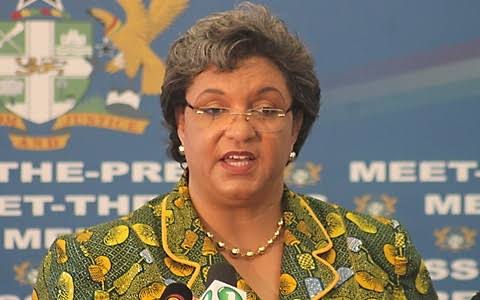

- Hannah Tetteh Calls for Common African Strategy on Trade, AI and Global Finance
United Nations Special Representative Hannah Tetteh has urged the African Union to concentrate its emerging continental foreign policy on trade integration, financial reform, artificial intelligence governance, climate-linked development and conflict resolution.
Speaking at the 21st Kronti ne Akwamu Public Lecture, Ms Tetteh said Africa had reached a point where policy declarations and political agreements were no longer sufficient.
“The challenge for Africa is no longer agreeing on priorities but delivering measurable outcomes,” she said.
Her remarks come as the continent prepares a proposed common African foreign policy framework ahead of the 2027 African Union Summit. The initiative, first endorsed at the February 2026 AU Summit, is intended to strengthen coordination among African countries on major global issues.
Ms Tetteh welcomed the effort but warned that an overly broad agenda could weaken implementation. She urged African governments to focus on a limited number of priorities capable of attracting political consensus and producing measurable results.
At the centre of her recommendations was the African Continental Free Trade Area, which she described as Africa’s most important economic integration project.
Although countries have ratified key AfCFTA agreements, she said the next phase must focus on implementation, particularly customs reform, transport infrastructure and institutional support for businesses seeking to trade across borders.
“There is a difference between market access and market readiness,” she said.
The distinction is important because the removal of tariffs does not automatically guarantee higher trade. Businesses must be able to move goods efficiently, meet regulatory requirements, access finance and navigate customs processes without excessive delay or cost.
Ms Tetteh said indicators such as border efficiency, logistics performance and the actual movement of goods should become central measures of AfCFTA progress.
Her argument suggests that success should be assessed less by the number of protocols signed and more by whether African companies can reach new markets and build regional supply chains.
Trade integration will also require stronger transport links, interoperable customs systems and coordinated standards among member states.
Without those reforms, businesses may continue to face high transaction costs even where formal trade barriers have been removed.
Ms Tetteh also called for sustained pressure to reform the global financial architecture.
African countries have repeatedly argued that existing international financial arrangements impose high borrowing costs and provide insufficient support for development and climate investment.
She said the continent must continue advocating reforms while simultaneously strengthening domestic revenue mobilisation.
That approach has become increasingly important as development assistance tightens and governments face growing demands for infrastructure, social services and climate investment.
Greater domestic revenue would reduce dependence on external financing and give African governments more control over development priorities.
However, improving revenue mobilisation will require broader tax bases, stronger administration and reduced leakages rather than repeated increases in tax rates on already compliant individuals and businesses.
Ms Tetteh said climate policy should also be linked directly to Africa’s economic ambitions.
She argued that the continent’s transition to cleaner energy must expand electricity access and protect industrialisation rather than impose additional constraints on growth.
Africa contributes a relatively small share of historical global emissions but faces some of the most severe consequences of climate change.
For many countries, the policy challenge is therefore to attract climate finance while maintaining access to reliable and affordable energy for households and industry.
On artificial intelligence, Ms Tetteh called for a unified African position on global governance.
She warned that international standards for AI should not be developed without meaningful participation from developing economies.
The rules adopted in the coming years could influence data ownership, employment, innovation, security and economic competitiveness across the continent.
A common African approach could give governments greater influence in negotiations and help establish safeguards reflecting the continent’s development priorities.
It could also encourage regional cooperation in digital infrastructure, skills development, data protection and research.
Peace and security, she said, remained the foundation on which every economic ambition depended.
Despite earlier commitments to “silence the guns”, conflicts continue to disrupt investment, trade, education and regional integration across parts of Africa.
Ms Tetteh called for renewed diplomatic engagement and stronger collective action to resolve conflicts before they become entrenched.
Insecurity increases fiscal pressure, weakens institutions and diverts resources away from development. It also undermines the commercial corridors required to support AfCFTA implementation.
Her message was ultimately one of disciplined execution.
Africa’s influence in a fragmented global system will depend not only on presenting common positions but on building the institutions and political cooperation required to implement them.
The proposed continental foreign policy framework could strengthen Africa’s voice, but its credibility will be judged by results.
For Ms Tetteh, those results should be visible in easier cross-border trade, stronger domestic financing, greater influence over AI rules, climate policies that support development and measurable progress towards peace.

