

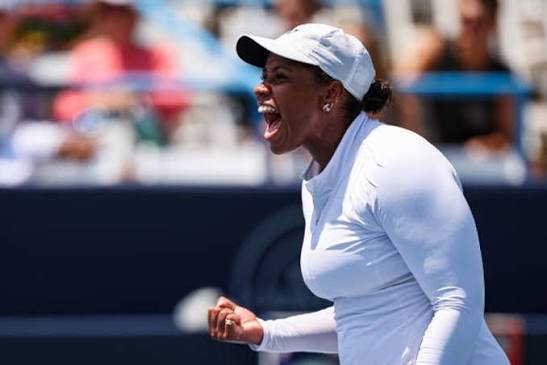

- Taylor Townsend Cuts Training Load At 30 As She Targets Greater Longevity in Tennis
Taylor Townsend is changing the way she trains, eats and recovers as she seeks to extend her career at the highest level of professional tennis, moving away from a relentless “do more” mentality towards an approach built around longevity.
The American, who turned 30 this year, told Business Insider that years of competing at elite level had changed how she thinks about preparation and performance.
Rather than completing every scheduled minute of practice simply because it is on the programme, Townsend increasingly prioritises the quality of the work and how her body is responding.
“If I can do everything that I need to do and it feels great in an hour, then I don’t need to do the other hour,” she said.
The shift reflects a broader concern across professional tennis about player workload, injuries and burnout as athletes navigate long seasons, extensive international travel and repeated physical stress.
Townsend said she has watched other elite players push beyond their limits until they become mentally and physically exhausted.
Her objective is different.
“I want longevity. I want to be able to exit the sport because I want to, not because my mind or my body can’t anymore,” she said. (Business Insider)
Townsend has competed professionally for more than a decade and has travelled internationally for tennis since the age of 11.
She acknowledged that 30 is not old, but said performing at such a demanding level for roughly 15 years inevitably changes how an athlete needs to manage the body.
Previously, she approached preparation with a far more rigid mindset.
She would practise intensely throughout the scheduled session, often adding extra ball-hitting after matches and placing a premium on doing as much work as possible.
“Sometimes it was because I wanted to, and then a lot of the times, it was because I felt like I had to,” Townsend said.
Now the emphasis is increasingly on quality over quantity. That approach has become central to how Townsend is attempting to maintain performance while reducing unnecessary physical and mental wear.
Her training routine incorporates stretching and bodywork, including regular sessions with physiotherapists, as she attempts to remain physically prepared for the demands of competition.
Townsend journals and meditates, while also talking through pressures with coaches and teammates.
Ahead of early practice sessions, she uses music and her personal grooming routine as part of the process of getting mentally prepared for the day.
The wider strategy is about remaining attentive to signals from her body rather than treating training volume as an objective in itself.
Additional training can improve performance when it produces useful adaptation.
Beyond a certain point, however, accumulated fatigue can increase injury risk, impair recovery and weaken the quality of subsequent training and competition.
Townsend’s revised approach reflects an attempt to find that balance after years of competing at professional level.
She told Business Insider that she is currently keeping her diet relatively light while paying close attention to what her body needs.
Long training sessions require accessible energy, so she keeps fruit strips available for a quick source of sugar and uses high-protein foods including boiled eggs.
One of her more recent favourites has been egg salad paired with tomato-basil rice cakes. Townsend also has a tendency to stick with foods that work for her rather than constantly change her diet.
During the previous US Open, for example, peanut butter and jelly sandwiches became a regular part of her routine.
The simplicity is consistent with the wider philosophy underlying her current preparation: identify what works, reduce unnecessary complications and pay attention to physical response.
But Townsend is also placing greater emphasis on what happens away from tennis. Creative activities, family time and interests outside the sport have become important components of how she manages the mental demands of competing.
During the 2026 US Open, she ordered Lego bricks to her hotel room and spent time building with her five-year-old son, Adyn. Townsend said the activity helped her disconnect mentally, and she subsequently felt she had an excellent practice session the following morning.
She also enjoys puzzles and spending time in nature when the demands of the tour make that possible. Those activities matter because professional athletes can spend much of the year cycling between training, competition, travel and recovery.
Creating spaces in which performance is not the immediate objective can itself become part of performance management. She runs a clothing label, has launched a YouTube series called Down The T and works with commercial partners including major consumer brands.
Rather than seeing those commitments as distractions, Townsend said creative outlets help keep her energised for tennis and allow her to build a broader identity beyond competition.
The approach is particularly relevant as she enters a different stage of her career. Townsend told Business Insider that she feels she is in some of her best years because experience has given her greater understanding of herself and what she needs.
At the time of the interview, she was ranked No. 95 in singles and No. 2 in doubles, while preparing for her singles campaign at the 2026 US Open.
Her experience illustrates a broader evolution taking place in elite sport. For younger athletes, performance development often revolves around accumulating training volume and building physical capacity.
Veteran athletes increasingly face a different calculation: how to extract the maximum competitive benefit from training while preserving enough physical and psychological capacity to sustain a career.
That can mean practising less rather than more. It can also mean treating recovery, sleep, nutrition, mental health and personal fulfilment not as secondary considerations but as core elements of athletic preparation.
For Townsend, the objective is not simply to remain on tour for as long as possible. It is to retain control over how the career eventually ends.
After years of believing she always needed to do more, her strategy at 30 is becoming more selective: train with purpose, recover deliberately and recognise when enough work has already been done.
In a sport where players are continually pushed towards another match, another practice and another tournament, Townsend’s longevity strategy rests on an increasingly valuable skill — knowing when to stop.

