

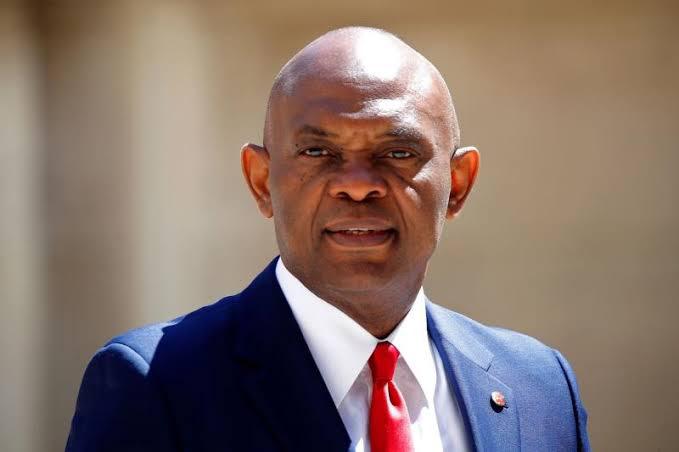

- Tony Elumelu Increases Seplat Energy Stake To 22.05% With Fresh £53.00 Million Share Purchase
Nigerian billionaire and businessman Tony Elumelu has strengthened his position as the largest disclosed shareholder in Seplat Energy Plc after acquiring an additional 5.89 million shares through Heirs Energies Limited, increasing the combined ownership of companies under his control to 22.05%.
The transaction, executed on the London Stock Exchange on November 16, 2026, involved the purchase of 5,888,341 ordinary shares at £9.00 each, representing a total investment of approximately £53.00 million, or about US$70 million.
A regulatory disclosure issued by Seplat on November 17 confirmed that the acquisition increased the combined shareholding of Heirs Energies Limited and Heirs Holdings Limited to 132,288,341 ordinary shares.
The holding represents 22.05% of Seplat’s issued share capital of 599,944,561 shares, consolidating Elumelu’s position ahead of his scheduled appointment as chairman of the Nigerian energy producer on January 1, 2027.
The latest purchase represents another significant investment in one of Nigeria’s largest indigenous oil and gas producers and reinforces the growing influence of locally controlled investment groups in the country’s energy sector.
It also raises broader questions about ownership concentration, corporate governance and the strategic direction of energy companies as Nigerian investors acquire stakes previously held by international oil groups.
Seplat’s regulatory announcement stated that the company had been notified of the acquisition by Heirs Energies, an entity controlled by Elumelu, who currently serves as a non-executive director.
Following the transaction, Heirs Energies directly holds 33,832,208 shares, while the two companies controlled by Elumelu collectively own 132,288,341 shares.
The acquisition increased their combined voting interest from 21.07% to 22.05%, representing an additional 0.98 percentage points of Seplat’s issued share capital.
The latest transaction follows another substantial acquisition on September 30, when Heirs Energies purchased six million shares at £8.87 each, paying approximately £53.22 million.
That investment increased the combined shareholding of the Elumelu-controlled entities to 126.40 million shares, equivalent to 21.07% of Seplat.
Taken together, the September and November transactions involved the acquisition of approximately 11.89 million shares at a combined purchase price of £106.22 million.
The successive purchases suggest a sustained commitment to increasing exposure to Seplat rather than a single opportunistic investment.
However, the additional purchases do not establish that Elumelu intends to pursue a majority stake or undertake a formal takeover.
The current ownership position gives the Heirs companies substantial voting influence but does not, by itself, confer majority control over Seplat’s shareholder decisions.
Elumelu’s investment in Seplat began with a significantly larger transaction in December 2025, when Heirs Energies and Heirs Holdings acquired approximately 120.40 million shares from French energy company Maurel & Prom.
The acquisition, valued at approximately US$500 million, represented 20.07% of Seplat’s issued share capital and established Elumelu as its largest disclosed shareholder.
The transaction marked a notable change in ownership, transferring a substantial equity position from an international energy company to Nigerian-controlled investment vehicles.
It also extended Elumelu’s interests in Nigeria’s energy industry, where Heirs Energies already operates oil and gas assets.
The expansion comes against the backdrop of a wider restructuring of Nigeria’s petroleum industry, characterised by international oil companies reducing exposure to certain mature assets while domestic operators increase their participation.
For Nigerian investors, the development presents an opportunity to acquire producing assets and build businesses with greater operational scale.
However, ownership transfers also bring significant financial, operational and environmental responsibilities.
Domestic companies must demonstrate their ability to sustain production, finance capital expenditure and manage the regulatory requirements associated with complex oil and gas operations.
Elumelu’s increasing shareholding is particularly consequential because it coincides with Seplat’s planned leadership transition.
The company announced in June that its chairman, Udoma Udo Udoma, would retire on December 31, 2026, after overseeing a period of corporate expansion.
The board subsequently elected Elumelu to succeed him from January 1, 2027.
Elumelu joined the company’s board as a non-executive director on January 22, 2026, following the initial acquisition of the 20.07% stake.
His assumption of the chairmanship will therefore bring together substantial shareholder influence and leadership of the company’s board.
This combination could strengthen strategic alignment between a major shareholder and the company’s long-term investment objectives.
Nevertheless, it also highlights the importance of maintaining appropriate governance arrangements to protect the interests of minority investors.
As chairman, Elumelu will have responsibilities extending beyond the interests of his own investment vehicles.
Effective board oversight will require transparent decision-making, appropriate management of potential conflicts of interest and continued accountability to Seplat’s wider shareholder base.
The governance implications are particularly relevant because Seplat maintains listings on both the Nigerian Exchange and the London Stock Exchange, placing its corporate disclosures and governance practices under the scrutiny of investors in both markets.
The increased investment also comes during a period of improved financial performance for the company.
For the nine months ended September 30, 2026, Seplat reported revenue of US$2.76 billion, representing an increase of 27.00% from approximately US$2.18 billion during the corresponding period of 2025.
Net profit rose by approximately 174.00% to US$260.20 million, compared with US$95.10 million a year earlier.
Adjusted earnings before interest, taxes, depreciation and amortisation increased by 38.00% to US$1.53 billion.
The results reflect stronger operational performance and the contribution of expanded production assets.
Seplat also reported free cash flow of approximately US$749 million during the nine-month period, providing additional financial flexibility to support debt reduction, investment and shareholder distributions.
Net debt declined from US$673.30 million at the end of 2025 to US$234.90 million by September 2026, a reduction of approximately 65.00%.
The improvements are significant because upstream oil and gas operations typically require substantial and recurring investment to maintain production and develop reserves.
Seplat’s financial performance provides an important commercial context for Elumelu’s investment.
A company generating stronger earnings and cash flow may become more attractive to long-term shareholders seeking exposure to Nigeria’s petroleum sector.
Nevertheless, future performance remains exposed to international oil prices, production disruptions, operating expenses and regulatory developments.
The company’s capacity to sustain profitability will depend partly on maintaining output and deploying capital efficiently.
For Nigeria, increasing domestic participation in the ownership of major energy producers also carries wider economic implications.
Stronger indigenous operators could support domestic investment, technical expertise, employment and locally retained corporate earnings.
However, the nationality of shareholders alone does not guarantee increased economic value for the country.
The ultimate benefits will depend on production performance, tax contributions, domestic procurement, employment and reinvestment in productive capacity.
The central significance of Elumelu’s latest purchase lies in the combination of increasing economic ownership, substantial voting influence and his forthcoming leadership of Seplat’s board.
With more than 22.00% of the company’s shares now held through his investment vehicles, Elumelu has strengthened his position as a long-term shareholder at a time when the company is recording improving financial performance.
His scheduled elevation to chairman in January 2027 will provide an opportunity to influence Seplat’s strategic direction, although executive management will remain responsible for day-to-day operations.
For minority investors, attention will turn to how the board balances the interests of its largest disclosed shareholder with those of other investors.
For the Nigerian energy industry, the investment represents another example of domestic capital assuming a more prominent position in the ownership of major petroleum companies.
Whether the increased ownership translates into sustained shareholder value will ultimately depend on Seplat’s operational performance, capital allocation and corporate governance.
The company’s next phase will therefore be closely watched, not simply because of the size of Elumelu’s investment, but because of the responsibilities accompanying his growing influence within one of Nigeria’s most significant publicly traded energy businesses.

