


- Cedi Faces Fresh Pressure as Rising Oil Prices Test Ghana’s FX Recovery
Ghana’s cedi is entering the second quarter under a different kind of pressure. For much of the past year, the currency’s story was one of repair. A firmer reserve position, a sharply improved trade balance, falling inflation and easing domestic interest rates all combined to rebuild confidence in a market that, not long ago, was still trading like a crisis economy.
But the latest Bank of Ghana data suggest that while the cedi remains better supported than it was a year ago, the next phase of the currency story may be less about macro stabilisation and more about whether Ghana can absorb a fresh imported oil shock without surrendering hard-won foreign-exchange credibility.
The headline move is modest but telling. The cedi closed at GH¢10.6865 to the US dollar in February 2026, before weakening slightly to GH¢10.87 by March 16, 2026, according to the central bank’s latest Summary of Economic and Financial Data. That leaves the currency down 2.2 per cent year-to-date in February and down 3.9 per cent year-to-date by mid-March, pointing to a clear loss of momentum after the stronger conditions seen deeper into 2025.
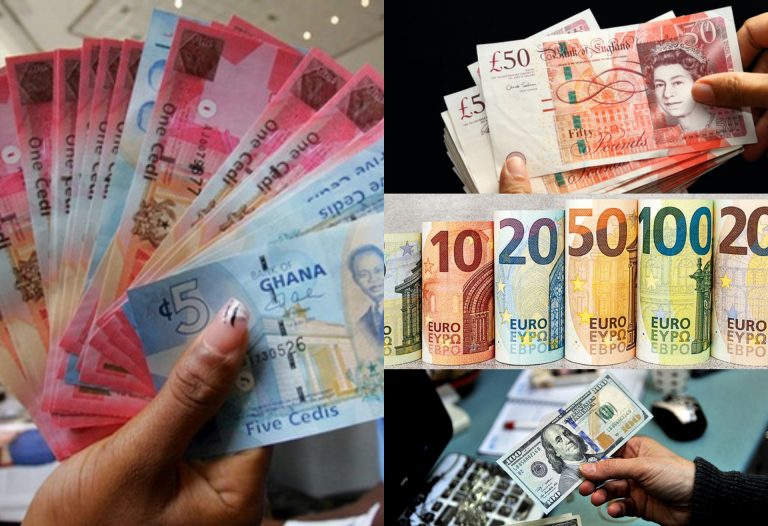
The pattern is similar against other major currencies. The cedi was down 2.8 per cent year-to-date against the pound sterling in March and down 1.7 per cent against the euro, compared with milder losses in February.
“The cedi is no longer being judged only on where reserves stand today, but on whether Ghana can defend its external gains against a fresh oil-driven import shock.”
That does not amount to a disorderly sell-off. Far from it. Measured against the past two years, the currency is still trading from a much stronger base. The more consequential point is that the cedi is now weakening despite one of the most supportive domestic macro combinations Ghana has posted in years.
Inflation continues to cool sharply. Headline consumer inflation slowed to 3.3 per cent in February, from 3.8 per cent in January, while food inflation eased to 2.4 per cent. The domestic rates complex has adjusted lower alongside it. The Monetary Policy Rate stood at 15.5 per cent in February, while the 91-day Treasury bill fell to 8.96 per cent, the 182-day bill to 10.75 per cent, and the 364-day bill to 11.53 per cent.
Ordinarily, that sort of disinflation and policy repricing would be enough to stabilise, if not strengthen, the local currency. And in several respects, Ghana’s external fundamentals have improved materially. Gross international reserves climbed to US$14.47bn in February, equivalent to 5.8 months of import cover, while reserves excluding encumbered assets, petroleum funds and related items stood at US$12.54bn, or 5.1 months of import cover. Net international reserves reached US$11.49bn.
The trade account also remains decisively supportive. By February, total exports stood at US$6.21bn, against imports of US$2.52bn, leaving a trade surplus of US$3.69bn. Gold remains the key support beam: gold exports reached US$4.26bn by February, comfortably outstripping cocoa exports of US$956.3mn and oil exports of US$451.5mn.
The cedi’s resilience has increasingly become a gold-and-reserves story. The international gold price rose to US$5,007.5 per fine ounce in February and US$5,150.4 in March, extending the export windfall that has helped Ghana accumulate reserves, improve FX liquidity and restore confidence around the external account.
Yet the new stress point is equally clear. The Bank of Ghana’s March table shows Brent crude at US$91.4 a barrel, up from US$69.4 in February and representing a 48.4 per cent year-to-date increase. For a net oil-importing economy trying to preserve disinflation and defend a more stable currency regime, that is an unfriendly turn. Ghana may be benefiting from higher gold prices, but it is also confronting the prospect of a more expensive import bill, higher transport and utility pass-throughs, and renewed pressure on dollar demand.
“Ghana’s currency story is no longer just about recovery. It is now about whether strong reserves and gold earnings can offset rising imported energy pressure.”
There are early signs the market is already reflecting that tension. The domestic macro backdrop is improving, but the cedi is no longer following it mechanically upward. Instead, the market appears to be distinguishing between stronger stock variables and more vulnerable flow dynamics. Ghana’s reserve stock is healthier. But the oil price shock threatens to worsen the flow position at the margin, particularly if import demand remains firm and higher crude prices prove sticky.
That pressure is also being amplified by the broader global environment. The US Dollar Index rose to 100.3 in March from 97.6 in February, indicating a firmer dollar backdrop, while the Emerging Market Currency Index fell to 46.2 from 47.7, suggesting pressure on non-dollar currencies is not unique to Ghana.
In that sense, the cedi is not weakening in isolation. It is softening at a moment when the external environment has become less forgiving, even as Ghana’s own fundamentals look better. That distinction matters.
The recent depreciation does not invalidate the broader macro recovery story. Inflation is down, reserve adequacy is up, the trade balance is firm and domestic rates have repriced sharply lower. These are not the markers of a currency under acute stress. They are the markers of a currency facing a more complex test from a far stronger starting point.
For investors and policymakers alike, the question is now straightforward: can Ghana preserve the gains already made? If gold continues to provide exceptional export support and oil stabilises before feeding more aggressively into the import bill, the CEDI may yet find a new equilibrium around current levels. But if crude remains elevated, the market will begin asking whether Ghana’s strongest currency backdrop in years can be interrupted by the oldest problem of all imported energy pressure.

