


- More Money for African Football: CAF Increases Annual Grants by 250%
The Ghana Football Association is expected to receive US$700,000 annually from the Confederation of African Football under a significant increase in financial support for the continent’s 54 national associations.
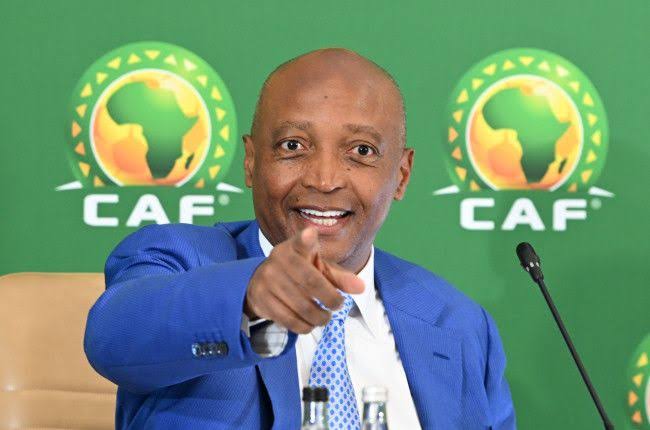
CAF President Patrice Motsepe announced that annual support for each member association would rise from US$200,000 to US$700,000 a US$500,000 increase and 250 per cent expansion over the previous allocation.
If the full amount is distributed equally, CAF’s annual commitment to national associations will increase from US$10.8 million to US$37.8 million.
The announcement was made during the CAF Strategy Conference held in Sal, Cape Verde, where football administrators discussed development, financing and the future direction of the African game.
Mr Motsepe said CAF ultimately wanted to raise the allocation to US$1 million annually for each association by securing additional sponsors and expanding commercial partnerships.
For Ghana, the increase creates an opportunity to invest more heavily in grassroots competitions, women’s football, coaching development, youth academies, officiating and football infrastructure.
But additional funding alone will not solve the structural problems affecting Ghanaian football.
The value of the allocation will depend on how the GFA prioritises expenditure, discloses its use and connects spending to measurable development outcomes.
An annual allocation of US$700,000 could provide greater stability for programmes that often suffer from uncertain funding.
Youth and women’s competitions require predictable financing for travel, officiating, medical services, equipment and administration. Coaching and referee-development programmes also need sustained investment rather than occasional interventions.
The allocation could similarly support regional football structures and clubs that operate with limited commercial income.
However, the funding should not become primarily an administrative subsidy for national federations. Its central purpose must be to improve the conditions under which football is played and developed.
For Ghana, that means establishing clear priorities before the money is spent.
The GFA should state how much will be directed towards grassroots football, women’s competitions, coaching, refereeing, infrastructure and administration. It should also identify the results expected from each investment.
Without those benchmarks, a larger subvention may increase expenditure without producing stronger national teams, better domestic competitions or improved player development.
CAF’s increased financial support also raises the importance of governance.
National associations exercise considerable control over football resources while clubs, players and supporters frequently have limited visibility into how development funds are allocated.
The expansion from US$200,000 to US$700,000 makes detailed reporting more necessary.
CAF should require independently audited statements showing how each association used its allocation. Disbursements could also be linked to compliance with financial-reporting, safeguarding and competition-management standards.
For the GFA, proactive disclosure would strengthen public confidence at a time when the governance and direction of Ghanaian football are under intense scrutiny.
The association could publish an annual CAF-funding report containing projects financed, beneficiaries, procurement arrangements, amounts spent and outstanding balances.
Such transparency would protect the GFA as much as it would protect the funds. It would make it easier to distinguish evidence-based criticism from speculation and demonstrate that money intended for development reached its target.
The funding commitment will also test CAF’s own financial sustainability.
Distributing US$37.8 million annually requires dependable revenues from sponsorships, broadcast rights and competitions. Raising the grant to US$1 million for every association would increase the annual bill to US$54 million.
CAF must ensure that its ambitions are supported by predictable commercial income rather than temporary surpluses.
The governing body’s ability to attract new sponsors will depend partly on the commercial quality of its tournaments, the credibility of its leadership and confidence in its financial controls.
Mr Motsepe’s funding expansion reflects an effort to return more of CAF’s resources to the national associations responsible for developing football.
Yet the increase will only be transformative if it reaches players, coaches, referees, clubs and communities.
For Ghana, US$700,000 represents meaningful additional support. It also creates a straightforward accountability question: what measurable improvement in Ghanaian football should the public expect in return?
The answer should be visible in functioning competitions, stronger development systems and publicly accessible financial reporting not merely in the GFA’s bank account.

