



CEDA Raises Concerns Over MIIF Mandate Shift, Calls for Stronger Transparency in Mineral Revenue Management
Executive Director of the Centre for Extractives and Development Africa, Samuel Bekoe, has raised concerns over recent changes to the mandate of the Minerals Income Investment Fund, warning that the revisions could undermine the Fund’s ability to achieve its core objectives.
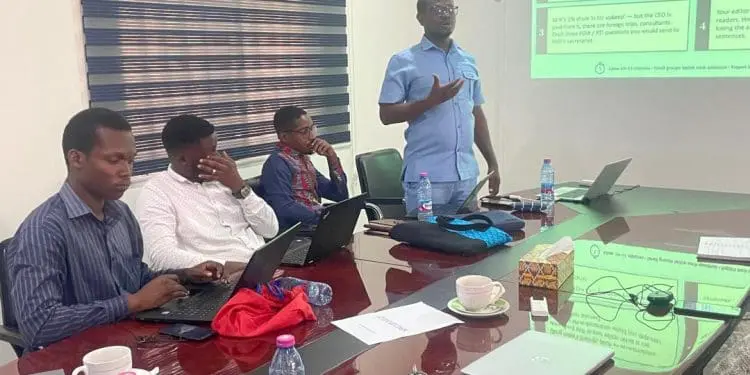
Speaking to journalists at a capacity training workshop on improving transparency and accountability in Ghana’s sovereign wealth fund framework, Mr Bekoe noted that MIIF was originally established to enhance returns from mineral royalties through strategic investments.
“If you look at MIIF, it was set up with a clear objective to improve our mineral investments and grow returns on royalties,” he stated.
He disclosed that the Fund’s assets under management have expanded significantly since inception, rising from an initial US$180 million in 2018 to approximately US$1 billion in 2024.
However, he argued that amendments to the Fund’s governing law have altered its revenue structure, reducing its share of mineral royalties from 80% to just 2%, with the remaining funds redirected into a newly created mineral income holding account.
According to him, this development raises critical questions about the future of MIIF and its ability to deliver on its original mandate.
“We do not believe, in its current state, MIIF can achieve its core mandate unless it demonstrates that its existing investments are generating adequate returns,” he stressed.
Transparency gaps and governance concerns
Mr Bekoe further pointed to longstanding governance and disclosure challenges within MIIF, including delays in publishing annual reports and financial statements.
He noted that although the Fund has undertaken several investments across the mining value chain, there is limited publicly available data on the performance and returns of these investments.
“There is the need to know the returns on these investments. While they are classified as assets, the performance data remains largely unclear,” he said.
He also questioned the transparency and accountability framework surrounding the newly established mineral income holding account, which now receives the bulk of mineral royalties.
“What are the reporting requirements? What are the withdrawal and investment rules? These are critical questions that must be addressed to ensure the funds are used for their intended purposes,” he added.
Call for enhanced oversight mechanisms
Mr Bekoe highlighted the disparity in transparency between Ghana’s mineral and petroleum revenue management systems, noting that oversight of mineral revenues remains relatively weak.
He referenced the role of the Public Interest and Accountability Committee in the petroleum sector, suggesting that similar mechanisms could be adopted or expanded to cover mineral revenues.
“Today, public awareness and oversight of petroleum revenues are stronger due to PIAC. We need comparable transparency frameworks for mineral revenues,” he noted.
He proposed options including expanding PIAC’s mandate or enhancing government-led disclosures to improve accountability.
Sustainability concerns
Mr Bekoe cautioned that mineral resources are finite and must be managed prudently to safeguard future generations.
“These resources are non-renewable. If we fail to invest them wisely, future generations may be worse off,” he warned.
He called for the introduction of clear governance rules, proactive disclosure of investment activities, and regular publication of financial and operational performance data.
MIIF was established under the Minerals Income Investment Fund Act to manage Ghana’s equity interests in mining companies and optimise returns from mineral royalties.
Despite its growth in assets under management, concerns persist over whether the Fund’s evolving structure and governance framework can sustain its long-term objectives.

