

Ghana: Import Dependence Could Threaten Economic Stability Amid Middle East Tensions – Dr Adu Owusu Sarkodie
Import dependence could expose Ghana’s economy if Middle East conflict escalates – Economist warns
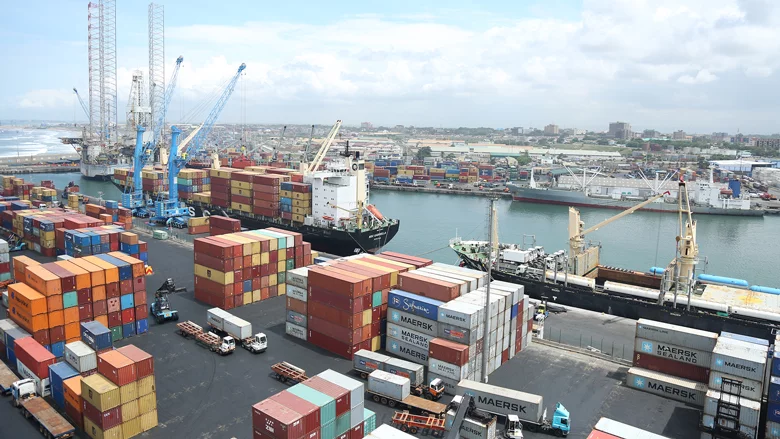
Economist, Adu Owusu Sarkodie, has cautioned that Ghana’s heavy reliance on imports could pose significant risks to the country’s economic stability should the conflict in the Middle East intensify and persist.
Speaking on PM Express Business Edition on Joy News PM Express Business Edition, Dr Sarkodie noted that although geopolitical tensions sometimes create opportunities for oil-producing countries, Ghana’s structural dependence on imports remains a major vulnerability.
According to him, while Ghana could benefit from higher crude oil prices due to its status as an oil exporter, the broader impact of prolonged global conflicts could place pressure on the domestic economy.
“The war in the Middle East is somehow expected, but the war in Europe – the Russia–Ukraine War – was not,” he said.
Dr Sarkodie explained that rising global crude prices could boost Ghana’s export earnings if production levels remain unchanged.
“I have already stated that Ghana also will export crude oil, so when the international crude oil price increases, Ghana stands a chance. If we keep the quantity the same, then we stand a chance of getting more revenue than projected,” he noted.
He suggested that any windfall revenue generated from higher crude prices could be channelled into targeted support programmes to cushion vulnerable groups who may be affected by global price shocks.
“So we could use that difference that went for to cushion maybe the very vulnerable people in the society,” he stated.
As part of such interventions, he proposed temporary support measures for commercial transport operators who are typically among the first to feel the effects of fuel price increases.
“More like maybe provide coupons to trotro drivers and to taxi drivers, Uber drivers, so as we are keeping them, we are cushioning them from a possible negative impact of this,” he explained.
Dr Sarkodie observed that Ghana has not yet experienced significant economic fallout from the Middle East tensions but warned that the situation could deteriorate if the conflict drags on.
“So far, so good – not good in terms of war – but so far we haven’t felt the impact yet. We are also hoping that the war does not travel that far,” he said.
However, he cautioned that prolonged conflict could have consequences similar to those seen during the Russia–Ukraine war, which disrupted global supply chains and pushed up prices of key commodities.
He recalled that the war created shortages of essential inputs such as fertiliser and wheat, both of which are heavily imported by Ghana.
“It will interest you to know that even when the war broke out in Russia and Ukraine, fertiliser was difficult to find and prices were rising,” he said.
“Even wheat flour, which we use to bake bread – when the question was asked why local alternatives were not used – the response was that consumers had developed a taste for wheat imported from Ukraine.”
According to him, this preference for imported inputs has made it difficult for local alternatives to gain wider acceptance in the domestic market.
Dr Sarkodie therefore argued that ongoing geopolitical tensions should serve as a catalyst for renewed efforts to strengthen domestic production and reduce Ghana’s import dependence.
“Not just the stability, but go deep down to the real economy in terms of production – agriculture production, industrial production and services,” he emphasised.
He questioned why Ghana continues to rely heavily on imports for basic agricultural inputs such as fertiliser.
“What does it take to produce fertiliser? Why should we depend on Ukraine, which is fighting a war, for fertiliser and other countries?” he asked.
While acknowledging that Ghana’s economy is still evolving, the economist noted that several sectors present opportunities to expand local production.
“I know our economy is still in transition. Our economy is so young, but there are small, small items like poultry and sugar – things we can at least try to produce here,” he added.

