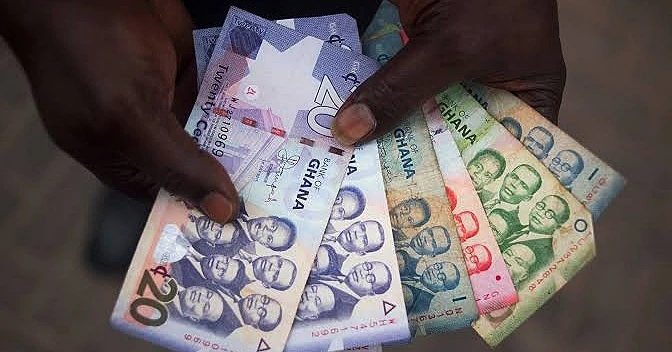

Currency Gains Built on Policy Discipline and Reform, Says Governor Asiama
Governor of the Bank of Ghana, Dr Johnson Asiama, has underscored that Ghana’s recent currency stability and appreciation are the result of deliberate policy discipline and renewed confidence in economic management and not mere market fluctuations.
Speaking through his Special Advisor, Dr John Kwakye, at the 14th Ghana Economic Forum, Dr Asiama said the cedi’s nearly 40 percent appreciation against the U.S. dollar in 2025 reflects belief in Ghana’s policy direction and institutional strength.
“When the cedi holds its ground, it is more than a technical outcome. It is a signal of policy credibility and disciplined governance,” he remarked. “The recent appreciation is not merely a market swing; it reflects trust in the central bank and the hard work of institutions that kept the policy anchor steady.”
Stability, Production, and Innovation as Pillars of Value
Dr Asiama emphasized that the long-term sustainability of the cedi’s value depends on three interlocking pillars – stability, production, and innovation – each reinforcing the others.
He cautioned that “stability without production is hollow,” stressing that a currency derives its enduring worth from the nation’s productive capacity and export performance.
“The next phase of our growth must come from value addition – refining gold, processing cocoa, and manufacturing more of what we consume,” he stated.
The Governor highlighted the passage of the Gold Board Act, 2025, as a critical milestone, saying it marks a strategic shift in how Ghana leverages its mineral wealth.
“The Act centralizes gold trading and export, formalizes the value chain, and links our mineral wealth directly to our reserve strategy. This is how currency value becomes tangible – when national resources translate into national assets,” he stated.
Building a Digital and Productive Economy
Dr Asiama also pointed to innovation as an equally essential pillar in preserving currency value and strengthening financial system efficiency.
He cited the Bank’s ongoing initiatives, including the E-Cedi pilot, expansion of digital payments infrastructure, and regulatory frameworks for fintech and virtual asset service providers, as part of efforts to build “the digital rails of tomorrow’s economy.”
“These efforts reduce transaction costs, promote transparency, and expand financial inclusion,” he said. “Innovation, when combined with stability and production, transforms resilience into competitiveness.”
From Stability to Structural Change
According to the Governor, the Bank of Ghana’s role has evolved from stabilizing markets to reshaping them for long-term resilience. He pointed to recent achievements such as inflation’s decline to 9.4 percent, banking sector capital adequacy at 18.8 percent, and improved credit flow to productive sectors as evidence of restored credibility.
Under the new gold policy regime, he noted, the precious metal has been transformed from a simple export commodity into a strategic reserve asset, helping bolster the cedi’s strength with real domestic value.
He also cited transparent FX auctions and spot sales as key contributors to the cedi’s 37 percent appreciation and renewed market confidence.
Fragile Gains and Global Risks
While acknowledging progress, Dr Asiama warned that stability remains fragile and that sustaining gains will require continued vigilance.
He identified three structural challenges – global shocks, domestic production constraints, and policy inertia – as potential risks. Citing the World Bank’s August 2025 Economic Update, he noted that Ghana’s growth is projected to moderate from 5.7 percent in 2024 to 3.9 percent in 2025 due to cooling global demand and tighter financing conditions.
“The gains we have achieved are not trophies to display, they are responsibilities to defend,” he cautioned.
“Resilience must be built, not borrowed.”