

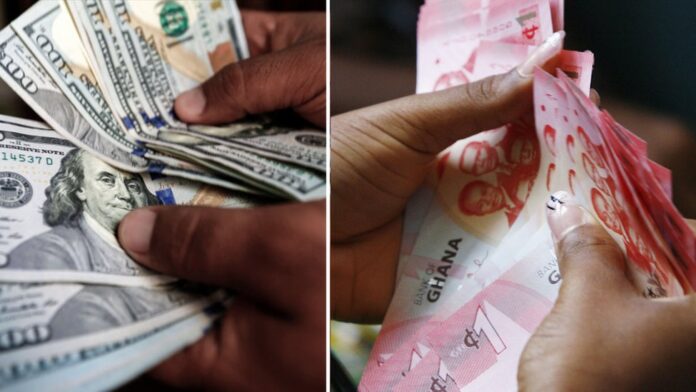

BoG Injects $10bn Into Forex Market to Stabilise Cedi; Interventions Backed by Gold Purchase Programme
The Bank of Ghana (BoG) has injected an estimated $10 billion into the foreign exchange market between January and the first week of December 2025 as part of sustained interventions to stabilise the cedi and meet rising dollar demand from businesses and banks.
According to sources close to the Central Bank, the interventions — described internally as “dollar intermediation” — were designed to meet market demand rather than to rigidly defend the local currency. The support has been channelled through regular dollar auctions to commercial banks and corporates.
Funding support from Gold Purchase Programme
The injections were financed largely through windfall revenues from the Bank’s Domestic Gold Purchase Programme, driven by elevated global gold prices. Officials say proceeds from the programme were strategically deployed to back the dollar auctions while preserving the country’s external buffers.
They emphasised that the interventions have been undertaken without undermining reserve accumulation or affecting Ghana’s debt-servicing commitments. Portions of the gold windfall have simultaneously supported reserve build-up, upcoming debt repayments and measured support to the market.
Ghana’s international reserves stood at $9.1 billion at the end of December 2024. By October 2025, reserves had improved to $11.4 billion, with projections suggesting the year could end above $12 billion. Market analysts say this reinforces evidence that the interventions have not led to reserve depletion.
Record support in October
In October alone, the central bank pumped $1.15 billion into the market under its FX Intermediation Programme, executed on a market-neutral, spot basis. Analysts note that these actions contributed significantly to the cedi’s strong performance that month.
BoG data show the cedi appreciated by 13.9% against the dollar as of end-October 2025, and 32.2% year-to-date — one of the currency’s strongest runs in recent years.
New Foreign Exchange Operations Framework
In November, the Bank of Ghana announced Board approval for a new Foreign Exchange Operations Framework, aimed at clarifying the principles guiding its FX activities under the inflation-targeting regime.
The framework is structured around three core objectives:
Supporting reserve accumulation to strengthen buffers against external shocks.
Reducing excessive short-term volatility by addressing disorderly market conditions without compromising exchange-rate flexibility.
Intermediating forex flows in a market-neutral manner, using inflows from the Gold Purchase Programme and export surrender requirements.
The Central Bank stressed that interventions going forward will follow a “structured discretion-under-constraint” approach — meaning it will not target a fixed exchange rate, but will intervene only to correct market failures, including limited access to effective hedging tools.
“Reserve accumulation and intermediation objectives will be achieved through transparent and well-communicated operations,” the Bank noted.
The revised framework is expected to enhance transparency, improve liquidity conditions, and ensure a more predictable FX market as authorities work to consolidate cedi stability.

