


- Tarkwa Lease Renewal to Face Fresh Technical Scrutiny as Government Reassures Investors
Ghana has committed to renewing Gold Fields’ mining lease for the Tarkwa mine, but says the process will be subjected to fresh technical scrutiny as the government moves to balance investor confidence with a tougher demand for local value retention in the mining sector.
The assurance, comes at a sensitive moment for Ghana’s extractive industry, where questions over lease renewals, local participation, parliamentary ratification and resource nationalism have intensified following the government’s earlier decision not to renew Gold Fields’ Damang lease.
Isaac Andrews Tandoh, Chief Executive Officer of the Minerals Commission, denied that the government was delaying the Tarkwa renewal process, saying officials had held meetings with Gold Fields as recently as last Friday. He said the company must present its development plans to a technical committee at the Minerals Commission, followed by a ministerial-level presentation before a final decision is taken.
“It won’t be business as usual where we just automatically renew the lease,” Mr Tandoh
The statement signals a shift in how the government intends to handle strategic mining assets. While the administration is seeking to reassure investors that security of tenure remains intact, it is also making clear that lease renewals will no longer be treated as routine administrative extensions without a fresh assessment of mine plans, community benefits, local participation and long-term value creation.
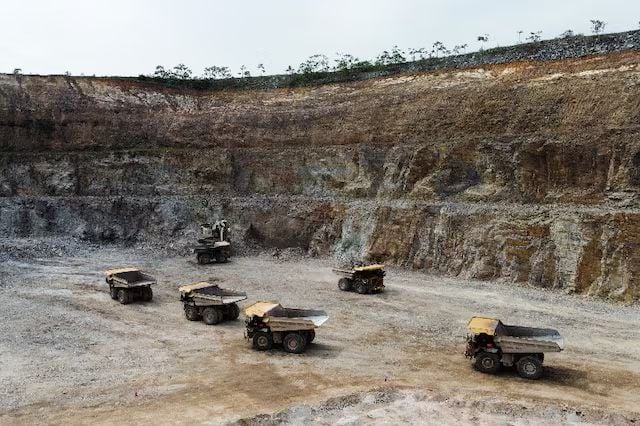
The Tarkwa mine is one of Gold Fields’ most important assets in Ghana and produced about 427,000 ounces of gold in 2025. Its lease expires in 2027, making the renewal process central not only to the South African miner’s Ghana portfolio but also to broader investor sentiment toward the country’s mining regime.
Lands and Natural Resources Minister Emmanuel Armah-Kofi Buah said the government had not adopted a blanket nationalisation policy but was seeking partners that would leave behind expertise and empower Ghanaians in the industry.
That distinction is important. Ghana’s current policy posture appears to be moving away from passive mineral extraction toward a more assertive model of partnership, one in which foreign capital remains welcome but is expected to support skills transfer, local procurement, Ghanaian participation and stronger community development outcomes.
The reassurance on Tarkwa also comes against the backdrop of unease among mining investors after the government rejected Gold Fields’ application to renew its Damang lease in April 2025 and assumed operational control of the asset.
That decision has since become a reference point in the wider debate over whether Ghana is entering a new phase of resource nationalism or merely enforcing a higher standard of value retention from strategic mineral assets.
The Ghana Chamber of Mines has already warned that lease revocations and renewal uncertainty could create the impression that security of tenure in Ghana is not guaranteed, potentially harming investment.
But the government’s latest position on Tarkwa appears designed to draw a line between two policy objectives: reassuring existing investors that Ghana remains open for mining investment while also insisting that renewal requests must demonstrate credible plans for the future of the mine and the country’s development interest.
Some civil society and community groups have called on government not to renew the Tarkwa lease, arguing that host communities have not received sufficient benefits from the mine.
That pressure reflects a broader shift in the political economy of mining in Ghana. Communities are demanding more visible development outcomes, government is seeking deeper local participation, and investors are demanding regulatory predictability.
The Tarkwa decision will therefore be closely watched as a test case.
If handled transparently, it could show that Ghana is capable of tightening scrutiny over mining renewals without undermining investor confidence. If mishandled, it could reinforce concerns that lease security is becoming unpredictable.
For Gold Fields, the message from Accra is cautiously positive: the government is committed to renewal, but not without conditions.
For Ghana, the larger question is whether it can use the renewal process to secure stronger commitments on local content, technology transfer, mine life extension, community development and fiscal contribution — while avoiding the perception that mining rights are being politicised.
The timing is also significant given the government’s broader effort to submit outstanding mining agreements to Parliament for ratification and bring greater legal certainty to the sector. That process has become more urgent after renewed public scrutiny over mining leases, including the Damang transition involving Damang Gold Mine Ltd and Engineers & Planners.
Taken together, the Tarkwa renewal assurance and the pending ratification push suggest the government is attempting to reset the mining governance framework: more scrutiny, more local participation, more parliamentary regularisation, but not wholesale nationalisation.
Ghana remains one of Africa’s most important gold-producing jurisdictions. But in a capital-intensive industry where mine development decisions are shaped years in advance, policy signals matter. Investors need certainty. Communities need benefits. Government needs revenue and local capability. Ghanaian firms need space to grow.

