


- Dollar Nears One-Month High as Yen Weakness Revives Intervention Risk
The US dollar is regaining momentum as investors bet that persistent inflation will keep interest rates higher for longer. In early Asian trading on Thursday, the dollar index rose 0.63% to 102.85, its strongest level since October 14.
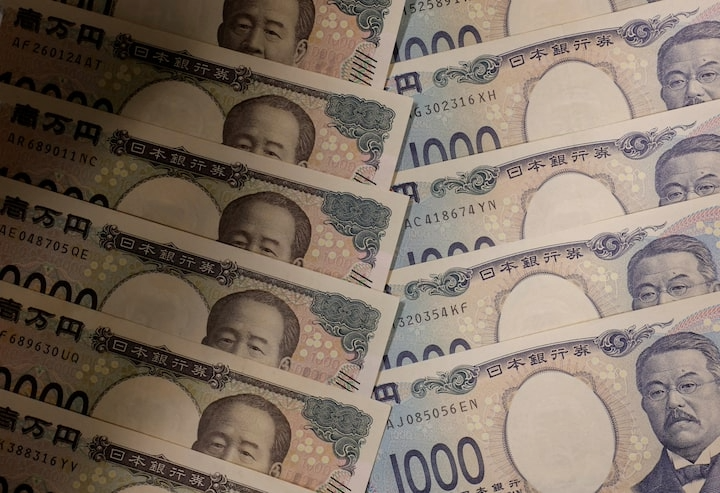
The yen, meanwhile, weakened to 159.58 per dollar—close to the psychologically important 160 threshold that has repeatedly drawn attention from Japanese authorities.
The move is more than a currency-market milestone. It reflects a widening divide in expectations: traders are increasingly pricing in further US monetary tightening, while uncertainty remains over how quickly Japan will raise its own rates.
That policy gap has made dollar assets more attractive and placed fresh pressure on the yen.
The latest trigger was the US October consumer price report. The Consumer Price Index rose 0.4% month-on-month, following a 0.6% increase in September. Core inflation, excluding food and energy, rose 0.3%, matching the previous two months.
Those monthly figures strengthened expectations that the Federal Reserve could raise rates in December.
There is an important qualification to the data. Because of a lapse in federal appropriations, the Bureau of Labor Statistics did not collect October 2025 survey data and could not publish a year-on-year inflation rate for October 2026.
The monthly increase is therefore informative, but the missing annual comparison limits one familiar way of judging the direction of price pressures.
Markets have focused on what the monthly figures may mean for the Fed. Officials have expressed concern about stubborn inflation, and some major financial institutions have shifted their forecasts towards additional rate increases.
A speech and public appearance by New York Fed President John Williams were also being watched for clues about the committee’s thinking.
The currency market is responding to expectations, not to a rate increase that has already happened. If traders believe US interest rates will rise relative to those elsewhere, dollar-denominated assets can become more appealing.
That expectation can lift the dollar before the Fed acts and can be reversed if subsequent inflation data or central-bank guidance weakens the case for tightening.
The yen’s approach to 160 is significant because weakness in the currency can raise the local cost of imported goods, including energy and food. For households and businesses, that can feed into prices; for policymakers, it creates a difficult choice between accepting the pressure and using monetary or foreign-exchange tools to counter it.
Japan’s currency authorities have warned that recent moves are too rapid and have revived the prospect of intervention. But intervention is not a lasting substitute for the underlying forces shaping the exchange rate.
If investors continue to expect a large interest-rate advantage for the United States, a one-off yen purchase could slow the decline without changing the direction of market pressure.
The Bank of Japan’s own decisions are therefore central to the next phase. A board member viewed as cautious on rate increases was due to speak on Thursday.
If policymakers signal that they are in no hurry to tighten, the contrast with a more hawkish Fed could encourage further dollar buying and yen selling.
But Japan’s wholesale prices rose 7.1% year-on-year in October, up from 6.8% in September, keeping attention on the domestic inflation problem as well.
This leaves the yen exposed to two opposing forces. Intervention could make traders wary of pushing the exchange rate through 160, particularly if officials signal readiness to act.
At the same time, the prospect of higher US rates and cautious Japanese policy could continue to favour the dollar. The threshold is therefore a marker of potential official response, not a guaranteed turning point.
For economies outside the United States, a sustained dollar rise can have consequences beyond currency charts. As an inference, if the dollar strengthens broadly, countries and companies with dollar-denominated obligations may face higher local-currency debt-service costs.
Importers paying in dollars can also face a larger bill, depending on their exchange rates and the prices of goods they buy.
That channel matters for emerging markets, including Ghana, where foreign-currency availability and external buffers shape the cost of servicing debt and importing essential goods.
A stronger dollar does not automatically mean the cedi will weaken by a particular amount; domestic export receipts, capital flows, policy choices and market conditions also matter. But a global turn towards the dollar can make the external financing environment less forgiving, especially if it coincides with higher US yields.
The impact is not uniform. Exporters earning dollars may benefit when those receipts are converted into weaker local currencies. Commodity producers can also gain if global prices rise enough to offset currency effects.
Yet for import-dependent businesses and governments borrowing in foreign currency, the combination of a stronger dollar and higher financing costs can narrow room to manoeuvre.
That is why the dollar’s rise should be read as a signal about the global price of money as well as the value of one currency against another. If the Fed tightens further, the result could be higher borrowing costs across markets, even where domestic inflation is easing.
Countries with stronger reserves, credible fiscal plans and access to local-currency financing would generally be better placed to absorb that pressure.
The immediate focus is on whether US inflation continues to surprise on the upside and how the Fed interprets it. October’s 0.4% monthly CPI increase does not, on its own, establish a new inflation trend.
Nor does it prove that a rate increase is certain. It has, however, reinforced the view that policymakers may need to keep financial conditions tight until they see convincing evidence that price pressures are easing.
For Japan, the policy challenge is to support the yen without undermining domestic growth or relying indefinitely on intervention. Officials must weigh currency weakness against the economic effects of higher interest rates.
That trade-off is especially difficult when imported inflation is rising but the central bank is cautious about tightening too quickly.
For traders, the 160 level offers a clear point to watch. For policymakers, the more consequential question is what happens after the headlines fade: whether interest-rate differences keep widening, whether intervention changes market behaviour and whether the latest US inflation readings are an interruption or a warning.
The dollar has gained ground because investors are reassessing the path of US policy. The yen is nearing a level that could prompt a response from Tokyo.
Neither outcome is settled. The next inflation releases and central-bank signals will determine whether this is a temporary currency surge or the start of a more persistent shift in global financial conditions.

