

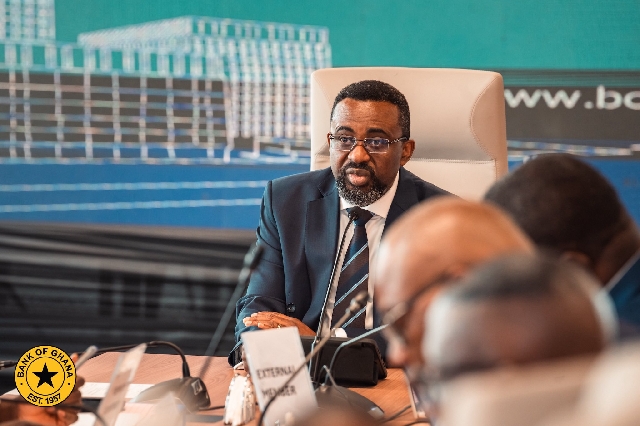

24-Hour Economy Secretariat Engages Bank of Ghana to Align Policy with Macroeconomic Framework
The Secretariat overseeing the 24-Hour Economy programme has held a strategic engagement with the Bank of Ghana as part of efforts to integrate the flagship initiative into the country’s wider macroeconomic policy framework.
The meeting forms part of a broader stakeholder consultation process being undertaken by the Secretariat to present the details of the 24-hour economy policy, gather institutional input, and build partnerships critical to effective execution. The engagement with the central bank comes as the initiative moves from the planning stage into active implementation.
Presidential Advisor on the 24-Hour Economy Programme, Goosie Tanoh, expressed gratitude to the Bank of Ghana for the engagement with its senior leadership and technical teams.
He noted that Ghana’s foremost economic objective at this stage is to consolidate macroeconomic stability and strengthen economic resilience. Mr. Tanoh commended the Bank of Ghana for the stabilising role it has played in laying the groundwork for economic growth, expansion of productive activity, and increased domestic output and exports.
He explained that the 24-hour economy programme is designed to build on these macroeconomic gains by introducing targeted, sector-level interventions that translate stability into sustained growth. He pointed to recent positive economic trends, including steady treasury bill performance and a continued moderation in inflation, as indicators of an improving foundation for long-term development.
Key among the issues discussed was the proposed creation of a Food Security and Price Stabilisation Fund, which is intended to help manage fluctuations in commodity prices, curb food inflation, and strengthen national food security in support of existing monetary policy tools.
The discussions also examined potential areas of collaboration involving the Secretariat, commercial banks and the central bank. Proposals considered included the introduction of a 24H+ credit policy and enterprise financing framework, joint assessment of credit applications, syndicated and direct lending arrangements, and balance sheet support for qualifying 24-hour economy businesses, subject to appropriate due diligence.
Other matters explored included the acceptance of credit insurance schemes to reinforce collateral structures, regulatory considerations for 24-hour economy loan portfolios, the use of foreign exchange hedging instruments to facilitate SME lending at competitive rates, and the deployment of digital platforms to widen access to trade and financial services.
The engagement is expected to culminate in strategic regulatory and policy initiatives that will strengthen the financial services architecture required to support the growth and competitiveness of Ghanaian enterprises under the 24-hour economy framework.

