

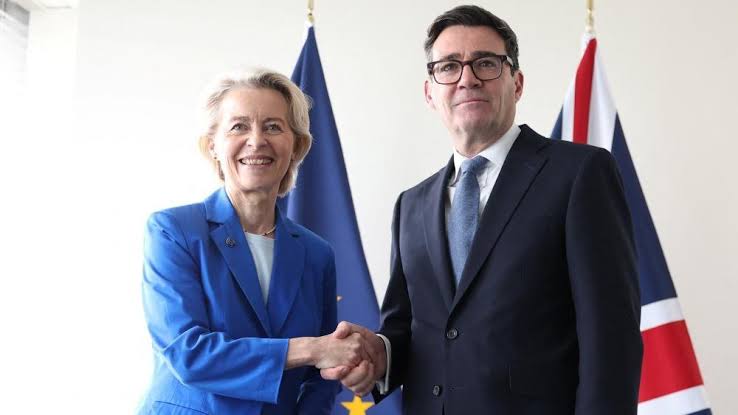

- UK–EU Draft Food Deal Promises £5.1 Billion in Annual Benefits, but Alignment Comes at A Price
The United Kingdom and the European Union have agreed a draft sanitary and phytosanitary (SPS) arrangement intended to remove many of the checks and certificates that have complicated food and agricultural trade since Brexit.
The British government estimates the agreement could eventually generate £5.1 billion in annual economic benefits, but the proposed easing of trade barriers would require the UK to keep its rules aligned with relevant EU standards.
The draft, reported to be about 200 pages, has been circulated to EU member states ahead of a UK–EU summit scheduled for November 20. It is not yet a final agreement in force.
Reports indicate that implementation is expected in the first quarter of 2028, leaving businesses with a significant wait before they can count on the proposed changes.
At the centre of the plan is a reduction in border friction for food and agricultural products. The agreement would remove requirements including £200 Export Health Certificates and £25 Phytosanitary Certificates, along with some inspection fees, organic certification charges, port fees and sampling costs.
It is also expected to reopen routes for British fresh sausages, burgers, shellfish harvested from domestic waters and seed potatoes to EU markets.
For exporters, the significance is not simply the cost of individual certificates. Repeated checks and paperwork can disrupt delivery schedules, increase storage and compliance expenses, and create particular difficulties for perishable goods. For smaller businesses, fixed administrative costs may be especially burdensome because they are spread across lower export volumes.
The UK and EU Trade and Cooperation Agreement preserved tariff-free and quota-free trade for qualifying goods, but it did not eliminate regulatory checks that followed Britain’s departure from the single market.
The SPS proposal is therefore an attempt to reduce those non-tariff barriers without formally returning the UK to the EU’s single market or customs union.
The economic case is significant, but £5.1 billion should be treated as a government estimate of eventual annual benefits, not money already saved or guaranteed. The result will depend on how much trade resumes, how many businesses use the new arrangements and whether the lower compliance burden translates into higher output, investment and export sales.
Business frustration gives the proposal a clear constituency. A British Chambers of Commerce survey of about 1,500 firms found that more than a third wanted customs paperwork and delays removed to support growth.
The proportion rose to 56% among exporters and 58% among manufacturers. The figures suggest that trade barriers are not only a concern for food producers, although the draft agreement is focused on sanitary and phytosanitary rules.
The BCC has welcomed a wider debate about Britain’s relationship with Europe while emphasising that businesses should be involved in decisions about the available models. Its director general, Shevaun Havilland, said the government should “examine all of the options” and “involve business in the decision-making process from the start”.
That reflects a concern that regulatory changes should be assessed not only for political appeal but for their practical effect on firms that trade across the Channel.
The draft’s most politically sensitive element is “dynamic alignment”: Britain would follow and adapt to relevant EU rules on food safety, animal health and plant protection as those rules change.
That could reduce the need for duplicate compliance checks, but it would also constrain the UK’s ability to diverge from the EU in these areas without reintroducing trade friction.
This is the central post-Brexit trade-off. Regulatory independence gives the UK greater formal discretion over its standards. But if the UK and EU apply different rules to goods moving between them, exporters can face additional certification, inspections and administrative costs.
The proposed arrangement seeks to reduce those costs by accepting ongoing regulatory alignment within a defined area of trade.
The agreement is part of a broader reset being discussed ahead of the summit. Draft proposals also cover linking the two sides’ emissions trading systems and a youth travel and work scheme. Further discussions include defence cooperation and access to law-enforcement databases.
These are separate strands, and their inclusion in draft discussions does not mean they have all been approved. Linking emissions trading systems could help British exporters avoid additional costs under the EU’s carbon border regime, but the design and timing of any such arrangement will determine its impact.
The food agreement also highlights a broader question about the UK’s economic relationship with the EU. A sector-specific SPS arrangement may provide a practical route to reducing some trade costs while leaving the UK outside the single market.
But it cannot by itself resolve every barrier facing exporters, including customs procedures, rules of origin and regulatory differences in sectors beyond food and agriculture.
For businesses, the immediate priority will be clarity on the final text, implementation timetable and transition arrangements. If the expected start date is 2028, firms will need to continue operating under existing requirements in the meantime.
The delay also means that any projected benefits are likely to emerge gradually rather than immediately after the political agreement is signed.
The draft is a consequential step towards making cross-Channel food trade less costly, but its success will depend on execution. The government must show how the £5.1 billion estimate was calculated and how benefits are expected to reach producers, exporters and consumers.
It must also explain how dynamic alignment will work in practice and how businesses will be consulted when EU rules change.
The agreement offers Britain a route to recover some commercial efficiency lost after Brexit, while preserving its formal position outside the EU’s single market. Whether that balance proves durable will depend on whether the reduction in red tape outweighs the obligations of alignment and whether the promised savings materialise for the firms that have spent years managing the extra paperwork.

