

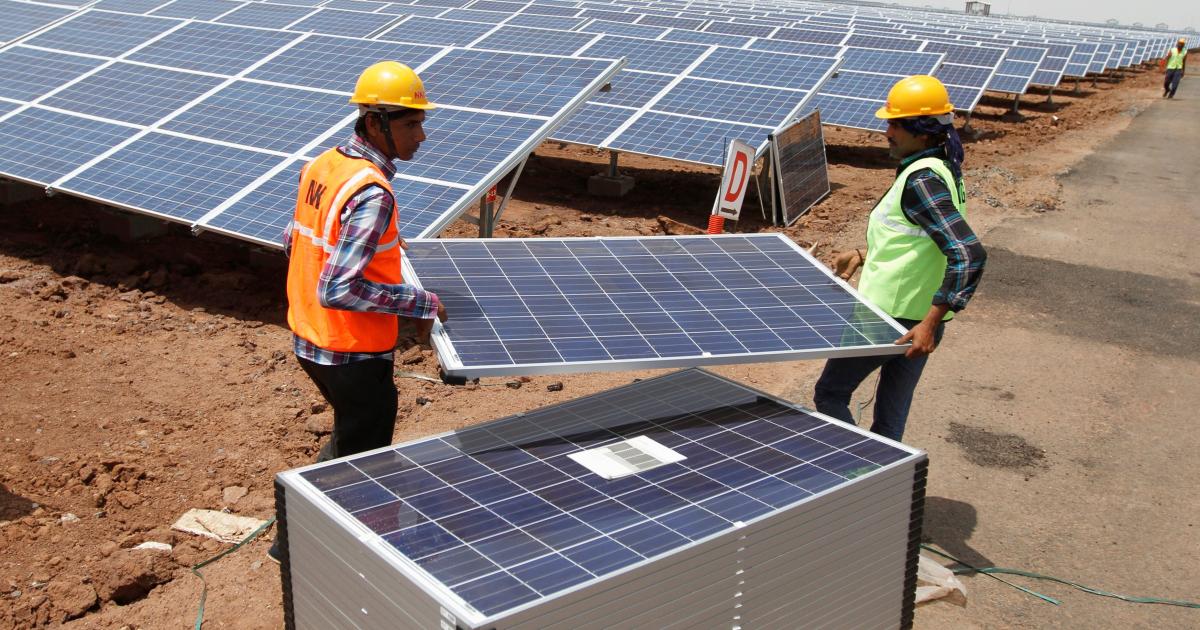

- Ghana Removes Import Duties and VAT on Solar Panels and Batteries
Ghana is removing import duties and value added tax on solar panels and batteries, a move intended to lower the cost of adopting solar power for households and businesses.
The measure gives the government’s energy transition a direct price incentive, but its impact will depend on whether tax relief reaches buyers and whether they can afford the equipment, installation and storage needed to rely on it.
“Ghana’s sunshine must become a greater source of power and prosperity for our people,” Finance Minister Cassiel Ato Forson told Parliament as he presented the 2027 Budget. The government said the exemptions would “strengthen incentives for households and businesses to go solar and lower the cost of adopting clean energy.”
The announcement is a notable shift in how the state is using the tax system: instead of relying only on public investment and utility-scale generation, it is seeking to make private solar adoption less expensive.
The opportunity is significant in a country where reliable electricity is essential to household welfare, business operations and industrial growth. But a tax exemption is an opening move, not a complete energy policy.
The immediate question is how much cheaper solar systems will become. Import duties and VAT are part of the cost of bringing equipment into Ghana, so removing them should reduce the landed price of eligible panels and batteries.
The size of the reduction for consumers, however, will depend on the equipment covered, customs administration, exchange-rate movements, shipping costs, distributor margins and installation charges.
There is also a difference between making equipment cheaper and making solar power accessible. Many households and small businesses may still struggle to pay the upfront cost of panels, inverters, batteries and installation, even after tax relief.
Without affordable credit, payment plans or targeted support, the measure could benefit buyers who already have access to capital more than those facing the greatest energy constraints.
Batteries matter particularly. Panels generate power when the sun is available; storage allows users to draw on that power after sunset or when generation falls. By including batteries in the exemption, the government recognises that solar adoption is about more than panel prices.
But the budget announcement does not specify whether it will also support consumer financing, installation standards, maintenance services or safe battery disposal.
The policy also creates a test for Ghana’s industrial ambitions. Removing import taxes may speed up deployment by reducing the cost of imported equipment. At the same time, it could make it harder for local firms assembling or manufacturing solar components to compete if they pay taxes on inputs or face higher production costs.
The government will need to align cheaper imports with its stated goal of building domestic industry, through clear eligibility rules and support for local value addition where it is commercially viable.
A second challenge is whether more rooftop and small-scale solar can work smoothly alongside the national grid. Greater private generation could ease pressure on the system and reduce some consumers’ dependence on grid electricity.
But it also raises questions about connection standards, safety, surplus power, billing arrangements and how distribution companies will manage a more decentralised supply. Tax incentives can accelerate adoption; regulation and technical standards must keep pace.
The measure arrives as Ghana is outlining a broader plan to strengthen energy security and support industrial expansion. The 2027 Budget also proposes a state-owned 600-megawatt solar plant backed by 2,000 megawatt-hours of battery storage.
The two initiatives serve different purposes: one encourages households and businesses to invest in their own systems, while the other would add large-scale generation and storage to the national supply.
Taken together, they point to a more diverse energy strategy. Yet the results will be judged by delivery, not capacity announcements. For the utility-scale project, that means securing financing, completing construction and integrating the plant into the grid. For the tax exemption, it means demonstrating that prices fall, installations increase and consumers receive dependable systems.
The government has not stated an expected revenue cost from the exemptions, a target for new installations or a timetable for measuring their impact.
Those benchmarks will matter. Without them, it will be difficult to establish whether the policy is increasing access or mainly reducing the tax bill on equipment that would have been imported anyway.
There is also a fiscal trade-off. Tax exemptions reduce revenue on eligible imports, while the government is seeking to maintain fiscal discipline and fund a wide set of priorities.
The policy’s case will be strongest if the foregone revenue helps produce measurable benefits: lower energy costs, improved reliability, new investment and reduced exposure to fuel-price swings.
The test is therefore broader than whether solar panels become cheaper at the port. It is whether the tax relief helps convert Ghana’s sunlight into power that households can afford and businesses can use reliably.
That requires equipment standards that protect consumers, financing that reaches beyond wealthier buyers, and a grid framework capable of accommodating more distributed generation.
The budget offers a clear signal of intent. Now the government must show how the exemption will work in practice and how it will know whether the promised “power and prosperity” is reaching beyond the market for imported equipment.

