

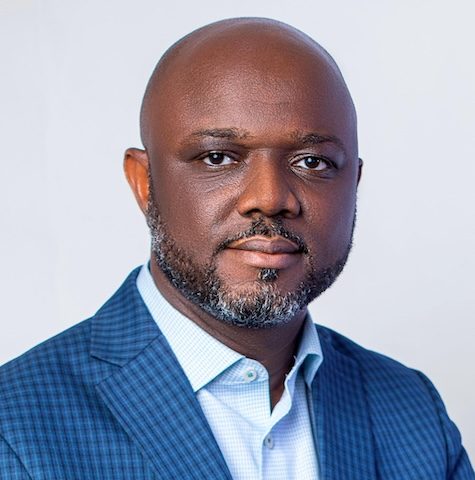

- Reconcile ECG–PDS Accounts Before Criminalising Disputed Funds — Benjamin Boakye
The Economic and Organised Crime Office should not use the coercive machinery of a criminal investigation to determine money allegedly owed between the Electricity Company of Ghana and Power Distribution Services before the underlying accounts have been reconciled, according to Benjamin Boakye, Executive Director of the Africa Centre for Energy Policy.
Mr Boakye has mounted one of the most pointed challenges yet to the handling of the renewed PDS investigation, arguing that questions over disputed funds, professional fees and contractual obligations must first be separated from allegations of criminal conduct if Ghana is to preserve the distinction between investigation and punishment.
Writing after an appearance on JoyNews’ Newsfile, the ACEP executive director said the programme had rekindled his concern about what he described as “institutionalised lawlessness masquerading as the exercise of lawful authority”, particularly where broad discretionary powers are exercised in ways that appear heavy-handed or disproportionate.
His intervention comes amid renewed scrutiny of EOCO’s investigation into transactions connected to the failed PDS electricity-distribution concession, including an alleged GH¢850 million linked to an account at CalBank. State officials have previously said investigators are tracing the movement of funds they believe may have belonged to ECG, while lawyers and individuals connected to PDS have disputed that characterisation.
The case has therefore evolved into something larger than another chapter in the long-running PDS controversy. It now presents a fundamental legal and institutional question: at what point does the legitimate exercise of investigative powers risk becoming punishment before guilt has been established?
Mr Boakye’s answer is that the line is crossed when restrictions imposed during an investigation begin to resemble sanctions.
“Investigation is not punishment, and bail conditions should not become punishment by another name,” he wrote.
He said he had learnt that PDS executives and lawyers arrested in connection with the investigation were reportedly required to report to EOCO every three days while inquiries continued. He also said accounts belonging to PDS, its executives and some lawyers had been frozen, including private accounts of people who, he argued, had no direct dealings with the State in the underlying transaction.
Those concerns partly echo a recent Newsfile commentary by Samson Lardy Anyenini, who said court documents he had reviewed showed that businessman Philip Kwame Asare Ayesu had been detained for two days and placed on GH¢100 million bail, after an earlier GH¢50 million figure, while corporate and personal accounts were frozen. The commentary also said lawyers connected to the case had, since May, been required to report to EOCO three times each week.
The law firm Minkah-Premo, Osei-Bonsu, Bruce-Cathline and Partners has separately said two of its lawyers were detained and granted GH¢50 million bail each, while rejecting suggestions that they had participated in wrongdoing involving the disputed GH¢850 million. The firm has characterised their treatment as intimidation and an abuse of investigative power. Those remain allegations contested by state investigators.
EOCO Executive Director Raymond Archer has rejected suggestions that the PDS investigation is being conducted improperly. He has described the exercise as “professional and methodical” and said the Office is proceeding on evidence and in accordance with due process.
That competing account is important. Anti-corruption and financial-crime agencies must be able to preserve assets, prevent dissipation of suspected proceeds and secure cooperation from persons under investigation. Economic crimes often involve complex company structures, rapid transfers and transactions whose significance may only become clear after extensive forensic analysis.
But the existence of those powers does not make the question of proportionality disappear.
Mr Boakye went further, saying he understood that EOCO had sought to move money from frozen accounts into an account under its control. He said most banks reportedly declined to act without a specific court order, while CalBank complied.
That assertion has not been independently established in the material reviewed by NorvanReports and should therefore be treated as Mr Boakye’s account of events rather than an established finding.
His broader question nevertheless deserves examination: what is the legal character of money that is frozen while its ownership, contractual status and possible connection to an offence remain disputed? Freezing an asset ordinarily preserves the status quo while investigators or courts determine its legal position. Treating the same asset as already recoverable proceeds requires a more consequential conclusion about ownership and wrongdoing.
It is here that the 2025 arbitration between PDS and ECG becomes central to Mr Boakye’s argument.
The London-seated tribunal issued its award on November 3, 2025. It dismissed PDS’s claims and held that ECG had been entitled to terminate the underlying Bulk Supply Agreement and Lease and Assignment Agreement after the demand guarantees required for the transaction were invalidated through the fraud of a third party. The tribunal also found that the Transfer Date Confirmation Letter was voidable for common mistake, while specifically finding that PDS had not made the misrepresentation alleged against it.
That combination matters because neither side emerged with the simple narrative sometimes attached to the award.
ECG prevailed on the validity of the termination. PDS failed in its substantive claims. But the tribunal also dismissed ECG’s counterclaims based on alleged breaches of the transaction agreements and, crucially for the present controversy, held that it had no jurisdiction over ECG’s counterclaims arising under the Interim Protocol.
The Interim Protocol was signed by ECG and PDS on August 8, 2019, after the original transaction had been suspended. According to the award, it created a separate regime governing the parties’ relationship during that period and contemplated, among other things, a reconciliation of amounts due and owing between them before the Protocol was executed.
The tribunal concluded that the Protocol was a separate agreement, contained no arbitration clause and did not incorporate the dispute-resolution provisions contained in the original transaction agreements. It therefore declined jurisdiction over claims arising from it.
That jurisdictional finding lies at the core of Mr Boakye’s challenge.
“The consequence of the Award is not that the money in PDS’ account has magically become criminal proceeds,” he wrote.
His position is that if the Interim Protocol governed the financial relationship between ECG and PDS during the relevant period and contemplated reconciliation, the first task should be to establish what ECG was owed, what PDS collected, what PDS paid, what each side claims and what balance, if any, remained outstanding.
Only after that accounting exercise, he argues, can the State confidently distinguish a contractual debt from money that may have been dishonestly diverted.
“The parties must first follow the dictates of the Protocol and establish, through reconciliation, what each party owes the other,” Mr Boakye said. “That is fundamentally a civil and accounting matter.”
The argument is intellectually compelling, but it is not in itself dispositive of EOCO’s legal authority to investigate.
The fact that an arbitral tribunal lacked jurisdiction to adjudicate claims under the Interim Protocol does not necessarily mean a criminal investigation must stop until a civil reconciliation is completed. If investigators possess independent evidence suggesting money laundering, dishonest receipt, diversion of funds, falsification of records or another offence, criminal authorities are not automatically precluded from examining that evidence merely because a related contractual dispute exists.
The more precise question is whether the suspected criminality can be established independently of a contractual liability that has not yet been determined.
That distinction could ultimately prove decisive.
Mr Boakye argues that the investigative sequence has been reversed: disputed funds are being treated as potentially criminal before ECG and PDS have established the underlying financial position.
“If, after that reconciliation, there is evidence that someone deliberately falsified accounts, diverted funds, stole money or otherwise committed a criminal offence, then by all means investigate and prosecute,” he wrote. “But you cannot reverse the sequence: criminalise the disputed account first and reconcile it later.”
The controversy over legal fees introduces another layer.
Mr Boakye said he understood part of the inquiry to concern whether lawyers associated with PDS charged excessive professional fees in connection with the multimillion-dollar international transaction and subsequent proceedings.
“What exactly is the alleged crime?” he asked.
His question is not whether lawyers are immune from criminal investigation. They are not. Rather, his argument is that disagreement over the quantum of a professional fee cannot, without additional evidence, become a substitute for proof that the payment itself was criminal.
He asks who determines what constitutes an excessive fee in a complex international commercial dispute: EOCO, a court, the client, professional regulators or an agreed contractual framework?
The issue becomes especially sensitive where lawyers receive money belonging to clients or are involved in moving funds to pay foreign counsel. Investigators are entitled to examine transactions that they reasonably suspect may form part of unlawful financial activity. But equally, legal representation in an international arbitration can involve substantial fees, and the size of a payment alone does not resolve the question of its legitimacy.
The firm representing the lawyers has said they were questioned over allegations including dishonestly receiving and abetment of money laundering, while denying wrongdoing and maintaining that the authorities failed to identify the specific property supposedly dishonestly received.
That dispute should eventually be resolved through evidence rather than competing public statements.
Mr Boakye’s larger concern is therefore institutional rather than personal.
He argues that bail, account freezes, reporting requirements and asset-preservation measures must remain tools for facilitating an investigation, not mechanisms for imposing hardship before charges have been tested.
The concern is especially acute in financial-crime cases because the investigative process itself can be economically destructive. Freezing corporate and personal accounts can restrict businesses, disrupt salaries and obligations, affect legal representation and damage reputations long before a court decides whether an offence occurred.
That does not mean such powers should disappear. It means the evidentiary basis, duration and proportionality of their use matter.
The State also has an important countervailing interest. If GH¢850 million or any other amount belonging to a public entity was unlawfully diverted, Ghana has an obligation to identify the beneficiaries, preserve recoverable assets and prosecute any person who participated in an offence. Failure to do so would itself constitute a serious governance failure.
EOCO’s insistence that its investigation is evidence-led must therefore be tested against the eventual facts, just as the claims of those under investigation must be tested.
The PDS arbitration does not provide an easy shortcut for either side. It confirms ECG’s contractual right to terminate the transaction, but it does not adjudicate the financial claims arising under the Interim Protocol. It rejected PDS’s claims but also left the accounting issues governed by that separate agreement outside the tribunal’s jurisdiction.
That makes it risky to cite the award either as proof that all PDS-related funds belonged to ECG or, conversely, as proof that PDS and its associated parties can have no criminal exposure.
What the award establishes is narrower and more important to the present debate: one potentially crucial set of financial questions was never decided by the arbitrators.
For Mr Boakye, that unresolved space is precisely where reconciliation should begin.
“If the allegation is that money belonging to ECG or the State is missing, then where is the reconciliation establishing what was due to ECG, what PDS collected, what PDS paid, what remained outstanding and why?” he asked.
That may ultimately be the most consequential question in the renewed PDS controversy.
Ghana’s institutions have every right — and responsibility — to investigate credible allegations of economic crime. But the legitimacy of that power depends not only on what investigators eventually uncover. It also depends on whether the methods used before guilt is established remain proportionate, reviewable and grounded in law.
Mr Boakye’s warning is therefore broader than PDS, ECG, EOCO or GH¢850 million.
“The State cannot use the coercive machinery of criminal investigation to determine a civil debt,” he wrote.
His concluding proposition is even sharper: “The rule of law requires that we establish the debt before we establish the crime.”
Whether the courts ultimately accept that sequencing as a legal requirement remains to be seen. But as a test of institutional restraint, the question is difficult to dismiss.
The credibility of Ghana’s anti-corruption campaign will ultimately depend not only on whether public money is recovered or offenders convicted, but also on whether the State demonstrates that formidable investigative powers can be exercised without turning suspicion into punishment and disputed liability into presumed criminality before the evidence has had its day in court.

