


- The Oil Market Absorbed the War Shock, but Buffers Are Running Low
By Jean-Marc Natal, Azim Sadikov
The largest disruption to the global oil market in decades should have sent prices soaring. But after spiking at the start of the war in the Middle East, crude prices soon settled in a range of $90 to $100 per barrel, much lower than many had feared. Why didn’t prices climb higher? The answer is that a combination of factors helped cushion the initial blow. But much of that room has now been used up.
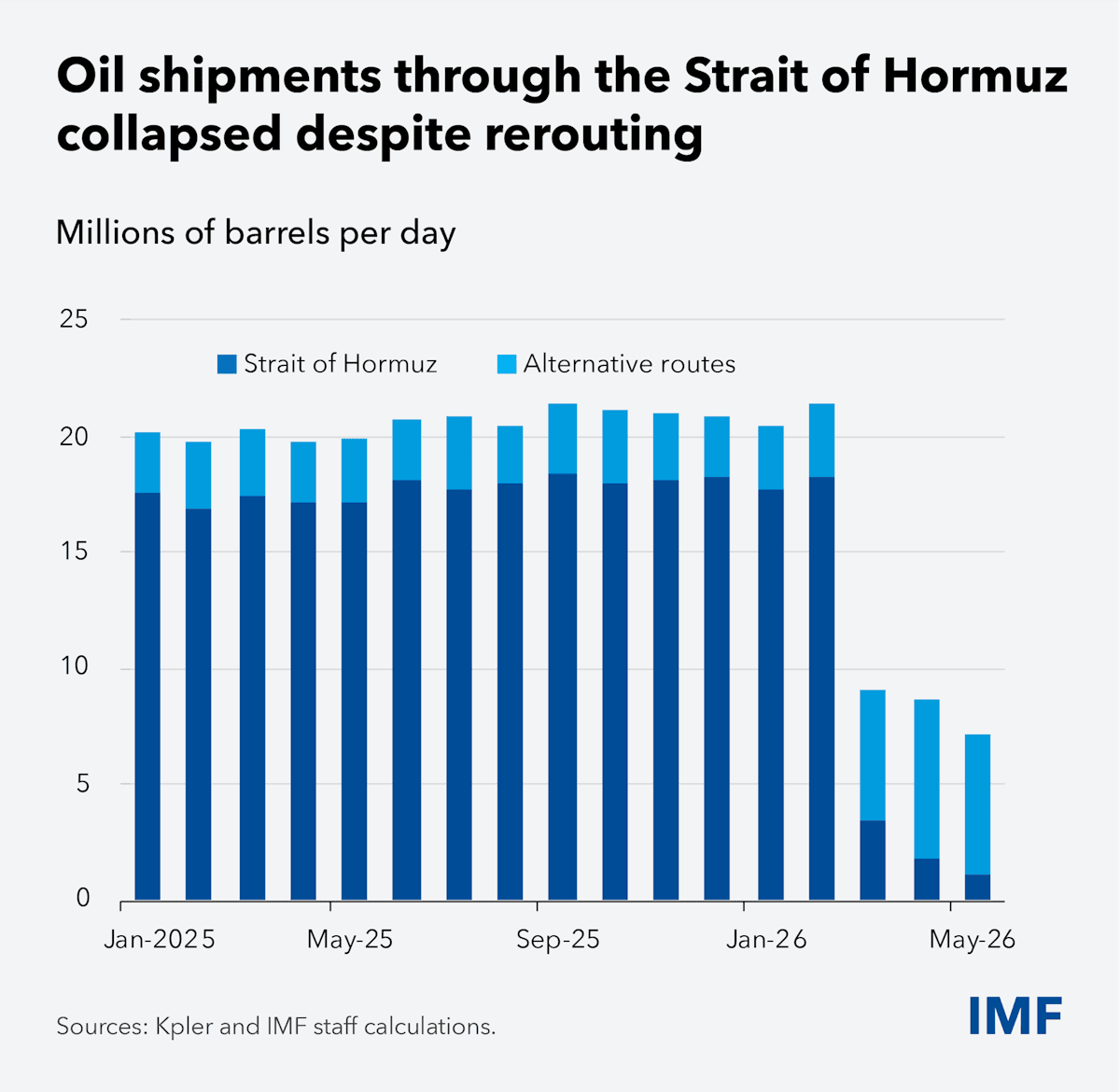
There are plenty of reasons why oil should have become cripplingly expensive. The war effectively closed the Strait of Hormuz, cutting off some 20 million barrels a day of crude oil and refined products, a fifth of global consumption. Gulf producers redirected what they could. Saudi Arabia sent oil through its pipeline to the Red Sea port of Yanbu. The United Arab Emirates pushed its Fujairah port, outside the strait, close to capacity. Even so, these workarounds offset only a fraction of lost Hormuz volumes.
Beyond crude, refined product output in the gulf region dropped significantly, hitting diesel and jet fuel hardest—products in which the region accounts for about 10 percent of global supply.
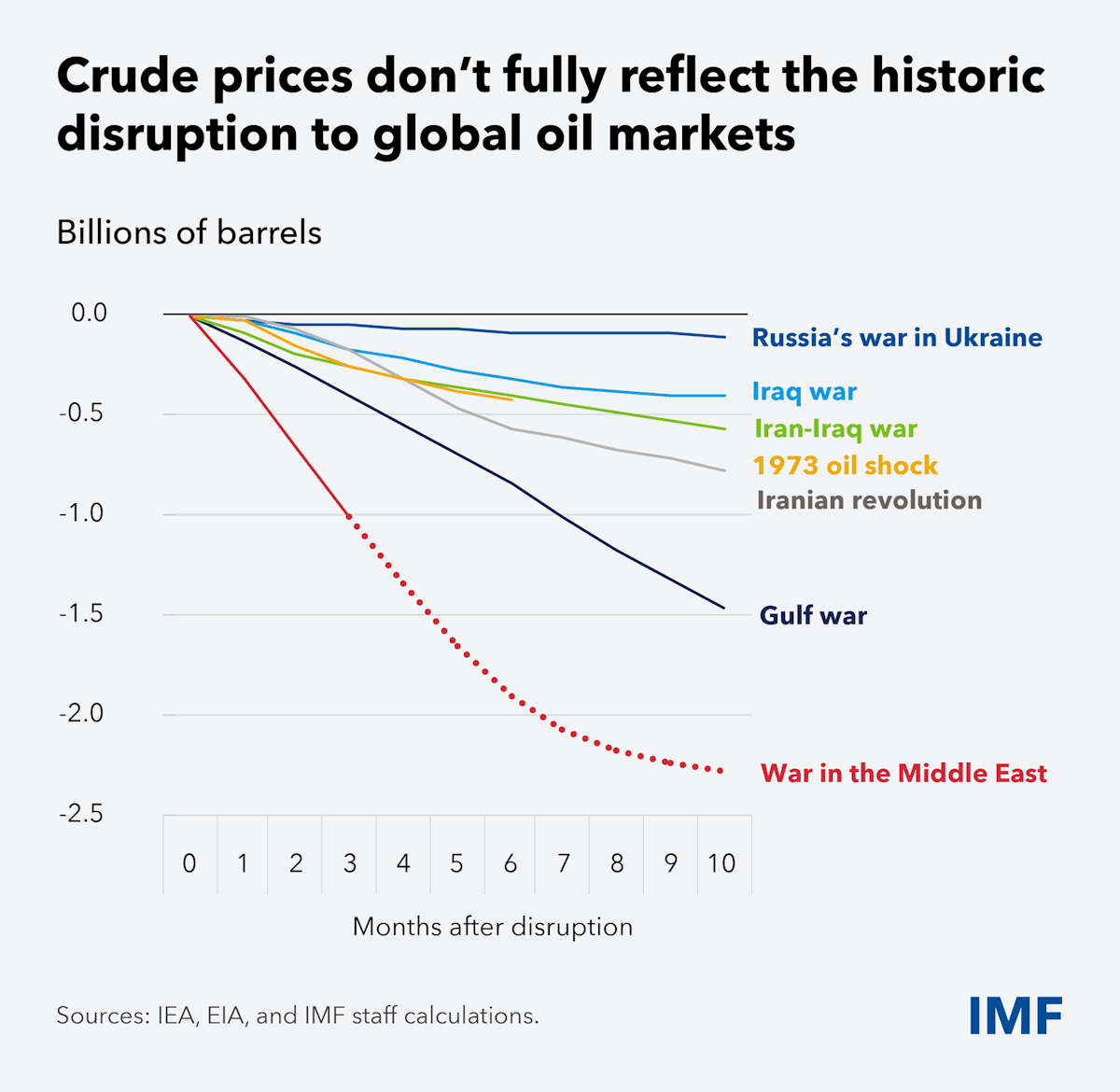
By the end of May, more than 1.1 billion barrels of crude—equivalent to about 10 days of typical global consumption—had not reached the market. At the same stage of the disruption, the shortfall exceeded those of the 1973 oil shock, the Iran-Iraq war, and the Gulf War.
Three shock absorbers
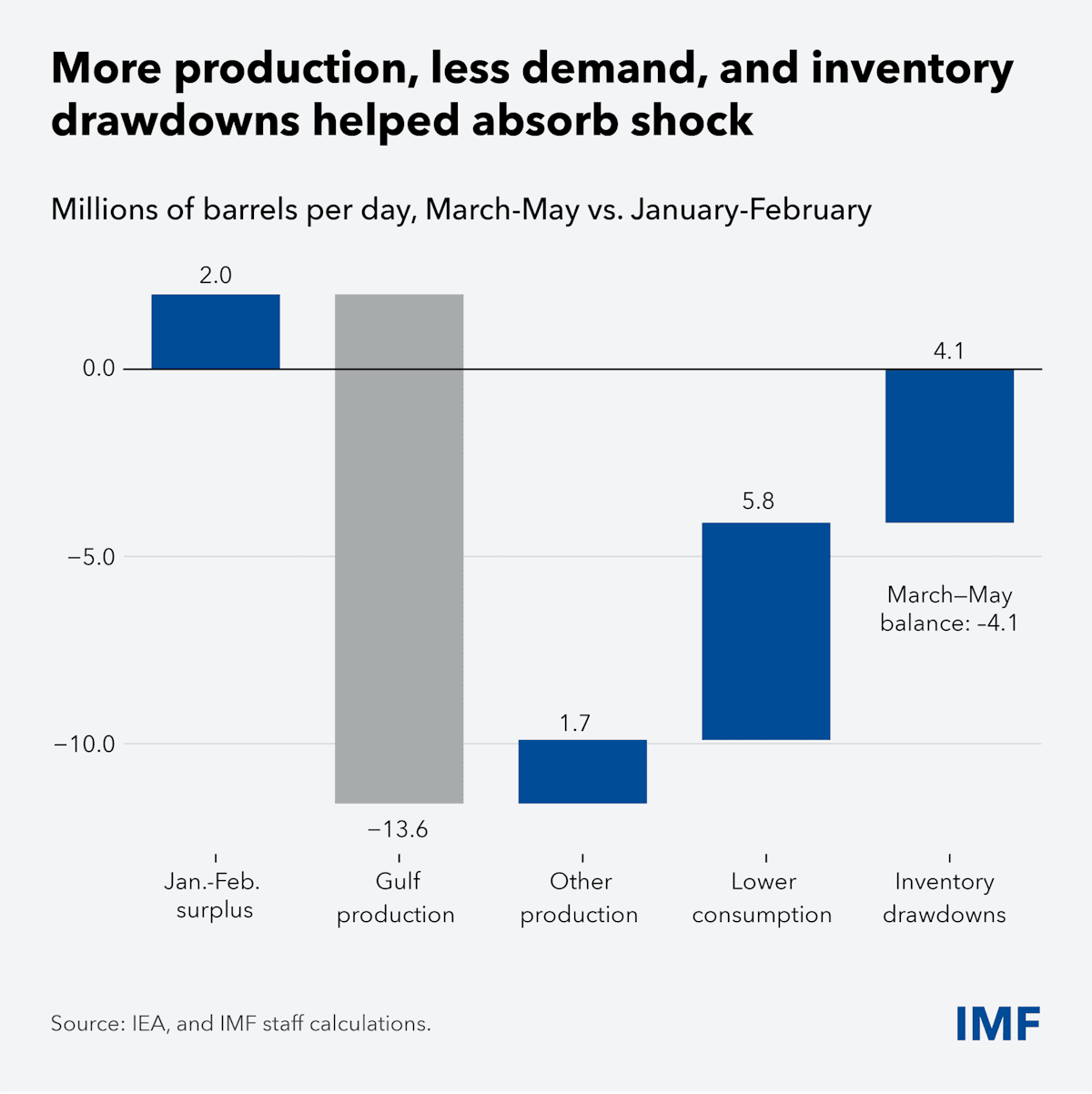
How did the global system absorb a disruption of this scale? In the days before the war, supply was running about 2 million barrels a day above demand, providing a head start. In the March-May period, three factors helped close the gap:
- Demand compression did the heavy lifting, especially in Asia, as higher prices reduced consumption and economies turned to alternatives such as coal and renewables. Transportation demand proved stickier though, in part because of fuel price caps, subsidies, and tax rebates that contained the impact—but at a fiscal cost.
- Production outside the gulf rose more than expected, by nearly 2 million barrels a day above 2025 levels. The United States led the way, with Venezuela, Guyana, and Russia also raising production.
- Inventories did the rest. The estimated market deficit of about 4.0 million barrels a day in March–May was met almost entirely by drawing down global stocks, including commercial inventories in China and strategic reserves.
Recovery won’t be instant
Before the most recent escalation of tensions, the US-Iran framework agreement to reopen the strait sent prices sharply lower, in large part because stranded oil on tankers in the Gulf could rapidly return to the market. Still, much remains uncertain—including when freedom of navigation through the world’s most critical oil chokepoint will be effectively restored, and how quickly shipping, insurance, and operator confidence will follow.
Industry estimates suggest it will take two to three months before a significant share of oil flows can resume following a full reopening of the waterway. A longer-term concern is that prolonged production halts could cause permanent output losses, especially where financing to restart wells is scarce.
Whenever supply begins to recover, the oil deficit will close only gradually, drawing inventories closer to operational minimums—the level below which the physical system itself begins to bind.
Lessons for policymakers
Energy shocks still bite. What cushioned the initial blow this time is that energy markets had room to maneuver and absorb it. As tensions flare again in the Strait of Hormuz, that room is now smaller and shrinking further as spare capacity has been deployed, demand has compressed, and inventories have been drawn down. Unless inventories are replenished, the world will start from a weaker position when the next shock comes.
For policymakers, three lessons stand out:
- Inventories matter. Rebuilding them is essential to prepare for future shocks.
- A single chokepoint leaves the global economy heavily exposed. Diversifying energy sources including renewables is as important as diversifying routes.
- Support to consumers should be targeted to the most vulnerable and temporary to protect government budgets and the price signals that encourage energy saving and efficiency.
Energy markets’ flexibility and prompt policy actions bought the global economy time. An enduring US-Iran agreement would create an opening to restore supply. But significant efforts are still critically needed to increase the resilience and diversification of energy supply and prevent oil shocks from destabilizing the global economy.

