
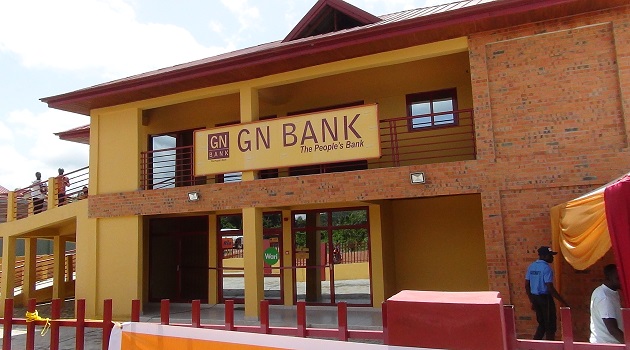

- GN Savings Has Won in Court, But Rebuilding the Bank Will Be Tough
Dr Nana Kweku Ndoum, President of Groupe Ndoum, has warned that restoring GN Savings and Loans to full operations will be a difficult process despite the Court of Appeal’s decision ordering the restoration of the company’s licence.
Speaking on Newsfile on Saturday, Dr Ndoum said years of receivership, asset deterioration and disposal had significantly complicated any immediate return of the institution to business. He said Groupe Ndoum is awaiting clear directives from the courts on the process for the return of the company’s assets before taking firm decisions on how to relaunch the business.
“We have pictures and videos of vehicles, generators and motorcycles rusting and exposed to the elements,” he said.
“There are places where you would previously see 100 or 200 vehicles parked, but if you go there today, you will find only four or five. So a lot of the assets have been disposed of,” he added.
The comments add a fresh practical layer to the legal victory secured by GN Savings and Loans after years of contesting the Bank of Ghana’s 2019 licence revocation.
The Court of Appeal ruling has been celebrated by Groupe Ndoum as vindication of its long-held position that the company was unfairly treated during the financial sector clean-up. But Dr Ndoum’s remarks suggest that the court decision is only the beginning of a more difficult process involving asset recovery, regulatory engagement, recapitalisation and public confidence rebuilding.
The institution, formerly GN Bank, was downgraded to a savings and loans company in January 2019 before its licence was revoked in August that year by the Bank of Ghana.
Dr Ndoum has disputed claims that the institution was insolvent before the downgrade and revocation, arguing that the bank had sufficient assets and that its financial position was misrepresented. He also claimed that unpaid government-related receivables were central to the liquidity problems that later affected the institution.
In a related interview, he said government owed GN Bank more than GH¢300 million in unpaid Interim Payment Certificates before the reclassification and licence revocation, arguing that those unpaid amounts formed the basis of the bank’s financial strain.
The restoration question now goes beyond the licence itself. A financial institution cannot operate on a court order alone. It needs capital, systems, branches, staff, liquidity, customer confidence and regulatory clearance.
The reported deterioration or disposal of assets under receivership could make the process more complex, particularly if the company has to reconstruct its balance sheet, recover physical assets, resolve outstanding liabilities and rebuild operational infrastructure.
The case has also revived wider debate over Ghana’s banking sector clean-up and its consequences for affected institutions, depositors, workers and shareholders. Dr Ndoum has said the collapse of GN Bank led to the loss of more than 4,500 jobs, underscoring the social and economic impact of the regulatory action.
For the Bank of Ghana, the ruling raises difficult questions about regulatory process, asset management during receivership and the practical implications of restoring a licence after several years of institutional disruption.
For Groupe Ndoum, the challenge is now to convert legal momentum into a credible recovery plan.
That plan will likely require a detailed asset audit, engagement with the Bank of Ghana, fresh capital commitments, governance restructuring and a clear strategy to reassure former customers and the wider market.
The Court of Appeal may have reopened the door for GN Savings and Loans. But Dr Ndoum’s comments show that walking through that door will not be easy.
The legal victory has restored hope. The operational comeback will require far more: assets, capital, regulatory trust and public confidence.

