

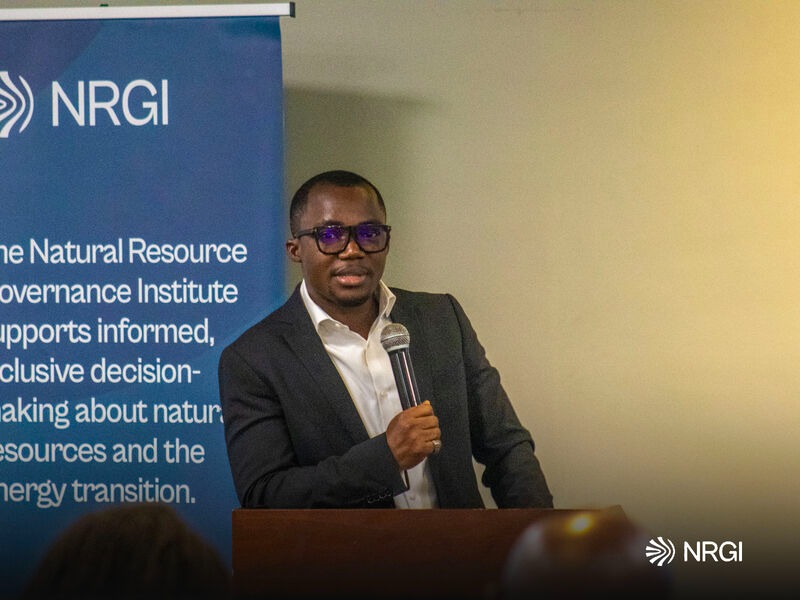

NRGI Urges Full Transparency in Power Procurement to Prevent Circular Debt Recurrence
Country Director of the Natural Resource Governance Institute (NRGI), Patrick Stephenson, has stressed that any meaningful “reset” of Ghana’s energy sector must prioritise full transparency in power procurement and contracting processes to prevent a recurrence of circular debt accumulation.
Speaking on the NorvanReports and Economic Governance Platform (EGP) X Space Discussion on the topic “Energy Sector ‘Reset’: Will it End the Circular Debt or Recreate It?”, Mr. Stephenson argued that while current interventions focus on managing existing liabilities, deeper structural issues upstream continue to drive debt build-up in the sector.
According to him, the origins of Ghana’s energy sector debt crisis can be traced largely to opaque power purchase agreements (PPAs) entered into over the years, often under emergency conditions with limited public disclosure and unfavourable commercial terms.
He pointed to “take-or-pay” contracts as a major contributor to the problem, noting that such agreements obligated the state to make payments regardless of whether power was consumed or not. This, he said, significantly increased costs and compounded financial pressures on state-owned utilities, particularly the Electricity Company of Ghana (ECG).
Mr. Stephenson observed that secrecy in public contracting carries high fiscal risks, adding that the accumulation of nearly $1 billion in energy sector liabilities at a certain point, reflected the long-term cost of non-transparent procurement practices. He maintained that current cash waterfall mechanisms and financing strategies only address the symptoms of the problem, rather than its root causes.
In his view, a genuine reset must begin with absolute transparency in power procurement and contracting, supported by competitive processes and full disclosure of contract terms. He warned that without such safeguards, progress achieved through ongoing reforms could easily be reversed by future administrations entering into poorly structured agreements.
The NRGI Country Director speaking further, acknowledged recent reforms including parliamentary approval of competitive power procurement frameworks as positive and a good start. However, he stressed that enforcement remains weak and must be strengthened through decisive implementation and institutional accountability.
Mr. Stephenson further called for stronger accountability mechanisms across the sector, including clear performance benchmarks, enforceable key performance indicators (KPIs), and consequences for non-performance. He argued that energy sector inefficiencies pose not only fiscal risks but also broader energy security and national security concerns.
He also cautioned against overreliance on short-term policy measures such as rapid capacity additions to address immediate power shortages, warning that such approaches often undermine long-term structural reforms. According to him, sacrificing transparency-driven reforms for short-term fixes risks recreating the very conditions that led to the current energy debt crisis.
On governance, Mr. Stephenson said responsibility for reform implementation must be shared across institutions, with the Ministry of Energy and Green Transition leading sector governance and procurement reforms, while the Ministry of Finance takes primary responsibility for managing the debt implications and setting measurable fiscal targets.
Mr. Stephenson concluded that without sustained transparency, accountability, and institutional discipline, Ghana risks revisiting the same energy sector challenges in the near future, despite current reform efforts.

