

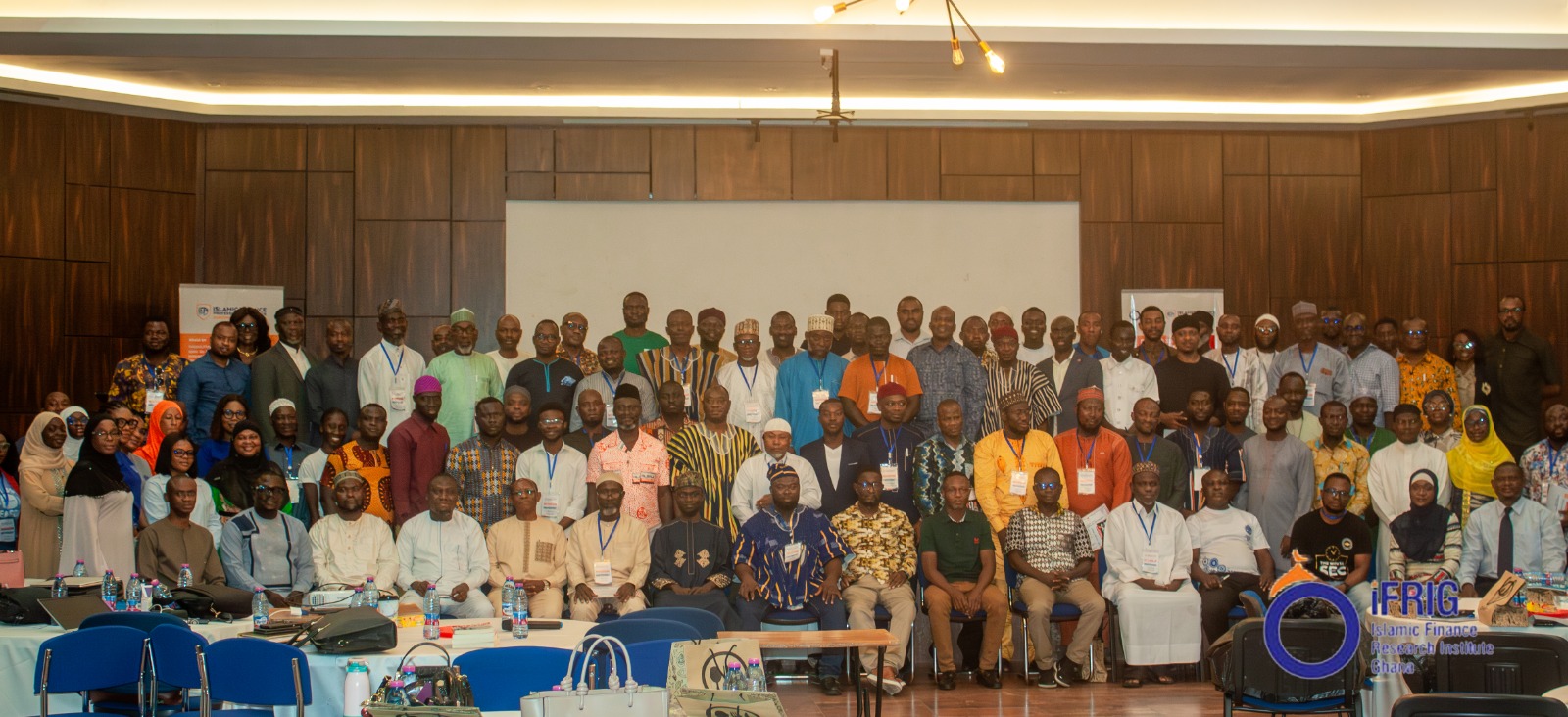

IFRIG Trains Banks, Regulators to Strengthen Non-Interest Banking and Finance in Ghana
A five-day intensive training programme on Non-Interest Banking and Finance ended successfully on Friday, January 23, 2026, marking a significant milestone in Ghana’s efforts to strengthen capacity in ethical and alternative finance.
The programme, which ran from January 19 to 23, 2026, brought together participants from nine commercial banks, two microfinance institutions, one regulatory body, and other key stakeholders across the financial services sector. The training aimed at deepening understanding of non-interest banking principles and equipping professionals with practical skills to support the growth of the sector.
Participants were drawn from a wide range of departments, including Customer Service, Operations, Lending and Credit, Retail and Corporate Banking, Treasury, Financial Control and Accounts, Risk Management, Digital Banking, Human Resources, Marketing and Communications, and Research. This broad representation ensured rich discussions and practical cross-functional learning.
Over the course of the programme, participants explored the principles, products, governance structures, and strategic opportunities within non-interest finance. Areas covered included ethical banking models, Sukuk (non-interest bonds), and Takaful (Islamic insurance), with sessions designed to link theory to real-world application. Observers noted that the depth of discussion and quality of interaction reflected the high calibre of professionals in attendance.
Speaking at the programme, Dr. Shaibu Ali, Director-General of the Islamic Finance Research Institute of Ghana (IFRIG), underscored the importance of capacity building in the sector.
“For non-interest banking to thrive in Ghana, institutions must invest in people who understand both the principles and the practical application of ethical finance,” he said.
The training featured facilitators from both local and international jurisdictions, providing participants with a global perspective. Local facilitators included Dr. Shaibu Ali and Sherif Heiman Shaban, Director of Training at IFRIG. International facilitators comprised Alhaji Attahiru Maccido of Malaysia, Director at IFRIG and Lead Facilitator, Mr. Steve Kyalo Muia from Kenya, and Mr. Ridwan A. Migdad and Mr. Akeem K. Odeduntan from Nigeria.
According to Alhaji Attahiru Maccido, the programme was structured to demystify non-interest finance for practitioners.
“Our focus was to ensure participants clearly understand how the entire non-interest finance ecosystem works from banking to Takaful and Sukuk and how these instruments can be practically deployed,” he explained.
Participants from the capital market industry were trained on the practical application of key non-interest financial instruments such as Murabaha, Mudaraba, Musharaka, Ijara, Istisna, and Sukuk, particularly within the context of capital market development and regulation.
Meanwhile, participants from the banking sector gained hands-on knowledge on how these non-interest financial contracts can be applied within banking operations, investment structures, and capital markets. The programme also highlighted the roles of the Non-Interest Banking Advisory Committee (NIBAC) and the Non-Interest Finance Advisory Council (NIFAC) in promoting compliance, transparency, and ethical conduct within non-interest financial institutions.
A participant from the banking sector described the training as timely and practical.
“The programme has helped us better understand how non-interest products can be integrated into existing banking operations without compromising regulatory requirements,” the participant noted.
The training concluded with syndicate group presentations, where participants presented structured non-interest financial products and services developed during group discussions. These presentations demonstrated participants’ ability to translate learning into practical, market-ready solutions.
Overall, the programme reinforced Ghana’s growing commitment to ethical finance, financial inclusion, and sustainable economic development, while laying a strong foundation for the continued growth of non-interest banking and finance in the country.

