

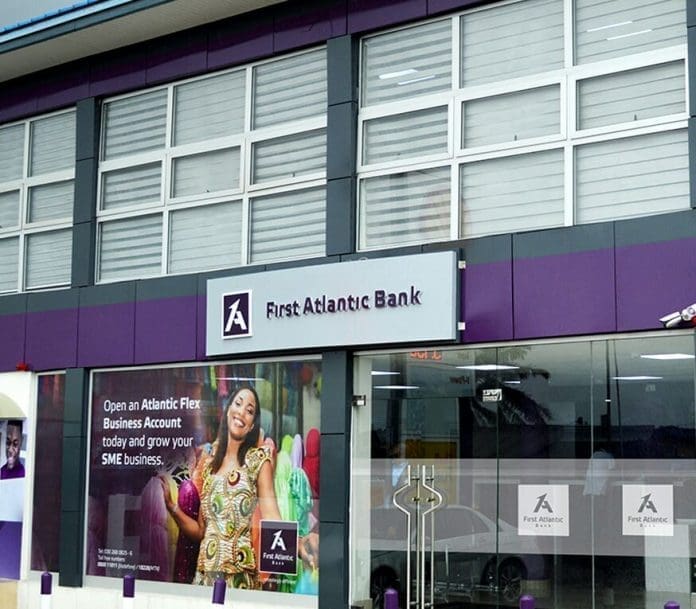

Accra High Court Orders First Atlantic Bank to Pay GH¢8.44 Million for Unauthorised Bond Tendering
The Accra High Court, Commercial Division 6, presided over by Justice Sedina Agbamava, has directed First Atlantic Bank to pay GH¢8,439,959.62 to a customer for losses incurred after the bank tendered his bonds into the Government of Ghana’s Domestic Debt Exchange Programme (DDEP) without his consent.
In the case of Vihama Energy Company Ltd & Anor v. First Atlantic Bank [TLP-HC-2025-06], the court also awarded exemplary damages of GH¢2 million and litigation costs of GH¢100,000 in favour of the plaintiffs, represented by Gratia Law Consult, led by Alfred Paapa Darkwah.
The court found that the bank acted negligently, failing to safeguard the investment entrusted to it, and rejected the bank’s argument that the Bank of Ghana coerced bondholders into participation or that the bonds’ non-submission posed operational risks. Justice Agbamava noted in her judgment that: “The Defendant’s unilateral decision to tender the bonds without the consent of the owner was a fundamental breach of its mandate and fiduciary trust as no such discretion was warranted by the facility agreement or any other instrument.”
The plaintiffs, Vihama Energy and Sebastian Klenam Asem, had acquired a loan facility from First Atlantic Bank, secured by Government of Ghana Bonds (GOG-26) and ESLA Bonds (ESLA-31), lodged as collateral. Evidence presented to the court showed that at no point did the plaintiffs authorise the bank to submit the bonds into the DDEP.
Despite the lack of consent, the bank unilaterally tendered the bonds, claiming it was protecting its interests due to alleged loan defaults. The court, however, found no evidence supporting these claims. The plaintiffs had fully met their obligations under the loan facility, and the bonds retained their value throughout the period.
Testimony also revealed that during the period the bonds were wrongfully lodged under the DDEP, the plaintiffs did not receive all coupon payments due to them. Consequently, the court awarded the compensation to cover both the lost returns and additional damages to reflect the bank’s egregious conduct.
Justice Agbamava’s ruling underscores the fiduciary responsibility of banks to act with consent and diligence when handling clients’ investments, setting a strong precedent for the protection of investor rights in Ghana.

