

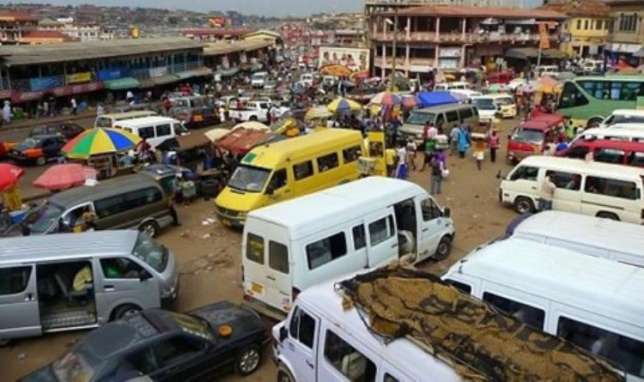

- Commuters Win Temporary Reprieve as Transport Operators Hold Back 30% Increase
Ghana’s road transport operators have temporarily suspended plans to raise fares by 30.00%, giving the government time to introduce measures intended to reduce petroleum prices before the next pricing window.
The decision provides short-term relief to commuters but leaves the fare increase firmly on the table, with operators expected to reassess their position after fuel prices are reviewed on Friday.
Transport unions agreed to delay the proposed adjustment following discussions with government officials, who appealed for more time to intervene in the petroleum market and ease the financial pressure facing commercial drivers.
Samuel Amoah, deputy public relations officer of the Ghana Private Road Transport Union, said the unions had not abandoned the proposed fare increase but would wait for the outcome of the next pricing window before taking a final decision.
The suspension reflects an attempt to balance the rising operational costs faced by drivers against the burden that a steep fare increase would impose on households already contending with higher fuel and living expenses.
Commercial transport operators argue that current pump prices have significantly eroded their margins.
Diesel is selling at about GH¢17.78 per litre, while petrol is priced at roughly GH¢14.95 per litre. The increases have raised the cost of operating taxis, minibuses and other commercial vehicles, particularly on routes where fares have not kept pace with fuel expenses.
Fuel represents one of the largest and most volatile components of commercial transport costs. Changes in pump prices can rapidly affect the viability of routes, especially where passenger numbers are low, traffic congestion increases fuel consumption or operators must travel long distances before filling their vehicles.
Mr Amoah said the unions’ own assessment of the petroleum market suggested that prices could increase further during the next pricing window.
Such an outcome would strengthen the case for a fare adjustment and make it more difficult for transport operators to continue absorbing the additional cost.
The government’s appeal therefore appears to depend on whether its proposed interventions can prevent another rise or deliver a measurable reduction at the pump.
The details of the measures being considered were not disclosed, leaving uncertainty over their scale, timing and likely impact on petroleum prices.
Ghana operates a deregulated downstream petroleum market in which oil marketing companies adjust prices in response to international refined-product costs, the cedi-dollar exchange rate, taxes, levies and margins across the supply chain.
Government intervention could involve changes to taxes or levies, reductions in selected margins or other mechanisms designed to cushion consumers from international price movements.
However, any intervention would need to balance affordability with the financial sustainability of oil marketing companies, bulk distributors, transport operators and public institutions funded through petroleum levies.
For commercial drivers, the current pressure extends beyond fuel.
Operators must also meet the cost of vehicle maintenance, spare parts, insurance, licensing, tyres and daily payments to vehicle owners. Many of those expenses are directly or indirectly linked to the exchange rate and inflation.
A rise in fuel prices therefore compounds an already difficult operating environment.
Some drivers have reportedly stopped working on routes they consider unprofitable, arguing that the revenue generated is no longer sufficient to cover fuel and other operating costs.
This could reduce the availability of public transport in some communities and increase waiting times for passengers, even without an official fare increase.
The unions’ decision to delay the adjustment avoids an immediate confrontation with government and commuters, but it does not resolve the underlying cost pressures.
A 30.00% fare increase would have significant consequences for household budgets, particularly for workers, students and traders who depend heavily on commercial transport.
It could also affect the wider inflation outlook.
Transport fares influence the cost of moving food, manufactured goods and other products across the country. Higher passenger and freight charges can therefore pass through to retail prices and reinforce broader cost-of-living pressures.
Businesses may also face higher wage demands as employees attempt to compensate for increased commuting expenses.
The government consequently has a strong incentive to prevent or limit a sharp fare increase, particularly as it seeks to preserve recent improvements in inflation and macroeconomic stability.
But prolonged restraint without corresponding reductions in operating costs could weaken the finances of commercial transport providers and encourage informal fare adjustments.
In previous periods of fuel-price volatility, some drivers have introduced unapproved charges, shortened routes or refused to carry passengers unless they paid more than the authorised fare.
A transparent and timely decision after Friday’s pricing review will therefore be important to prevent uncertainty from spilling into transport operations.
The fare-setting process typically requires engagement between transport unions and government, with adjustments informed by changes in the principal components of operating costs.
Fuel-price increases alone do not always produce an immediate or equivalent rise in fares because other cost factors and previous adjustments are also considered.
The unions’ proposed 30.00% increase nevertheless indicates the scale of pressure operators believe has accumulated.
The next petroleum pricing window will now serve as the immediate test of the government’s intervention.
A reduction or stabilisation in pump prices could persuade the unions to moderate or postpone the increase further. Another rise would make it more difficult to resist demands for higher fares.
For commuters, the suspension offers only a temporary reprieve.
The broader outcome will depend on whether fuel-price relief is sufficient to restore viable margins for transport operators without shifting an unsustainable cost onto the public purse.
Until Friday’s review is completed, Ghana’s transport sector remains caught between two competing pressures: drivers seeking compensation for rising operating expenses and commuters whose incomes may not withstand a 30% increase in the cost of daily travel.

