


- Ghana Woos Global Capital, But the Hard Work Begins After the Summit
An investor can be impressed by a country’s promise and still choose to wait. That is the test facing Ghana as the maiden Invest Ghana Summit brings investors, financial institutions, businesses and public officials together in Accra.
The question is not whether the country can present an attractive case. It is whether that case can persuade investors to commit capital, complete projects and stay long enough to build productive businesses.
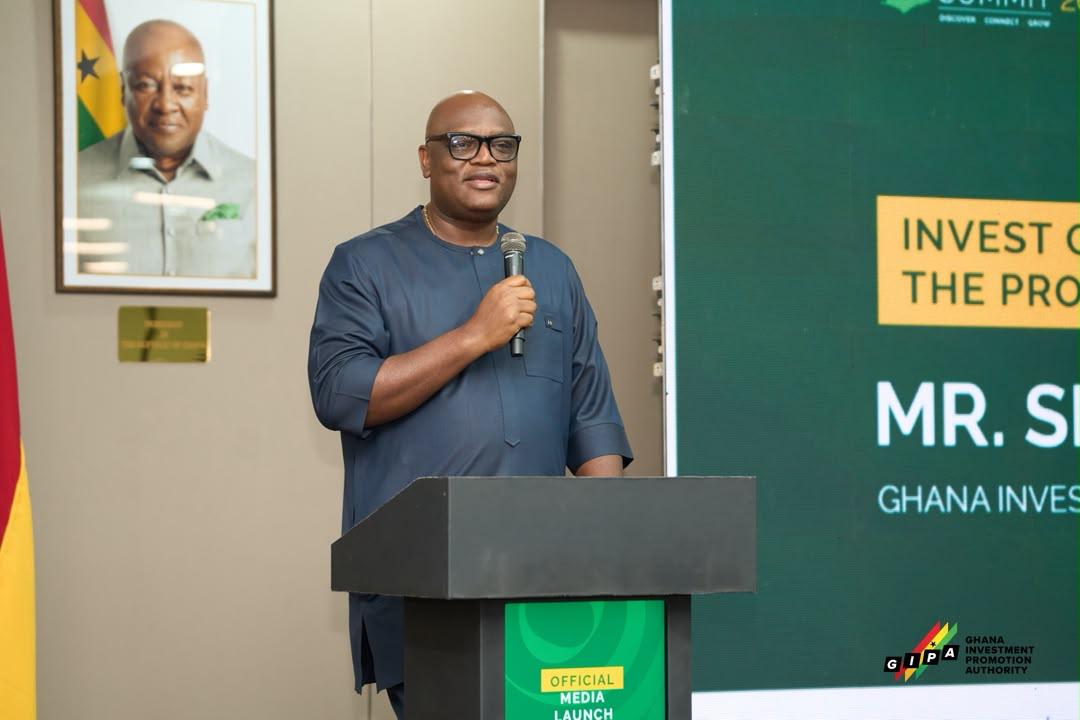
Simon Madjie, chief executive of the Ghana Investment Promotion Authority (GIPA), framed the country’s pitch around resilience, leadership, reform and opportunity. “Our story is one of resilience, credible leadership, forward-looking reforms and abundant opportunities,” he said at the summit’s opening on November 16.
The two-day event, jointly organised by GIPA, the Ghana Export Promotion Authority and the Ghana Free Zones Authority, is designed to connect that message with investors and project opportunities.
The ambition is substantial. Ghana wants to attract capital into agriculture, manufacturing, infrastructure, energy and other productive sectors, with the proposed $10 billion New Economy Programme forming part of the broader investment drive.
Regional ministers are also expected to present opportunities beyond the country’s established commercial centres.
But investment promotion is the beginning of a process, not its conclusion. A summit can create introductions and signal political commitment. It cannot, by itself, make a project commercially viable, resolve a land dispute, secure reliable power or guarantee that an investor can move money and earn a predictable return.
That distinction matters because the value of a national investment campaign will ultimately be measured in what follows the presentations: projects reaching financial close, factories built, farms connected to processing, export contracts secured and jobs created. Without that conversion, a persuasive pitch risks becoming a recurring performance rather than a durable economic strategy.
Madjie said Ghana’s resilience and ongoing reforms provide a foundation for attracting investors. He also pointed to the country’s position as a gateway to Africa and to opportunities in regions and districts across the country.
“These factors are converging, making Ghana an important investment destination that the global investor community cannot afford to miss out on,” he said.
The language speaks to a familiar proposition: Ghana offers access to a wider regional market, a range of natural and human resources, and the possibility of serving as a base for businesses looking beyond its borders.
The summit’s theme, “Investing in Ghana’s New Economy: Building a Productive Economy that Creates Value and Competes Globally,” puts the emphasis on production and value creation rather than investment for its own sake.
That is the right test. Foreign capital can support growth, but the volume of money entering a country does not automatically reveal its economic impact.
The more consequential questions are what the capital finances, where value is added, how much local expertise and supply-chain capacity it develops, and whether the returns are shared through employment, taxes and wider business opportunities.
A mining project that exports unprocessed resources, for example, may generate revenue but create fewer domestic linkages than one that develops local suppliers and technical skills.
A factory can add productive capacity, but its effect will depend on access to inputs, energy, logistics and customers. An agricultural investment may raise output while leaving farmers exposed if storage, processing and reliable markets are missing.
Ghana’s investment pitch will therefore have to be specific. Investors need more than a catalogue of sectors with potential.
They need projects with clear ownership, credible feasibility studies, transparent procurement, predictable regulation and identified infrastructure requirements.
The greater the clarity, the easier it becomes to distinguish bankable opportunities from aspirations that still need years of preparation.
The decision to showcase regional projects could help address a weakness in many investment drives: the concentration of attention and capital in a few urban centres. If investors see credible opportunities in agriculture, tourism, industry and infrastructure across the regions, the result could be a broader distribution of economic activity.
Yet a regional project list is only useful if it reflects what businesses can realistically deliver. Investors will ask whether a site has dependable electricity, water, roads and digital connectivity; whether workers can be trained; whether local authorities can process permits; and whether there is a clear route to market.
Presenting those constraints honestly may be more persuasive than describing every opportunity as immediately ready.
The summit’s programme includes regional investment sessions, sector discussions and scheduled investment announcements.
Those are useful milestones, but the announcements themselves will need careful scrutiny: a memorandum of understanding, an expression of interest and a funded project are not equivalent forms of commitment.
That distinction should shape how the public evaluates the event. The presence of prominent investors including Aliko Dangote, whose attendance Madjie described as an endorsement of Ghana’s economic potential can draw attention. It does not, on its own, establish that a specific investment has been approved or financed.
For a country seeking to build confidence, precision is an asset. Clear reporting on which projects have secured financing, which remain under discussion and which require further development can protect the credibility of the campaign. It also helps local businesses understand where they can participate.
The proposed $10 billion New Economy Programme raises another important issue: how public priorities and private capital will fit together.
The government’s investment drive needs to show how public spending will prepare the ground for commercially viable activity, rather than simply accompany private investment.
That could mean financing infrastructure that connects producers to markets, strengthening power supply, improving the quality of project preparation or supporting skills needed by emerging industries.
Public resources can help reduce risks that would otherwise deter private investors. But they must be deployed with careful appraisal, transparent selection and a clear account of expected benefits.
The danger is that a large headline figure can overshadow the harder questions of financing structure and delivery. How much is expected to come from government, private investors and development partners?
Which projects are already prepared? What safeguards will prevent public support from absorbing losses while private partners capture the gains? And how will the government report progress if proposed projects stall?
These are not objections to ambition. They are the questions that turn ambition into a credible investment proposition.
GIPA’s role is central because an investment authority can help investors navigate public institutions and connect them with opportunities. But the authority’s success cannot be judged only by the number of meetings, delegations or announcements it facilitates.
Its real contribution will be visible in how effectively obstacles are identified and resolved, and whether firms that invest can expand their operations.
That requires a system for tracking outcomes after the summit. Ghana could report, over time, how many projects move from introduction to feasibility, from feasibility to financing, and from financing to operation.
It could also show the jobs created, the share of local procurement, the volume of exports and the amount of value added within the country.
Such measures would give investors and citizens a clearer picture of whether the investment campaign is changing the structure of the economy.
The event gives Ghana a platform to make its case. Its organisers have brought together public agencies and investors around a goal of mobilising capital for production and global competitiveness.
The harder work begins when the delegates leave Accra: maintaining policy consistency, preparing viable projects, building infrastructure and ensuring that agreements become operating businesses.
Ghana’s resilience may attract attention. Its reforms may open doors. But confidence is built when investors can see that rules are applied consistently and projects can move from proposal to production. The summit will matter most if it produces a pipeline that can be checked, financed and delivered.
The question for Ghana is no longer simply whether it can attract the world’s interest. It is whether it can convert that interest into productive capacity and make the benefits visible in jobs, exports, skills and stronger businesses across the country.

