

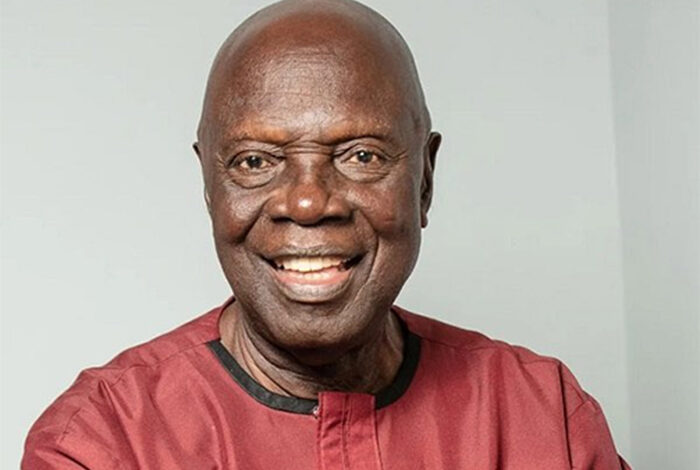

Inflation Decline and Cedi Recovery Masking Deeper Economic Challenges, Says Dr Ishmael Yamson
Renowned business management consultant and Chief Executive Officer of Ishmael Yamson & Associates, Dr Ishmael Yamson, has cautioned the government against complacency, arguing that while recent economic stabilisation has been impressive, the fundamental problems confronting Ghana’s economy remain unresolved.
Delivering the opening address at the University of Ghana’s 77th Annual New Year School and Conference (ANYSC) on Tuesday, Dr Yamson offered a candid assessment of the country’s economic progress, describing it as encouraging but incomplete.
He commended the government’s performance over the past year, citing key gains such as the appreciation of the cedi from GH¢15.11 to GH¢10.65 and the decline in inflation to 6.3 percent. However, he warned that celebrating these outcomes without addressing deeper structural deficiencies could prove costly.
Using medical analogies, Dr Yamson likened the current situation to emergency intervention rather than full recovery. “We have stopped the bleeding, but the wound has not healed. The crisis has been managed, but the disease itself has not been cured,” he said, stressing that the economy remains in a stabilisation phase rather than a transformation stage.
According to him, achieving the “Ghana we want” requires more than short-term policy announcements or renewed borrowing. Instead, he called for a comprehensive reset encompassing economic structures, institutional culture, and national values.
Dr Yamson also pointed to what he described as a growing “consensus of discontent” across society, warning that widespread quiet frustration among citizens and investors poses a greater risk than overt unrest. He noted that economic uncertainty has made long-term planning increasingly difficult for businesses, with many unable to plan beyond a few months due to frequent macroeconomic volatility.
He explained that persistent swings in prices of essential goods such as food, fuel, and raw materials have undermined confidence and eroded financial security. “The middle class, which should serve as the backbone of any stable democracy, has been steadily weakened by inflation, draining both savings and dignity,” he observed.
Calling for honest reflection, Dr Yamson identified three interrelated challenges facing the country: an economic structure vulnerable to external shocks and lacking industrial depth; a crisis of values sustained by political impunity; and an execution gap where ambitious policy visions fail due to weak implementation.
As discussions begin under the theme “Building the Ghana we want together for sustainable development”, he said his remarks should serve as a guiding challenge for participants throughout the programme.
Dr Yamson concluded by stressing that only discipline, strong leadership, and unwavering commitment to execution can prevent the current recovery from becoming yet another temporary pause before the next economic downturn. “Slogans do not create opportunities for the youth,” he warned, adding that no economy can thrive in an environment marked by constant disruption and uncertainty.

