


- Ghana’s 2027 Budget Sidelines Mission 300 Commitments Despite US$2.20 Billion Energy Plan — CSOs
A coalition of civil society organisations has raised concerns over Ghana’s proposed US$2.20 billion energy infrastructure investment programme, warning that the government’s 2027 Budget does not clearly reconcile its new electricity generation plans with commitments already made under the World Bank and African Development Bank-backed Mission 300 initiative.
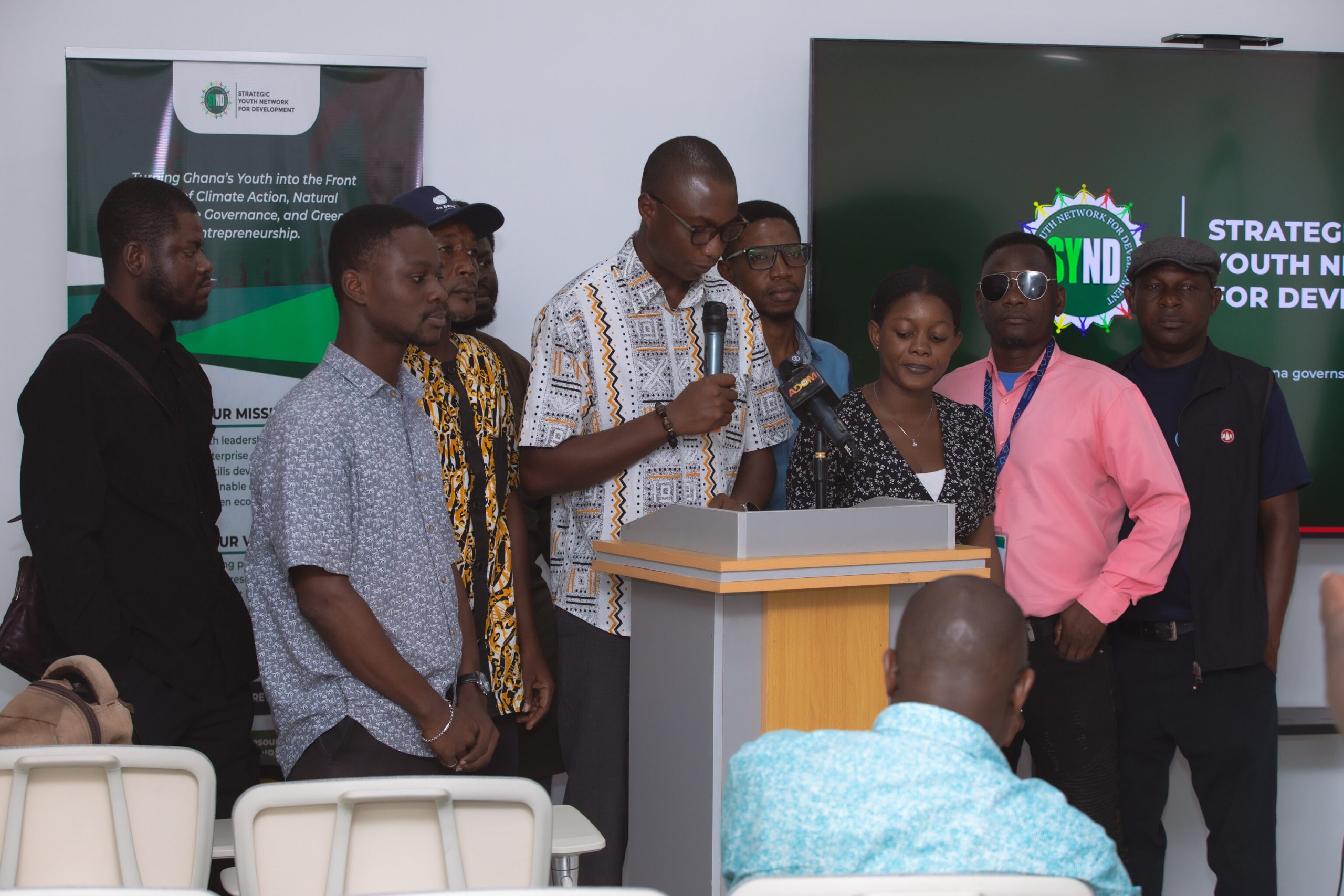
The Ghana CSOs Alliance on Mission 300 says the government’s proposed investments in thermal power, solar generation, electricity transmission and nuclear development raise questions about financing, project coordination and the country’s long-term energy transition strategy.
In a statement issued in Accra on Monday, November 23, 2026, the Alliance acknowledged the government’s commitment to addressing electricity distribution inefficiencies and reducing the sector’s financial losses.
However, it questioned why the 2027 Budget failed to explicitly reference Ghana’s National Energy Compact, its implementation targets or the institutional arrangements established to monitor the country’s participation in Mission 300.
The concerns introduce a significant policy question: whether Ghana’s latest energy investment programme complements existing international commitments or represents a potentially competing framework for developing the electricity sector.
Mission 300, jointly supported by the World Bank and African Development Bank, seeks to provide electricity access to 300 million Africans by 2030.
Ghana joined the initiative’s second cohort of countries in September 2025, submitting a National Energy Compact outlining commitments involving electricity access, renewable energy, private-sector investment and institutional reforms.
The Alliance, established in July 2026 to monitor Ghana’s implementation of the Compact, argues that the government’s new investment programme should demonstrate how those existing obligations will be fulfilled.
The statement noted, “Our concern is coordination and transparency.”
The coalition insists that a substantial increase in energy investment cannot independently guarantee successful implementation if financing arrangements, project priorities and accountability mechanisms remain unclear.
The government’s proposed National Energy Investment Compact, outlined in the 2027 Budget, contains five major commitments for implementation between 2027 and 2030.
These include constructing a 1,450-megawatt state-owned thermal power plant, developing 600 megawatts of state-owned solar generation supported by battery storage, and investing US$500 million in upgrading the national electricity transmission network.
The government also intends to deploy two million prepaid electricity meters, expand private-sector participation in electricity distribution by the end of 2027 and allocate US$200 million over 24 months towards preparatory work for a state-owned nuclear power project.
According to the Alliance’s account of the budget, the government expects these interventions to eliminate the electricity sector’s estimated annual financial shortfall of US$1.40 billion by January 2029.
The programme also targets a reduction in the average industrial electricity price from approximately US$0.16 per kilowatt-hour to US$0.08 by 2030, equivalent to a proposed 50.00% reduction.
While acknowledging the potential economic benefits, the Alliance questions how these commitments align with Ghana’s existing renewable energy development targets.
Under the National Energy Compact, Ghana had identified plans to attract approximately US$2.60 billion in private investment to develop 850 megawatts of solar generation, 150 megawatts of hydropower and 200 megawatts of wind generation.
Together, these investments represent 1,200 megawatts of proposed renewable generation capacity.
The Alliance argues that the government’s new emphasis on state-owned power projects introduces uncertainty about the status of these previously identified investments.
The statement observed, “It’s unclear whether, these two very different generation strategies fit together.”
The issue is particularly consequential because the two frameworks appear to involve different financing and ownership approaches.
The National Energy Compact envisages significant private investment and competitive procurement, while the new budget framework places considerable emphasis on publicly owned generation assets.
However, the existence of two different approaches does not necessarily mean they are incompatible. The question is whether the government has established a coherent investment pipeline identifying which projects are complementary, which overlap and how they will be financed.
The coalition also identified potential duplication within the country’s solar generation plans.
Beyond the Compact’s 850-megawatt solar target and the newly proposed 600 megawatts of state-owned generation, the Alliance cited other projects involving the Volta River Authority and Bui Power Authority.
These include the 150-megawatt-peak Pwalugu solar project, a proposed 200-megawatt-peak development at Dawa and solar installations associated with Bui Power Authority.
The coalition wants the government to clarify whether these projects form part of a consolidated national generation strategy or represent separate investment commitments.
Such clarification is important because power-sector planning must account not only for installed generating capacity but also for actual electricity demand, transmission requirements, financing obligations and system reliability.
An inadequately coordinated expansion of generation assets could create additional financial commitments without necessarily resolving the sector’s underlying operational weaknesses.
The Alliance further highlighted what it considers inconsistencies in financing figures, referring to amounts of US$2.00 billion and US$2.20 billion appearing in the relevant energy investment frameworks.
It wants the government to reconcile these figures and explain the precise scope of the proposed commitments.
Electricity distribution reform represents one area where the coalition expressed support.
The 2027 Budget proposes greater private-sector participation in distribution, alongside targets to reduce system losses at the Electricity Company of Ghana and Northern Electricity Distribution Company to approximately 15.00%.
The government also intends to increase electricity bill collection to 95.00%.
These objectives address longstanding financial difficulties in Ghana’s electricity distribution system, where technical and commercial losses, inadequate collections and payment arrears have contributed to recurring sector deficits.
However, the Alliance insists that private-sector participation should be structured to ensure meaningful Ghanaian ownership and skills development.
It has demanded disclosure of the beneficial ownership and financing arrangements behind future distribution contracts before agreements are signed.
The proposal reflects concerns over whether transferring operational responsibilities to private companies would necessarily improve performance without transparent governance and enforceable contractual obligations.
The coalition also wants clarity on the US$500 million earmarked for GRIDCo’s transmission infrastructure.
Specifically, it is seeking confirmation of whether funding for the Accra–Kumasi transmission line and the Ghana–Côte d’Ivoire interconnection will come from that allocation or require separate financing.
Both projects are identified in its statement as priority transmission investments affected by previous financing and approval delays.
[FINAL] Statement by the Ghana CSOs Alliance on Mi_261122_194630.pdf
Beyond infrastructure financing, the Alliance raised concerns about the absence of explicit social inclusion targets in the budget’s energy programme.
It noted that Ghana’s National Energy Compact contains commitments to achieve 99.00% electricity access, increase renewable energy’s contribution to 10.00% and expand access to clean cooking solutions to 50.00% of households.
The coalition argues that these benchmarks should remain central to assessing the government’s energy-sector performance.
It also wants the government to retain the Compact’s target of 30.00% women’s participation by 2030 and provide a formal role for the Ministry of Gender, Children and Social Protection.
Young people should similarly be represented in planning, implementation and monitoring arrangements, the statement argues.
Among its proposals is reserving 10.00% of selected renewable energy contracts for youth-led businesses, an idea intended to encourage entrepreneurship and direct participation in the energy transition.
The Alliance additionally called for completion of three outstanding planning documents: the updated power-sector master plan, the National Clean Cooking Policy and revised standards for extending electricity networks.
The central concern emerging from the civil society statement is not opposition to investment in power generation but uncertainty over whether Ghana’s multiple energy programmes are operating within a unified, transparent and financially sustainable framework.
For the government, reconciling these commitments would help establish clearer priorities for public expenditure, private investment and international development financing.
For electricity consumers, successful implementation could improve reliability and reduce costs, although the proposed benefits remain dependent on execution.
For Ghanaian businesses, the investment programme presents potential opportunities in renewable energy, infrastructure, electricity distribution and associated services.
However, those opportunities will depend on transparent procurement, credible funding and clear project implementation schedules.
The coalition maintains that affordable and reliable electricity remains essential to industrialisation, employment creation and economic transformation.
Its intervention therefore places renewed attention on whether Ghana’s 2027 energy strategy can deliver lower electricity costs while maintaining the country’s commitments to renewable energy, expanded access and private-sector participation.
The immediate test will be whether the Ministries of Finance and Energy and Green Transition provide a comprehensive reconciliation of the country’s investment commitments, financing arrangements and performance targets.
Without that clarity, the government risks pursuing ambitious energy projects without adequately demonstrating how they fit into Ghana’s existing electricity-sector transformation agenda.

