


- AfDB Commits $125 Million to ATIDI to Mobilise Private Capital for Africa’s Infrastructure Gap
The African Development Bank is set to become the largest shareholder in the African Trade and Investment Development Insurance after committing $125 million to the Nairobi-based risk insurer, in a move aimed at mobilising more private capital for Africa’s infrastructure and development needs.
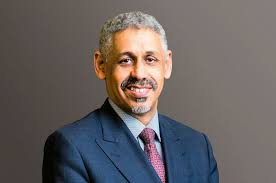
The investment, announced by AfDB President Sidi Ould Tah following the bank’s annual meetings in Brazzaville, will increase the lender’s stake in ATIDI from 3 per cent to 14 per cent.
The move forms a key pillar of the bank’s New African Financial Architecture for Development, an initiative designed to unlock Africa’s large but underutilised domestic capital pools for long-term development financing.
The commitment comes at a time when traditional sources of development finance are under increasing strain.
Official development assistance from advanced economies fell sharply last year, intensifying pressure on African institutions to identify more sustainable financing alternatives for infrastructure, industrialisation and economic transformation.
AfDB estimates that Africa possesses nearly $4 trillion in institutional capital held across pension funds, sovereign wealth funds, insurance assets and savings schemes.
Yet much of this capital remains fragmented and largely absent from large-scale development financing, despite an annual infrastructure and development funding gap estimated at $400 billion.
By strengthening ATIDI’s capital base, the bank hopes to significantly expand the use of guarantees and risk-sharing instruments that can attract private investors into projects often viewed as too risky.
The objective is to increase ATIDI’s annual guarantee capacity to $10 billion, more than three times the volume of investments it currently supports.
Founded 25 years ago, ATIDI has played an important role in reducing investment risk across African markets through insurance and guarantee products that support both public and private sector projects.
Its shareholder base includes 24 African countries, alongside development finance institutions and international partners.
The latest AfDB investment marks one of the most significant shifts in ATIDI’s ownership structure and reflects growing recognition that risk mitigation will be central to unlocking private-sector participation in Africa’s development agenda.
AfDB is also encouraging additional governments, development institutions and private investors to increase their participation in ATIDI, with discussions already underway with prospective shareholders seeking either to expand their stakes or join the institution for the first time.
The strategy reflects a broader recalibration of development finance across the continent.
As concessional funding becomes scarcer and global economic uncertainty persists, African policymakers are increasingly looking inward, seeking to leverage domestic savings and institutional capital to drive long-term growth.
For Africa, the challenge has rarely been the absence of capital alone. It has often been the absence of structures that can convert available capital into bankable, risk-adjusted investments. That is where institutions such as ATIDI become important.
Guarantees, political risk insurance and credit enhancement tools can help reduce the perceived risk of infrastructure, energy, transport, trade and industrial projects, making them more attractive to pension funds, insurers, banks and global investors.
For private investors, the AfDB’s increased stake sends a signal that de-risking African investment is becoming a strategic priority, not a peripheral development finance activity.
For governments, it points to a shift away from relying heavily on public borrowing and donor flows toward using public balance sheets more strategically to crowd in private capital.
The broader message is clear: Africa’s next phase of development may depend less on external aid and more on the continent’s ability to deploy its own financial resources at scale.
But that will require stronger institutions, better project preparation, credible guarantees and deeper cooperation between governments, development banks and private investors.
AfDB’s $125 million commitment to ATIDI is therefore more than a shareholder transaction. It is a statement about where African development finance is heading: away from dependency, and toward risk-sharing, capital mobilisation and self-financed transformation.

