


- From Income to Wealth: UBA Ghana Pushes Young Ghanaians to Rethink Financial Success
UBA Ghana has placed financial discipline, entrepreneurship and smart money habits at the centre of Ghana’s youth development conversation, urging young people to look beyond earning an income and begin building sustainable wealth.
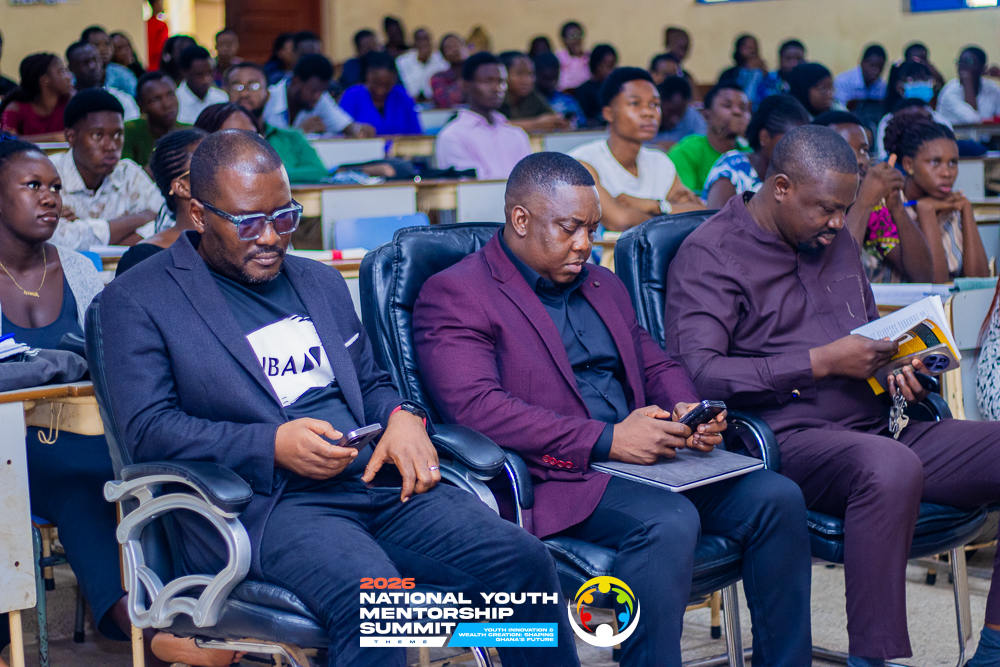
At the National Youth Summit 2026, the bank joined hundreds of young participants to discuss wealth creation and the role of the youth in shaping Ghana’s future. The engagement came at a time when many young Ghanaians are seeking practical knowledge, financial confidence and opportunities to build secure livelihoods in an economy where income alone is no longer enough.
The message from UBA Ghana was simple but important: the future will not be built only by young people who earn money, but by those who know how to manage, save, invest and multiply it.
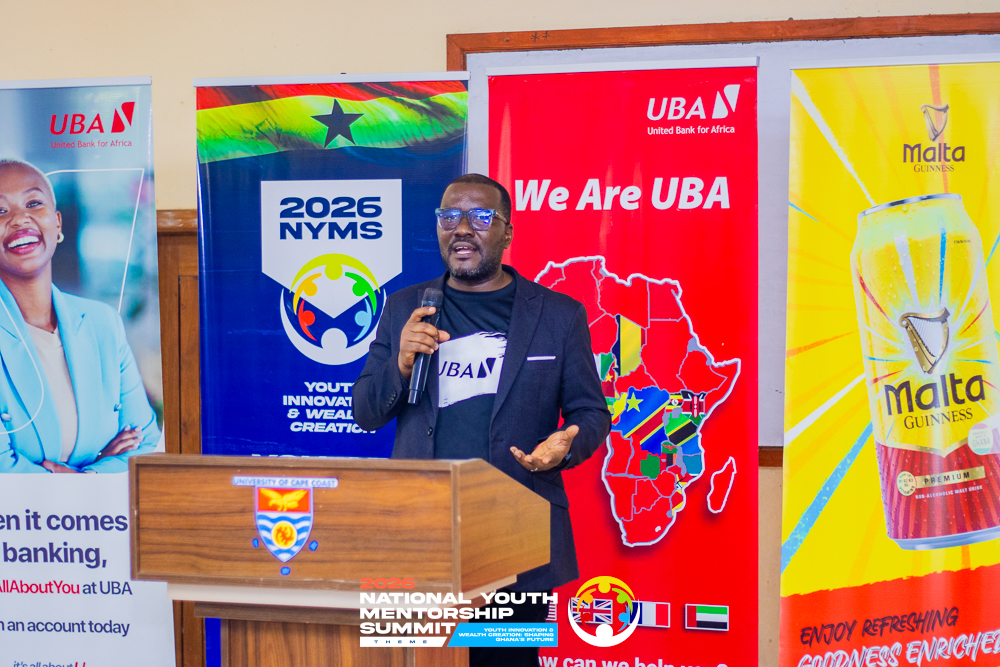
Speaking on the theme, “Wealth Creation and Shaping Ghana’s Future,” UBA Ghana’s Outstation Regional Head, Belinda Y.D. Tinkorang, and Head of Distribution and Channels, Elvis Dan-Sekyi, challenged participants to rethink their relationship with money, time and opportunity. They urged the youth to embrace planning, saving, investing and informed financial decision-making as the foundation of long-term wealth.
That message is timely because Ghana’s youth challenge is not only about unemployment. It is also about financial preparedness. Many young people want jobs, businesses and better incomes, but fewer have access to structured guidance on how to convert income into assets, skills into enterprise and opportunity into lasting value.
A young person who earns without planning may remain financially vulnerable. A young entrepreneur with talent but no discipline may struggle to scale. A graduate with income but no savings culture may remain trapped in short-term survival. A society that does not teach its youth how money works should not be surprised when many enter adulthood unprepared for economic responsibility.
Elvis Dan-Sekyi captured this point clearly when he reminded participants that “what you do with your money and time today determines what your future will be like.” His message was not only about saving money. It was about intentional living the idea that the habits formed early in life often determine the quality of one’s future.
That is a powerful lesson for Ghana’s young generation.
In an era of social media pressure, lifestyle competition and rising consumerism, many young people are encouraged to display success before they build it. The temptation to spend for visibility can be stronger than the discipline to invest quietly. Yet wealth is rarely built by appearance. It is built by patience, sacrifice, knowledge and consistent decisions over time.
UBA Ghana’s intervention therefore goes beyond banking. It speaks to mindset.
Belinda Y.D. Tinkorang reinforced this by urging participants to embrace entrepreneurship and problem-solving. “The path to wealth creation starts with a mindset shift: see problems as opportunities, turn skills into income, build with discipline, and make decisions today that secure your future,” she said.
That statement speaks directly to one of Ghana’s biggest economic needs: a youth population that does not only search for opportunity, but learns how to create it.
Ghana has a large and energetic youth population, but its potential will remain underused if young people are not equipped with the right financial and entrepreneurial skills. The country needs young people who can identify market gaps, build small businesses, use digital tools, manage cash flow, invest in productive ventures and create jobs for others.
This does not mean every young person must become an entrepreneur. But every young person needs an entrepreneurial mindset the ability to see problems clearly, think creatively, manage resources and take responsibility for outcomes.
For banks, this is also a strategic issue. Financial institutions cannot focus only on today’s customers. They must help shape tomorrow’s productive citizens, entrepreneurs, professionals and business leaders. When young people become financially literate, they become better savers, borrowers, investors and enterprise builders. That strengthens both the banking sector and the wider economy.
UBA Ghana’s participation in the summit therefore reflects a broader understanding of banking as a development partner. By engaging young people directly, the bank is not merely promoting financial products. It is investing in the financial behaviour that will shape Ghana’s future economy.
The bank’s engagement also had a national reach. Elvis Dan-Sekyi interacted with participants at the University of Cape Coast, while Belinda Y.D. Tinkorang led discussions at the Kwame Nkrumah University of Science and Technology. This campus-based approach is important because universities remain key spaces where young people form ideas about work, money, leadership and the future.
Many young Ghanaians outside formal tertiary institutions also need access to financial education. Apprentices, informal workers, traders, artisans, start-up founders, unemployed graduates and young people in rural communities all face financial decisions that can either build or weaken their future.
If Ghana wants a generation capable of creating wealth, financial literacy must become more practical and more widely accessible. It should not be limited to seminars and one-off events. It must be taught in schools, reinforced in homes, promoted by banks, supported by government and made relevant to everyday life.
Young people need to understand budgeting, savings, debt, investment, insurance, digital finance, business records, taxes and long-term planning. They need to know the difference between income and wealth. They need to understand that money without discipline disappears quickly, while small but consistent financial decisions can compound into security.
The future of Ghana will not be shaped only by government policy, infrastructure projects or natural resources. It will also be shaped by the financial habits of millions of young people. If those habits are weak, the economy will struggle with dependency, poor savings, business failures and limited wealth creation. If they are strong, the country will have a better chance of building resilient households, competitive businesses and a stronger middle class.
UBA Ghana says it believes that investing in young people is an investment in Ghana’s future. That statement is correct, but it also carries responsibility. Youth empowerment must be sustained, practical and measurable. Young people do not need motivation alone. They need tools, mentorship, access to finance, market opportunities and institutions that believe in their capacity to build.
The National Youth Summit 2026 provided a useful platform for that conversation. But Ghana now needs more such engagements not as ceremonies, but as part of a serious national effort to help young people move from survival to wealth creation.
The challenge before the youth is equally clear. Wealth will not come only from ambition. It will come from discipline. It will come from learning. It will come from using time well, solving problems, building skills, saving consistently and making informed decisions.
UBA Ghana’s message to young people is therefore both encouraging and demanding.
The bank is telling them that the future is still open. But it is also reminding them that the future will be shaped by what they do today.
For Ghana, that may be one of the most important development lessons of all.

