

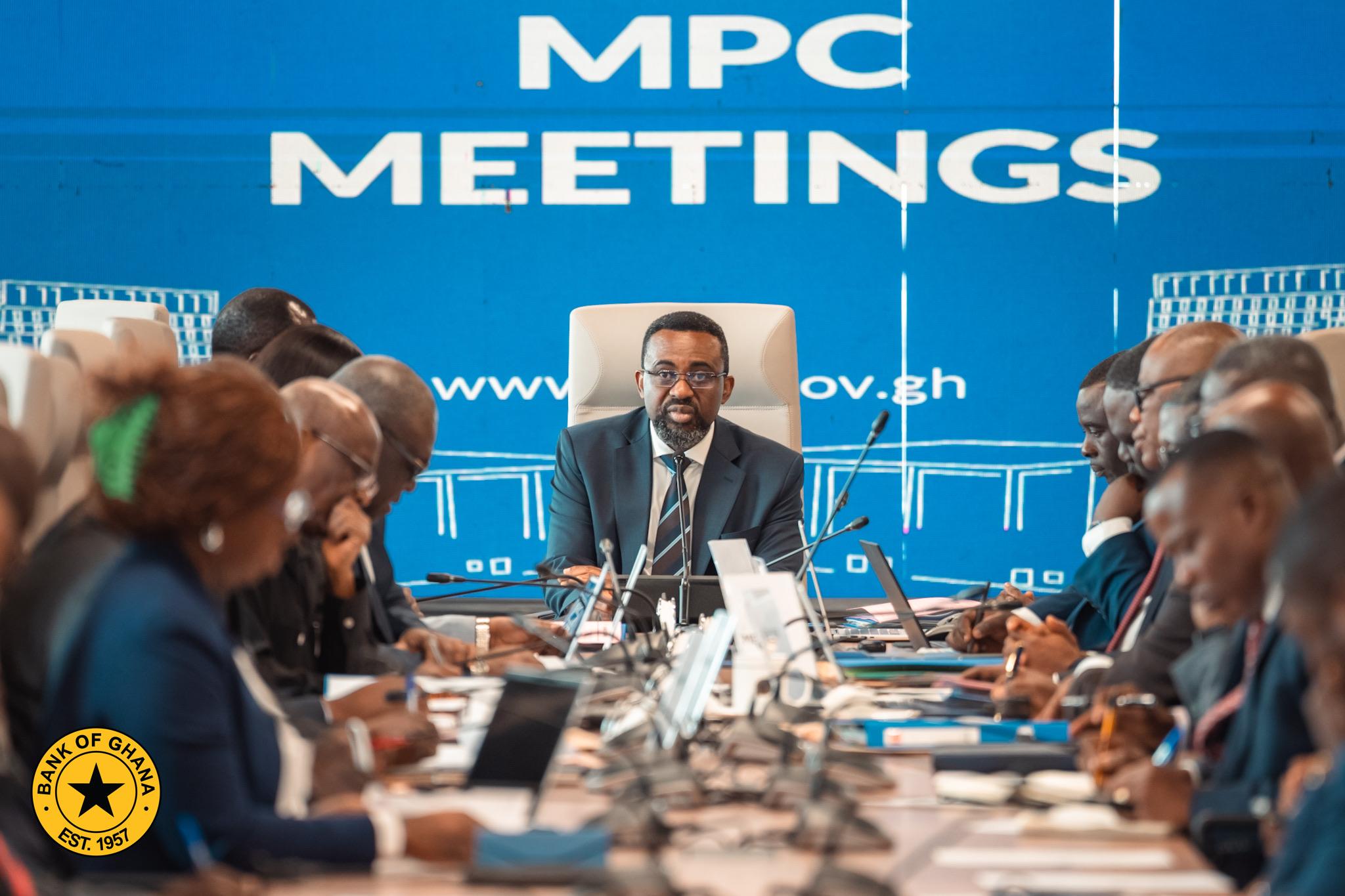

Dr Asiama Warns Policy Choices Must Withstand Future Scrutiny Despite Improved Indicators
Governor of the Bank of Ghana, Dr Johnson Asiama, says deliberations at the 128th Monetary Policy Committee (MPC) meeting will be guided by a careful assessment of data to determine whether Ghana’s recent macroeconomic gains can be sustained over the medium term.
Speaking at the opening of the MPC meeting on Monday, January 26, 2026, Dr Asiama stressed that the meeting is not intended to celebrate improvements already recorded but to evaluate the durability of stability and the robustness of policy choices.
“At its core, this meeting is not about whether conditions have improved, because yes, they clearly have,” he said. “The meeting is about how we respond to that improvement and how we ensure that decisions taken today remain robust under scrutiny tomorrow.”
He noted that policy decisions before the Committee are not mechanical, but rather require sound judgement, balance and a clear focus on the Bank’s mandate, particularly at a time when both domestic and global conditions present mixed signals.
On the global front, Dr Asiama said growth remains resilient, with projections of about 3.3% into 2026, even as geopolitical uncertainties persist. While Ghana has benefited from favourable external conditions, especially higher gold prices, he cautioned that such tailwinds may not be permanent and must therefore be treated with prudence.

Domestically, the Governor said rapid disinflation has created policy space, but also raised critical questions for monetary policy. He noted that although coordinated monetary and fiscal policies have underpinned recent gains, the task before the MPC is to assess the durability of these policies and calibrate future actions to support growth while preserving credibility.
Dr Asiama further observed that while economic indicators have improved markedly, the progress achieved so far should not lead to complacency.
“We are convening at a moment where, on one hand, all the economic indicators are looking good, but on the other hand, these very improved conditions must remind us that the work has indeed only just begun,” he said, adding that more effort is required to lock in stability in the year ahead.
He disclosed that inflation declined sharply to 5.4% at the end of 2025, coming in well below expectations. External buffers also strengthened, with gross international reserves rising to over US$13.8 billion, equivalent to 5.7 months of import cover, supported by a current account surplus of 8.1% of GDP.
The Governor noted that economic growth remained strong through the third quarter of 2025, with leading indicators pointing to further expansion, helping to restore confidence among consumers and businesses.
“These outcomes confirm that recent policy choices are indeed yielding results, and that policy credibility has been restored,” Dr Asiama said, while cautioning that sustaining these gains will test policy management in the year ahead.

