


- Unilever Ghana Posts GHS 1.04 billion Revenue as Growth Strategy Pays Off
Unilever Ghana PLC has crossed the GHS 1.00 billion revenue mark for the first time in recent years, signalling renewed momentum in the company’s turnaround strategy and strengthening its position within Ghana’s fast-moving consumer goods market.
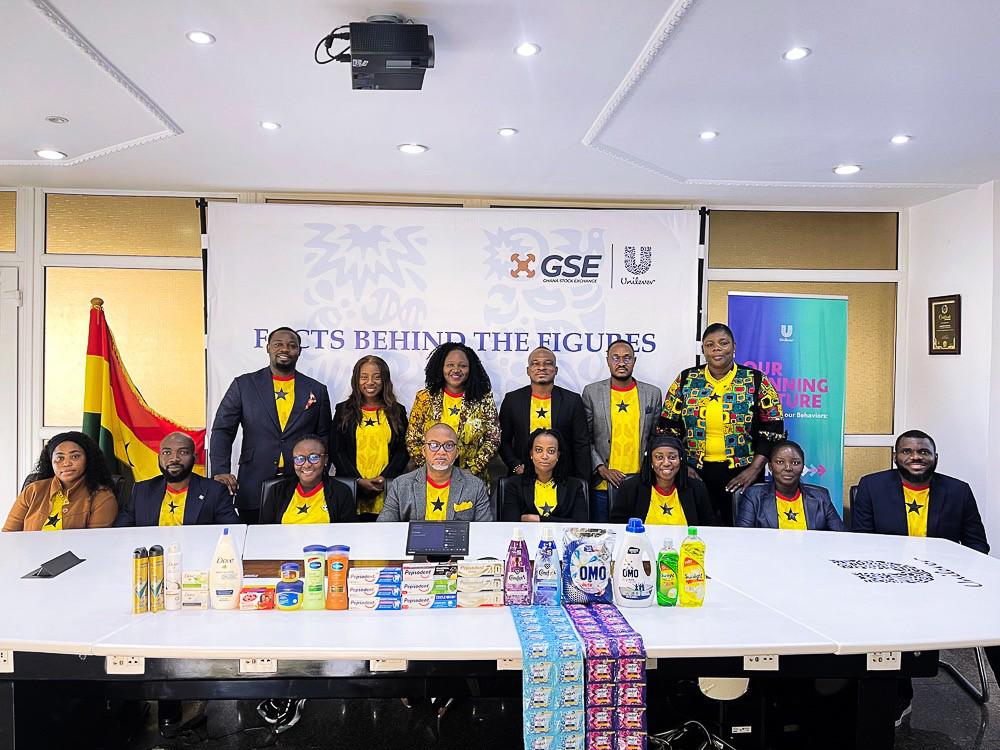
Speaking at the Ghana Stock Exchange’s annual Facts Behind the Figures forum in Accra, Managing Director Christopher Wulff-Caesar said the company’s 2025 performance reflected the impact of a deliberate growth agenda built around stronger brands, operational efficiency, innovation and long-term value creation.
“This performance is the result of deliberate choices we have made to strengthen our brands, improve our operations and build a more agile business,” Mr Wulff-Caesar said. “We are focused on creating sustainable value for consumers, shareholders and the communities we serve.”
Unilever Ghana reported revenue of GHS 1.039 billion in 2025, up from GHS 930.80 million in 2024. This represented revenue growth of 11.62%, underscoring the company’s recovery after years of operating in a difficult macroeconomic environment.
Profit for the year stood at GHS 96.00 million, while cash reserves reached GHS 210.00 million, giving the company a strong liquidity position to support operations, innovation and future investments.
For investors, the numbers point to a company that is beginning to convert restructuring efforts into stronger financial results.
The performance also comes against a gradually improving economic backdrop in Ghana. Easing inflationary pressures, a more stable cedi, improved GDP growth and returning investor confidence have created a more supportive environment for consumer goods companies after years of cost volatility and demand pressure.
Mr Wulff-Caesar said the company’s growth was supported by the execution of Unilever’s global Growth Action Plan, which is intended to make the business more focused, competitive and responsive to consumer needs.
“Our Growth Action Plan is about doing fewer things better and doing them with greater impact,” he said. “We are concentrating resources behind brands that matter to consumers and categories where we believe we can win.”
Central to the strategy is a focused portfolio approach built around Unilever Ghana’s flagship brands, including Pepsodent, Lifebuoy, Vaseline, Omo and Comfort.
These brands continue to anchor the company’s presence across personal care, home care and hygiene-related product segments.
In 2025, Unilever Ghana also introduced Comfort Fabric Conditioner, a significant addition to its Home Care portfolio. The launch expanded the company’s product offering and strengthened its efforts to diversify revenue streams beyond traditional categories.
According to management, product innovation remains an important part of the company’s medium-term growth strategy.
“Innovation will remain central to our business,” Mr Wulff-Caesar said. “Consumers are changing, their expectations are evolving, and we must continue to offer products that meet their everyday needs while delivering quality and value.”
The company’s performance is particularly important because Ghana’s consumer goods sector has faced years of pressure from high inflation, currency depreciation, rising input costs and weakened purchasing power.
For manufacturers such as Unilever Ghana, these conditions have often affected margins, pricing decisions and demand patterns.
The 2025 results therefore suggest that the company is benefiting both from internal restructuring and a more stable macroeconomic environment.
A stronger cash position also gives Unilever Ghana flexibility at a time when businesses continue to manage cost pressures, changing consumer preferences and competition from imported and locally manufactured products.
The company’s GHS 210.00 million cash reserves provide a buffer for working capital, brand investment, distribution expansion and product innovation.
Beyond the numbers, Unilever Ghana also used the forum to highlight sustainability as a core part of its long-term strategy.
Through the Ghana Recycling Initiative by Private Enterprises, the company continues to support efforts to develop a circular plastics economy and improve waste management practices.
This is increasingly important as Ghana faces growing concerns over plastic waste, sanitation and environmental sustainability.
Mr Wulff-Caesar said business growth must be aligned with responsible environmental practices.
“We believe growth must be responsible,” he said. “Our sustainability agenda is not separate from our business strategy; it is part of how we build a company that can remain relevant and resilient for the long term.”
Unilever Ghana also highlighted its social impact programmes, particularly through the Pepsodent oral hygiene campaign, which reaches more than one million Ghanaians annually.
The programme promotes preventive oral healthcare through school and community-based education, supported by product donations targeted at underserved communities.
The company said such initiatives reflect its wider commitment to improving health outcomes while deepening the social relevance of its brands.
For Unilever Ghana, this link between brand growth and social impact is becoming increasingly central.
Consumer goods companies are under pressure not only to sell products but also to demonstrate how their operations contribute to public health, environmental sustainability and community welfare.
Looking ahead, management said it expects to sustain growth momentum through continued investment in innovation, stronger route-to-market capabilities and deeper penetration of core brands.
The route-to-market strategy will be particularly important as competition intensifies across Ghana’s retail and consumer goods landscape.
To maintain growth, Unilever Ghana will need to ensure that its products remain accessible across modern trade, traditional retail, community shops and informal distribution channels.
The company must also balance pricing with affordability, especially in a market where many consumers remain sensitive to changes in household income and cost of living.
Still, the 2025 performance gives management a stronger platform.
Revenue above GHS 1.00 billion, profit of GHS 96.00 million and cash reserves of GHS 210.00 million suggest that Unilever Ghana’s turnaround strategy is gaining traction.
For the Ghana Stock Exchange, the company’s recovery also adds to the story of listed firms repositioning after a difficult economic cycle.
For shareholders, the key question will be whether Unilever Ghana can sustain revenue growth, protect margins and turn brand strength into consistent returns.
Mr Wulff-Caesar said the company remains confident about the future.
“We are encouraged by the progress we have made, but we are not complacent,” he said. “Our focus is to keep building a stronger, more consumer-centred business that delivers growth today while investing for tomorrow.”
The message from the Facts Behind the Figures forum was clear: Unilever Ghana’s turnaround is no longer only a strategic promise. It is beginning to show in the numbers.

