


- Tanzania, Lesotho and Uganda Show What Clean-Cooking Investment Can Do
Tanzania, Lesotho and Uganda are showing that clean-cooking programmes can move beyond targets and reach households, schools and communities.
But the continent’s progress faces a financial test: about US$1.46 billion of the US$2.2 billion pledged at the 2024 Africa Clean Cooking Summit has yet to be disbursed.
That gap was at the centre of a leaders’ roundtable at COP31 in Antalya, where governments outlined their efforts to expand access to cleaner cooking fuels and technologies.
The country examples offered evidence of progress and a warning that ambition alone cannot deliver a transition if promised finance does not arrive.
The figures suggest the challenge is not simply to devise programmes. It is to fund them at the scale and pace required to make cleaner options available and affordable, particularly for rural and low-income households.
Tanzania reported the largest measurable expansion. President Samia Suluhu Hassan said access to clean cooking had risen from 16% in 2022 to 28.6% in March 2024, and was expected to reach 35% by the end of 2026. If achieved, that would more than double access in four years.
The government’s approach combines measures that address different barriers to adoption: rural electrification, lower electricity tariffs for cooking, subsidies for LPG equipment and tax incentives.
By March 2026, the government had facilitated the distribution of more than 346,000 subsidised LPG cylinders, alongside over 49,000 induction stoves and 7,000 electric cookers.
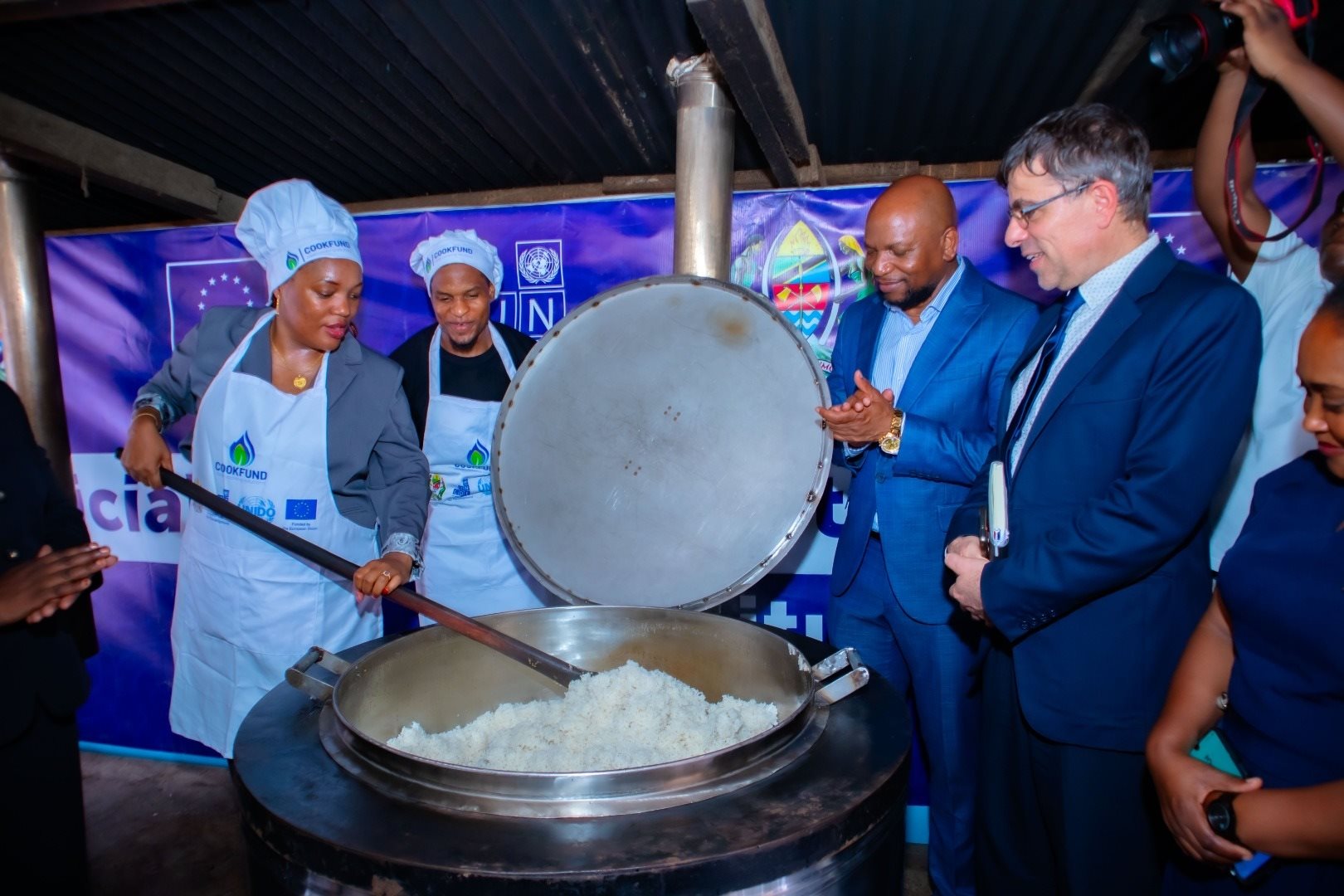
Through the Cook Fund, more than 413,000 households benefiting nearly two million people—had gained access to clean-cooking solutions, the president said.
The programme had also reached 45 public institutions, including schools with more than 62,000 students, and was estimated to have cut 3.8 million tonnes of carbon dioxide equivalent.
The figures point to a lesson for governments: clean cooking is not a single-technology choice. LPG cylinders may serve households without reliable electricity, while induction stoves depend on access to power and an electricity tariff that makes cooking affordable.
Public procurement can extend those options to schools and hospitals, where benefits reach beyond individual households.
Lesotho’s experience reinforces the need to design policy around local energy needs. Deputy Prime Minister Justice Nthomeng Majara said household energy use extends beyond cooking to include space heating.
A clean-cooking plan that overlooks heating may fail to address the full burden on households or the fuels they actually use.
Lesotho piloted electric pressure cookers in five schools in 2022 with the World Food Programme and the Modern Energy Cooking Services programme.
It is also producing improved cookstoves locally. A renewable-energy initiative envisages 9,194 improved cookstoves by 2028, with 60% earmarked for female-headed households.
That targeting reflects a wider point: the transition has distributional consequences. If access depends on upfront payments for equipment, or on electricity and fuel costs that poorer households cannot sustain, national targets may advance while the people most exposed to energy poverty remain behind.
Grants, concessional finance and targeted support can determine who is able to switch.
Uganda has set an intermediate target of 50% access to clean cooking by 2030, on the way to universal access by 2040. Its measures include a dedicated electric-cooking tariff and pilot programmes in schools.
President Yoweri Museveni has also issued an executive order banning charcoal, according to the country’s representative at the roundtable.
But Uganda’s account contained a caution: the availability and cost of alternatives remain a challenge. A restriction on a traditional fuel cannot by itself create a workable replacement.
If cleaner options are too expensive, inaccessible or unreliable, the burden falls on households least able to absorb it. Policy must coordinate the supply of alternatives with affordability and practical access.
That challenge makes the financing gap more than a question of accounting. At the first Summit on Clean Cooking in Africa in Paris in 2024, leaders pledged US$2.2 billion.
International Energy Agency Executive Director Fatih Birol said about US$740 million roughly one-third had been disbursed, leaving US$1.46 billion outstanding.
The delivered portion has supported projects in 28 African countries, including LPG infrastructure and electric cooking in Kenya and new stove factories in Nigeria, Birol said.
Tanzania’s president said about US$740 million had been deployed across 22 countries, while a further US$900 million had since been mobilised, bringing total commitments to about US$3.1 billion.
Those figures describe different measures: disbursements from the original Paris pledge, and later commitments mobilised by participating governments. The distinction matters.
A new pledge can expand the headline total, but it does not necessarily put money into a project’s account. For governments and communities planning infrastructure, the decisive measure is whether funds are committed on workable terms and then delivered.
The annual financing need also remains uncertain. Kenya’s special envoy, speaking for President William Ruto, said Africa’s clean-cooking challenge requires at least US$2 billion each year.
OPEC Fund President Abdulhamid Alkhalifa cited an IEA estimate of US$4 billion annually. The estimates differ, but both suggest the outstanding pledge is only part of the financing task.
The next step is to convert commitments into projects that can reach households without leaving affordability to chance. Uganda and Lesotho called for concessional finance, private investment, grants and results-based funding.
Each has a role: public and concessional finance can support infrastructure and low-income users, while private investment can expand supply, manufacturing and distribution.
The scale of the required funding may appear daunting, but it also exposes a test of international credibility. Leaders can set access targets and announce financing totals; neither guarantees that clean-cooking equipment will be available at a price households can afford.
Disbursement, local supply chains and sustained consumer support will determine whether programmes move from pilot projects to widespread adoption.
The countries’ examples demonstrate that progress is possible when policy combines infrastructure, technology choices, targeted support and public-sector uptake.
The unresolved question is whether the money pledged will reach those efforts in time and whether future financing will be predictable enough for governments and companies to plan beyond isolated projects.
Leaders are due to meet again at the second Summit on Clean Cooking in Africa in Nairobi on January 27–28, 2027. By then, the measure of progress will not be the size of the pledge announced.
It will be how much has been disbursed, what it has financed and whether households can keep using the cleaner options made available to them.

