

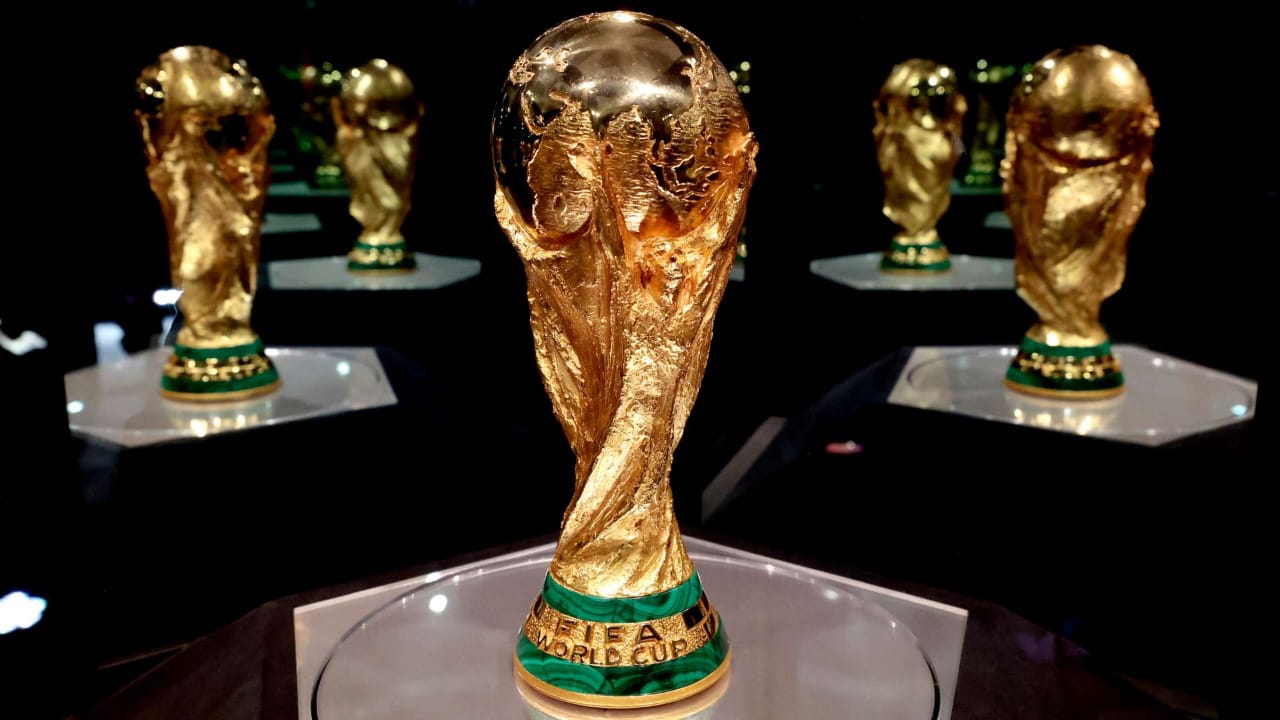

- The Blueprint for World Cup Glory: What Separates Champions from The Rest
Every four years, the FIFA World Cup reminds the world why football is called the beautiful game.
It is the stage where dreams are realised and broken within 90 minutes, where unknown players become global names, and where entire nations unite behind one flag, one anthem and one ambition.
Yet beneath the emotion, drama and unforgettable moments lies a hard truth: winning the World Cup is one of the most difficult achievements in sport.
Since the first tournament was staged in Uruguay in 1930, more than 80 countries have appeared on football’s biggest stage. But only eight nations Uruguay, Italy, Germany, Brazil, England, Argentina, France and Spain have lifted the trophy.
That statistic tells its own story.
The World Cup is not won by accident. It is earned through planning, football culture, technical development, institutional discipline, investment and the ability to deliver under pressure when the whole world is watching.
Every World Cup has its superstars.
Pelé dazzled the world as a teenager. Diego Maradona carried Argentina to glory in 1986 with one of the greatest individual tournaments football has ever seen. Ronaldo Nazário returned from injury and conquered the world in 2002. Lionel Messi finally completed his extraordinary career by leading Argentina to the title in 2022.
But none of these legends achieved greatness alone.
Behind every champion stands a complete system: disciplined defenders, tireless midfielders, intelligent coaches, medical teams, analysts, psychologists, administrators and years of careful preparation.
The World Cup does not reward talent alone. It rewards complete teams and complete football nations.
The foundations of a World Cup triumph are usually laid long before the opening match.
Germany offers one of the clearest examples. After disappointing performances at the turn of the century, German football undertook a deep structural reform. Youth academies were modernised, coaching standards improved and clubs were required to take player development more seriously.
The transformation did not produce instant success. But the patience paid off. In 2014, Germany won the World Cup with one of the most technically gifted and tactically balanced generations in its history.
Spain followed a similar path.
Years of investment in youth football, combined with a clear philosophy built around possession, intelligence and technical excellence, produced one of the greatest international teams ever assembled.
Between 2008 and 2012, Spain won two European Championships and the 2010 FIFA World Cup, redefining how modern football could be played.
Their success was not a miracle. It was the reward for consistency.
In football’s strongest nations, the game is not simply entertainment. It is part of national life.
In Brazil, children learn the game in the streets, on beaches and in informal spaces long before they enter structured academies. In Argentina, neighbourhood clubs remain the heartbeat of player development. Across Europe, organised youth systems identify, train and refine talent from an early age.
That culture creates competition. Competition sharpens ability. Ability, when supported by structure, creates champions.
It is no coincidence that Brazil remains the most successful nation in World Cup history with five titles, while Germany and Italy have each won four, and Argentina three.
These countries have built traditions of excellence that inspire each new generation before a ball is kicked at the tournament.
Modern World Cups, however, are no longer decided by talent and tactics alone.
Sports science has become one of football’s greatest competitive advantages.
Teams now monitor every sprint, heartbeat, recovery session and injury risk. Nutritionists design player diets with precision. Analysts spend hours studying opponents. Medical teams use advanced technology to reduce recovery time and maintain performance levels during demanding tournament schedules.
Even climate conditions have become part of preparation.
At the 2026 FIFA World Cup, with matches played across the United States, Canada and Mexico, extreme heat has forced teams to think carefully about recovery, hydration and temperature management.
Advanced cooling vests, reflective jackets, tailored warm-up routines and detailed recovery protocols have become part of the tournament’s hidden battle.
In elite football, marginal gains matter.
A faster recovery, one better tactical adjustment, one sharper substitution or one extra percentage of physical readiness can decide a knockout match.
That is why modern champions are often those who combine talent with science, emotion with planning, and courage with preparation.
The knockout stage is where reputations are made.
Every pass carries more weight. Every mistake becomes more expensive. Every decision is magnified.
The greatest teams possess something statistics cannot fully measure: the ability to remain calm when everything is on the line.
Argentina showed that resilience in Qatar after suffering a shocking opening defeat to Saudi Arabia. Many teams would have collapsed under the pressure. Instead, Argentina recovered, rebuilt confidence and marched towards the title.
France have repeatedly demonstrated the ability to perform under pressure, while Croatia have built a reputation for surviving exhausting knockout matches through discipline, composure and belief.
Champions refuse to panic.
That mental strength is often the difference between good teams and great ones. At the World Cup, technical quality gets a team into contention. Mental strength carries it through the moments when legs are tired, nerves are stretched and one mistake can end a dream.
For Africa, the challenge is different but equally clear.
The continent has never lacked talent.
George Weah, Samuel Eto’o, Didier Drogba, Yaya Touré, Mohamed Salah, Sadio Mané, Victor Osimhen and Achraf Hakimi have all proved that African football can produce players of world-class quality.
Yet Africa continues its search for a first World Cup winner.
Morocco’s historic run to the semi-finals in 2022 showed that African nations can compete with the very best. Ghana’s unforgettable quarter-final run in 2010, Cameroon’s achievement in 1990 and Senegal’s breakthrough in 2002 also revealed the continent’s enormous potential.
But potential alone is not enough.
The next frontier is consistency.
Africa must move from producing outstanding individual players to building complete football systems. That means deeper investment in grassroots football, stronger domestic leagues, better coaching education, modern academies, sports science, data analysis, player welfare and long-term national planning.
The ingredients already exist.
The task is to put them together.
Winning the World Cup can be compared to constructing a skyscraper.
The trophy sits at the very top, but reaching it requires a foundation built over many years.
Talent provides the bricks.
Coaching supplies the blueprint.
Investment strengthens the structure.
Discipline keeps everything standing.
Experience adds resilience.
Belief completes the building.
When the final whistle blows and a captain lifts football’s greatest prize, the celebration may last one unforgettable night.
But the journey to that moment often spans generations.
That is the real secret of World Cup success.
Champions are not created during a tournament.
They are built long before the world is watching.

