


- President Mahama Says $10bn New Economy Plan Will Strengthen Cedi
President John Mahama has placed the Ghana cedi’s long-term strength on a proposition that is economically sound but difficult to deliver: Ghana must produce more at home, process more of what it grows and exports, and rely less on imports.
The proposed US$10 billion New Economy Programme, set to anchor the government’s four-year development push from 2027 to 2030, is meant to make that shift.
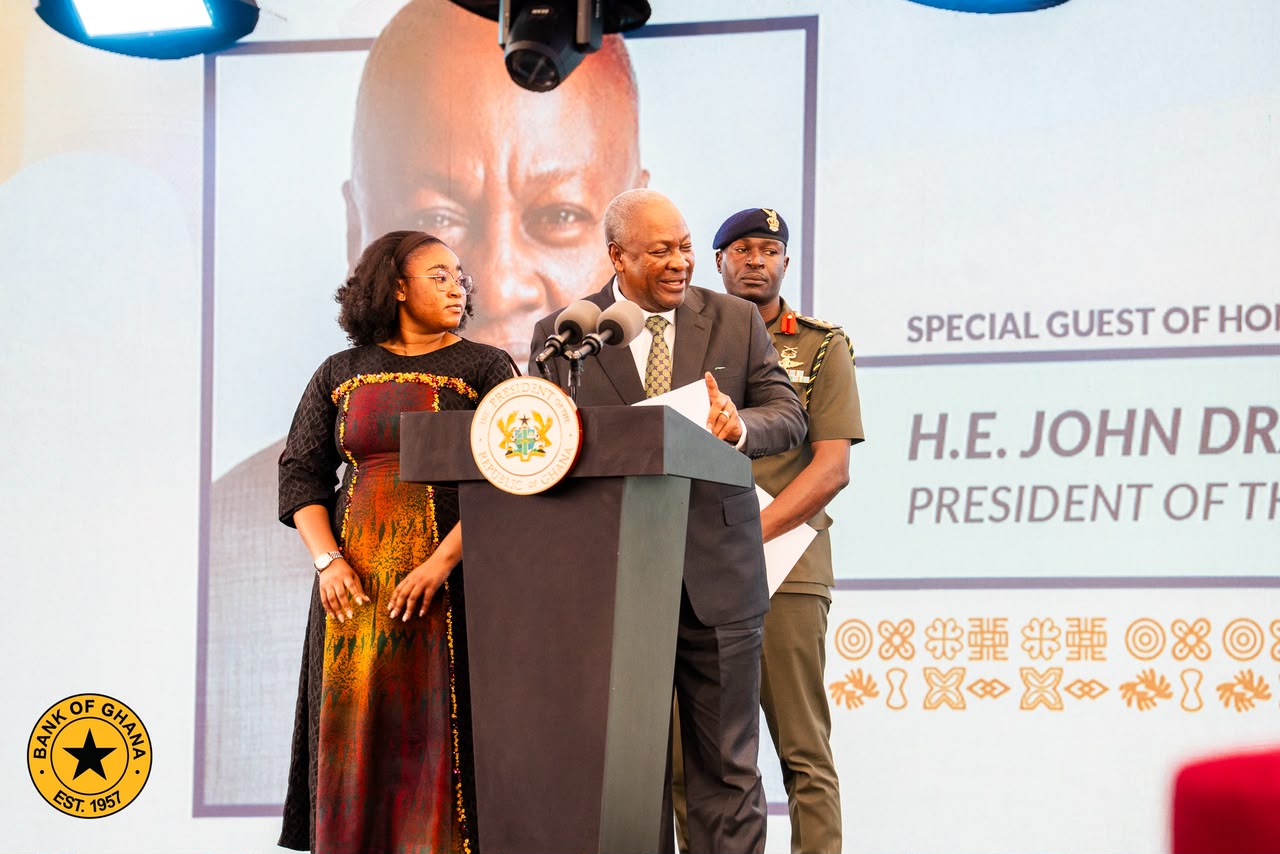
At the launch of the Ghana Cedi Heritage Series, Mr Mahama argued that expanding exports would bring in foreign exchange while greater domestic production would reduce the demand for dollars to pay for imported goods. “The link to the cedi is clear,” he said.
The logic is compelling. A currency cannot be made durable by confidence alone if the economy continually needs more foreign exchange to import fuel, machinery, food, medicines and industrial inputs than it earns from exports and investment.
But the distance between that diagnosis and a stronger cedi is measured in years of investment, execution and export performance not in the size of a programme headline.
The budget due to be presented later today therefore matters beyond its allocations. It must show how the New Economy plan is expected to change Ghana’s capacity to earn and save foreign currency, and how the government will fund that transition without unsettling the fiscal discipline that has helped stabilise the economy.
Mr Mahama’s framing shifts attention from the cedi as a symbol to the economic structure beneath it. A more stable exchange rate can ease import costs and help businesses plan.
Yet durable stability requires a reliable supply of foreign exchange and confidence that policy will not generate fresh pressure through excessive spending, borrowing or monetary expansion.
The Bank of Ghana’s October investor bulletin reported that the cedi traded at GH¢11.50 to the US dollar at the end of September, representing a 6.58 per cent depreciation since the start of 2026.
That record is a reminder that relative calm in the currency market does not mean the exchange rate has become immune to shocks.
The central bank has cited export receipts, stronger external balances and foreign-exchange management as supports, while warning that external volatility remains relevant.
The New Economy proposition is that Ghana can make the cedi less dependent on such buffers by changing the economy’s underlying flows. If local firms can replace imports competitively, demand for foreign exchange may ease.
If they can sell processed goods abroad, export receipts may rise. If local supply chains deepen, more of the value generated by agriculture, minerals and energy could remain in the country.
But these effects are not automatic. A factory may require imported machinery, spare parts and components before it produces anything. An export industry can expand while still relying heavily on foreign inputs.
And a project can create jobs without generating enough foreign-exchange revenue to cover its costs. The test is not simply whether production rises, but whether the investment improves the country’s net capacity to earn, retain or save foreign exchange.
The government has described the programme as a US$10 billion investment push across four years. The Ministry of Finance has said full details were expected in the 2027 Budget, while its earlier announcement described the agenda as a move towards an economy that generates wealth and jobs from what Ghana produces.
That headline number needs careful interpretation. It does not, by itself, show how much money is already available, how much is expected from private investors, whether funds are loans or equity, or which projects will receive financing. Nor does it tell the public when investments will begin producing goods, jobs or export revenue.
The distinction matters for the cedi. Foreign investment can bring in dollars at the outset, but projects may later require imported equipment, debt repayment and profit repatriation.
Borrowing can finance productive assets, but it also creates future foreign-currency obligations. Public spending can crowd in private investment or displace it if it raises financing costs or strains confidence.
A credible plan should therefore make clear the financing mix, project selection rules, expected returns, local content, implementation timetable and risks to the public balance sheet. T
he more that the programme depends on private capital, the more important it becomes to explain what guarantees or incentives government will offer and who bears the cost if projects underperform.
Ghana enters this investment phase after a period of disinflation and fiscal adjustment. The IMF’s 2026 assessment noted that inflation had fallen sharply and reserves had strengthened, but also said the macroeconomic impact of major investment initiatives remained uncertain.
It emphasised that continued reform and policy credibility would be needed to preserve stability and support inclusive growth.
That is the tension at the heart of the budget. A country emerging from instability needs investment to lift productivity and employment.
Yet a rapid spending drive can revive the very pressures that undermine the currency if projects are poorly selected, financed through unsustainable borrowing or implemented faster than domestic capacity can absorb.
Mr Mahama also linked cedi strength to “disciplined public finance and credible monetary policies.” That qualification is essential. Industrial policy cannot substitute for fiscal restraint, and export ambitions cannot override the central bank’s need to manage inflation and liquidity.
The two sides of the argument have to reinforce one another: macroeconomic stability creates space for long-term investment, while productive investment should eventually strengthen the external position that underpins currency stability.
The strongest version of the New Economy plan would treat foreign-exchange resilience as an outcome to be measured sector by sector. For each major investment, the public should be able to ask: How much import demand will it replace? How much export revenue could it generate? How many jobs will it create, and at what skill and wage levels? What public support is required? When will the benefits arrive?
Those questions would turn the cedi promise into an accountability framework. They would also expose the difference between investment that merely expands output and investment that changes Ghana’s position in global markets.
The President is right that a country which produces more of what it consumes and exports higher-value goods can reduce some of the structural pressure on its currency. Yet that achievement depends on productivity, reliable energy, transport, skills, predictable regulation and access to finance. It depends, too, on businesses being able to compete without permanent protection.
The cedi’s future will not be determined by a single budget speech or a new banknote series. It will depend on whether Ghana converts the proposed US$10 billion into a portfolio of viable projects that earns more foreign exchange than it consumes and whether the government can do so while preserving the stability investors and households need to plan. The budget can set that course. Delivery will determine whether the currency promise holds.

